This program aired on KIUN 1400 AM in Pecos, TX on March 7, 2018.
This program aired on KIUN 1400 AM in Pecos, TX on March 7, 2018.

“The hand that rocks the cradle, rules the world.” Thus goes the well-known proverb. It is a truth that is so powerful that it has become self-evident. The influence of mothers is so important it cannot be overstated. Conversely, the neglect of that influence is so powerful that it cannot go unchallenged.
We live in a world where certain basic values have been eroded by the influence of skeptics whose godless ways have made a mockery of motherhood and all God intended it to be. Very often today, “the hand that rocks the cradle” is a stranger, the paid hireling at the child-care center. Many children spend more time with these care givers than they do with their parents. This ought not to be so.
Children are a gift from the Lord. They are a sacred trust. They are precious souls who are entrusted to parents for spiritual as well as physical nurturing. When we bring a child into the world we begin a life that will exist throughout eternity. The eternal destiny of that soul is largely the responsibility of the parents. The wise man said, “Train up a child in the way he should go, even when he is old he will not depart from it” (Prov. 22:6). It is our God-given duty as parents to bring up our children in the “discipline and instruction of the Lord” (Eph. 6:4).
No one is better at this than mothers. This does not excuse fathers from their required participation in this responsibility, but it is the mother who has special power to accomplish God’s purpose in this regard. The scriptures are full of examples of godly mothers who molded their offspring for God’s use. From Jochebed, the mother of Moses, to Hannah, the mother of Samuel, to Eunice, the mother of Timothy, we see the positive influence of the hand that rocks the cradle. We see this influence even in those cases in which the father was not as involved in the process as he should have been.
There are many in the family of God who are there in large measure because of the influence of their mothers. I am one of them. My mother made certain that I learned to love the Lord. She did so even though my father was not a Christian until I was in my teens. She taught me the importance of being in the assembly on the Lord’s Day. She taught me that obedience to the Lord was the most important choice I would ever make. She formed in me the basis attitudes toward God and His word that have led me to this point in my life. She did this despite her own struggles as a Christian. She was not perfect, but she was a child of God, and is now gone to her reward.
It is not enough to give life to a child. Society is overrun with children who have been abandoned by their birth mothers. It is not enough to physically nurture a child. All around us are well-fed children who are morally bankrupt, or well on the way to becoming so. We need mothers who will do whatever it takes to nurture the soul as well as the body. We need mothers who have more concern for their children’s souls than for material things. Those who act on this concern in accordance with God’s word will receive a great reward in eternity.
It is a challenge to be a godly mother. No one denies this fact. Therefore, to all those mothers who are meeting this challenge, we honor you today, and say, “Thanks Mom!”
This program aired on KIUN 1400 AM in Pecos, TX on March 5, 2018.

For many years the U.S. Marine Corps used the recruiting slogan, “We’re looking for a few good men.” Part of the reasoning behind this slogan was that the Marine Corps is the smallest of the four primary military services, and has always been so. Another reason for this slogan is that not every man is cut out to be a Marine. Therefore, they are looking for quality instead of quantity. The idea of a few good men has biblical precedent, although the U.S. Marine Corps is likely unaware of it.
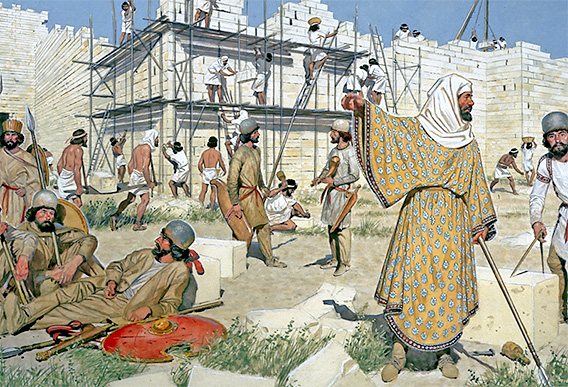
Early in the reign of King Saul Israel was a war with the Philistines. Saul was camped at Gibeah with his pitifully small army of about 600 men. The Philistines were encamped at Michmash with three companies of men who raided Israel with impunity. In 1 Sam. 14:1 Saul’s son Jonathan called his armor-bearer to accompany him to the garrison of the Philistines which stood across a pass from them. Jonathan had great faith in God and in v. 6 said to his armor-bearer, “Come and let us cross over to the garrison of these uncircumcised; perhaps the Lord will work for us, for the Lord is not restrained to save by many or by few.” Jonathan’s faith in God was rewarded with a great victory over the Philistines that day. This victory was precipitated by a few good men who trusted in God.
During the reign of King David Israel was again at war with the Philistines. David and his army were in the cave of Adullam, while the Philistines were encamped in Bethlehem, David’s home town. In 2 Sam. 23:15 David idly expressed his wish that he could drink from the well that was by the gate in Bethlehem. V. 16 tells us that three mighty men fought their way into the city, drew water from the well, fought their way out again, and brought the water to David. These men, Adino the Eznite, Eleazar the son of Dodo, and Shammah the son of Agee, were the greatest of David’s mighty men (cf. 2 Sam. 23:8-12). David was so moved by their feat that he poured out the water as a drink offering to God.
The principle of God bringing about victory with a few good men is well attested in the Old Testament. It is also evident in the New Testament. Early in His ministry the Lord chose twelve ordinary men to be His apostles. Except for Judas, these few good men became the vehicle by which the gospel was carried throughout the known world in the first century. Compared to the masses of people at that time, these men were far too few to accomplish so great a mission, yet they were able to do so because they gave themselves in obedience to the Lord and served Him faithfully until death.
Today, the Lord is still not restrained to save by many or by few. In most places around the world, His church survives and carries on His mission through the work of a few good men. These men show the trust and confidence in God that Jonathan possessed. They also show the resolve to do whatever their master requires, no matter the cost, like the three mighty men of David. They also know their limitations, like the twelve apostles, but they do not allow these to deter their service. They know that the victory belongs to the Lord.
The search for a few good men never ends, because as one generation of good men passes, another generation must arise to take their place. Those who stand up for the Lord will always be few, but this fact must not discourage us. Our Father in heaven has proven that He can save by a few. Therefore, let us trust Him and choose to be one of the few good men whom He can use to accomplish His purposes.

This program aired on KIUN 1400 AM in Pecos, TX on March 2, 2018.

One of the common stereotypes of men is that they refuse to read the directions. More of us than are willing to admit it will immediately begin to assemble some item without giving a second thought to the assembly instructions that accompany it. Often, after spending much more time than it should have taken, we finally surrender and turn to the directions to see where we went wrong. Then, having read the instructions, we begin again.
As much as we enjoy making fun of men in this regard, the fact is that we all tend toward this attitude in many areas of life. This is especially the case in spiritual matters. Social media is full of memes that declare the wish that life came with an instruction book. The sad truth is that it does, but most people have tried to live their lives without consulting it.
Our Father in heaven knew before He created mankind that we would be this way. Therefore, He put many warnings and exhortations in His word calling on us to read His instructions for life. When Moses reminded Israel of the Law God had given them, he solemnly warned them to diligently adhere to it, so they could live and prosper in the promised land. In Deut. 6:1-3 Moses said, “Now this is the commandment, the statutes and the judgments which the Lord your God has commanded me to teach you, that you might do them in the land where you are going over to possess it, so that you and your son and your grandson might fear the Lord your God, to keep all His statutes and His commandments which I command you, all the days of your life, and that your days may be prolonged. O Israel, you should listen and be careful to do it, that it may be well with you and that you may multiply greatly, just as the Lord, the God of your fathers, has promised you, in a land flowing with milk and honey.”
This theme is a constant throughout the Old Testament, and it remains so under the covenant of Christ. The Lord Himself declared this fundamental principle at the conclusion of the Sermon on the Mount. In Mt. 7:21 He said, “Not everyone who says to Me, ‘Lord, Lord,’ will enter the kingdom of heaven, but he who does the will of My Father who is in heaven will enter.” The simple truth of this statement is that God has provided us the instructions for life in His revealed word, and only those who follow His instructions will enter heaven at the end of time.
Many through the centuries have contended that these instructions are incomplete, or unknowable, from the scriptures. However, these contentions are patently false. In Eph. 5:17 Paul called on us to not be foolish but to understand what the will of the Lord is. If the Lord’s will is unknowable, we cannot obey this command. The very fact that Paul commanded it proves that we can understand God’s will.
In 2 Tim. 3:16-17 Paul said that all scripture is inspired by God and equips us for every good work. In 2 Pet. 1:3 Peter said that God has granted to us everything pertaining to life and godliness through the true knowledge of the one who called us. These statements assure us that the scriptures are everything we need in order to live life the way God intended us to.
The grace of God and the sacrifice of our Lord Jesus Christ offer us redemption for the sins we commit by ignoring or violating God’s instructions for life. This redemption saves our souls, but does not undo the physical consequences of our sins. How much better our lives would be if we chose to follow God’s instructions from the beginning, instead of only turning to them when all else fails!

This program aired on KIUN 1400 AM in Pecos, TX on February 28, 2018.

Since 1970 April 22nd has been officially recognized as “Earth Day”. The impetus for this ongoing event was a catastrophic oil spill off the coast of Santa Barbara, CA in 1969. Each year on this date environmentalists gather in nearly 200 nations around the world to draw attention to their concerns. Two factors tend to characterize these events. The first is the implication that the world would be a better place without humans on it. The second is the notable absence of any reference to God. Instead, proponents refer to “Mother Earth” in terms that deify the planet. The stated goal of these events is to save the earth. While no honest person would argue against being responsible in the use of the resources on our planet, the greater danger is in removing the God who created this planet from any consideration in this matter.
The scriptures are explicit in their discussion of the purpose of the earth. The origin and purpose of the earth are described in Gen. 1. God systematically created the earth and filled it with everything necessary for mankind to live upon it. In Gen. 1:26-30 the scriptures tell us that God created mankind and commanded them to be fruitful and multiply and fill the earth. He also told them to subdue the earth and to rule over the animals. At that time God gave both man and animals every green plant for food (vs. 29-30). Later, after the flood, He again told mankind to be fruitful and fill the earth (Gen. 8:15-17), and then He gave all the animals to man for food (Gen. 9:1-4).
Before He did so, however, God said something about the earth. In Gen. 8:22 He said, “While the earth remains, seedtime and harvest, and cold and heat, and summer and winter, and day and night shall not cease.” The covenant of the rainbow (Gen. 9:8-17) reassured Noah that God would never again destroy the earth with water, as He had just done. This statement reassured him, and us, that the earth will continue to provide for all mankind’s needs so long as God allows it to remain. In other words, mankind cannot exhaust the resources that God has placed on the earth. There will always be enough resources to sustain life until God decides to destroy the earth.
Environmentalists are trying to save the earth, as though it will last forever and there is nothing beyond life on this planet. The scriptures, however, are clear that the earth is not intended to last forever. In 2 Pet. 3:10-13 Peter said that the elements will be destroyed with intense heat when the day of the Lord arrives. This will not be the result of a man-made nuclear holocaust or some environmental doomsday. Instead, it will be the result of the word of God (2 Pet. 3:7). The destruction of the earth and universe will be the prelude to the final judgment of all mankind.
While we should all be responsible in our care of the environment in which we live, our greater concern should be to prepare ourselves for eternal life. When the day of the Lord comes, and with it the destruction of the physical realm, the Son of God will come with His mighty angels in flaming fire to deal out retribution to all who do not know God and who have not obeyed the gospel (2 Th. 1:7-8). At that time the saved will be ushered into the new heavens and new earth to which Peter referred in 2 Pet. 3:13. This is the place to which our Lord has gone, and in which He is preparing dwelling places for the redeemed (Jn. 14:1-3).
In the meantime, let us make the most of the abundant resources of our earthly home without being wasteful or irresponsible. Let us also be grateful to God for this beautiful place in which we live, knowing that while it remains the earth will sustain all who live here, just as God planned from before the beginning of time.
This program aired on KIUN 1400 AM in Pecos, TX on February 26, 2018.
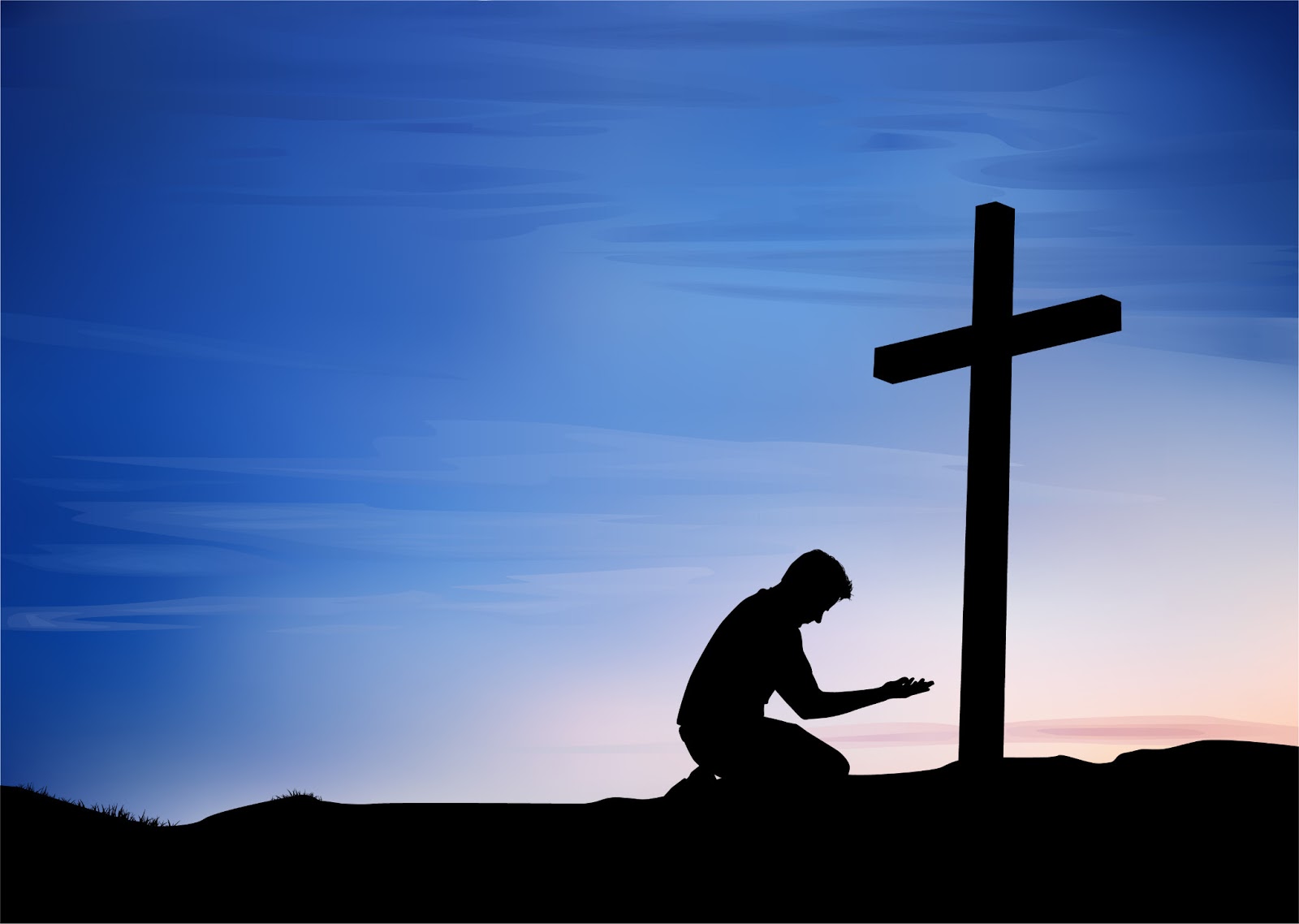
There is a song that at one time was frequently sung in our worship assemblies, but has recently fallen into disuse. The song is entitled, “None of Self and All of Thee”. This song is one in which all stanzas should be sung because of the story it tells. It is the story of one who stands defiantly before the Lord, seeking his own way. He proudly proclaims, “All of self and none of Thee”. As the song progresses, however, his demeanor softens to “Some of self and some of Thee” and, “Less of self and more of Thee”. In the final stanza the change is completed, and he humbly says, “None of self and all of Thee”.
One can only speculate why this song is no longer popular. It could be that many modern worshipers prefer the catchy tunes, made up of simple, repetitive phrases, that are so common today. However, it could also be that this song rings too true to real life for comfort. It is easier, after all, to sing upbeat praises about the love and grace of God than to admonish ourselves about the struggle to be faithful disciples. It is more pleasant to sing “happy” songs than to sing songs that remind us of the practicalities of putting God first in our lives.
There is a place in our worship for songs that convey every facet of our relationship to God, but we must not neglect those that call us to diligent service. When the Lord was asked what the greatest commandment was, He replied, “You shall love the Lord your God with all your heart, and with all your soul, and with all your mind” (Mt. 22:37). This was not one of the Ten Commandments, but is a foundational principle that Moses taught the people of Israel as he led them toward the promised land (Deut. 6:5).
Nearly everyone will profess that they love God, but too often this profession means little more than an affection for Him. When Moses commanded Israel to love God with all their heart, soul, and mind, he defined it with a series of commands regarding their personal and daily devotion to Him (Deut. 6:6-9). They were to make God’s word the central feature of everything they did each day. Although the Lord did not go into the kind of detail that Moses did, He had the same principle in mind. Loving God with all one’s heart, soul, and mind means putting Him first in everything we do.
In practical terms, this is about how we use our time each day. As we allocate our time, do we fill it with God’s things, or do we fill it with our things? Personal Bible study and meditation on God’s word, prayer, worship, fellowship with other Christians, and sharing the good news are all things that demonstrate that we are putting God first in our lives. Doing these things does not detract from our physical responsibilities, but enhances our performance of these things. When we commit to a “none of self and all of thee” perspective, the Lord will bless our efforts in ways that the less committed will never enjoy.
Our Lord said that loving God with all one’s heart, soul, and mind is the greatest commandment. For this reason, we must make this our primary goal in life. To do so we must commit to the “none of self and all of thee” principle. Doing so requires the faith to trust in the Lord’s promise that He will take care of those who seek first God’s kingdom and His righteousness (Mt. 6:33). How blessed our lives would be, and how much better the world would be, if each of us made this commitment! Then our lives, as well as our lips, would truthfully and joyously declare, “Higher than the highest heavens, deeper than the deepest sea, Lord, Thy love at last has conquered, None of self and all of Thee”.
 ". . . let God be found true, though every man be found a liar."