A Happy New Year


As we prepare to welcome 2018, should the Lord grant it to us, there are some qualities that can insure we will indeed have a happy new year, if we are willing to make them a part of our character.  To illustrate this principle consider the following qualities, each of which stands for one of the letters in our standard  year-end greeting, “Happy New Year!”

H — Honesty.  The old adage says that honesty is the best policy.  For believers it is the only policy.  In the Sermon on the Mount the Lord said, “But let your statement be, ‘Yes, Yes,’ or ‘No, No,’; anything beyond these is of evil.”  

A — Ambition.  Ambition can be good or bad, but the believer’s ambition is molded by God’s word.  In 1 Th. 4:11-12 Paul told Christians to make it their ambition to lead a quiet life, to attend to their own business, and to work with their hands.

P — Persistence.  The human adage is “Winners never quit, and quitters never win.”  This agrees with scripture.  Those who are faithful until death will receive the crown of life (Rev. 2:10).  If we fight the good fight, keep the faith, and finish the course, we will receive the reward (2 Tim. 4:7-8).

P — Prayer.  Most people pray only as a last resort.  Believers are exhorted to pray without ceasing (1 Th. 5:17).  If we do so, we are promised that the peace of God, which surpasses all comprehension, will guard our hearts and minds in Christ Jesus (Phil. 4:6-7).

Y — Yearning.  To yearn for something means to desire it to such a degree that one would do anything to possess it or to achieve it.  The Lord said, “Blessed are those who hunger and thirst for righteousness, for they shall be satisfied”.  Hunger and thirst are two of the strongest yearnings that humans have.  If we have this kind of yearning for God’s word, we will be blessed, and happy.


E — Enthusiasm.  Human enthusiasm is fickle and can fade as quickly as it rises.  However, this word actually means “God in us.”  If we truly have God in us, we will not lose our enthusiasm for doing His will.  In Col. 2:23-24  Paul said, “Whatever you do, do your work heartily (or enthusiastically), as for the Lord, rather than for men, knowing that from the Lord you will receive the reward of the inheritance.  It is the Lord Christ whom you serve.”

W — Wisdom.  Some equate knowledge with wisdom.  Unfortunately, there are too many knowledgable people who lack wisdom for this to be true.  Wisdom cannot come without knowledge, but knowledge alone makes one arrogant (1 Cor. 8:1).  As we learn God’s word, it exhorts us to ask God for wisdom and promises that He will grant it to us (Jas. 1:5).  True wisdom is exhibited by obedience, as the Lord said in Mt. 7:24-25.  The wise man is the one who hears God’s word and obeys it.

Y — Yoked With Christ.  Many adults consider themselves to be free from all constraints, but everyone serves a master.  There are only two that we may serve, though.  In Rom. 6:16-18 Paul said that we are slaves of whomever we present ourselves to in obedience.  These masters are sin or righteousness.  When we yoke, or bind, ourselves to Christ in obedience to His word, then we will be blessed.  In Mt. 11:28-30 the Lord said His yoke is easy and His burden is light.

E — Eagerness.  Some people must be dragged kicking and screaming in protest to every good thing in life.  This attitude greatly diminishes the value of that good thing, whatever it may be.  However, believers are called to be eager in their pursuit of godliness.  The people of the ancient city of Berea were such.  They eagerly received the word and examined the scriptures daily (Acts 17:11).

A — Amity.  Amity simply means love.  We all want it, and we all need it, but in human terms love can be a very fragile thing.  This is because human love is based on our emotions.  In Christ, however, love is a choice of the will.  It is a determination to do what is best and right for all in every circumstance.  In Jn. 14:15 the Lord said if we love Him we will keep His commandments.  In 1 Jn. 4:17 John said that we love because love is from God.

R — Respect.  To respect means to give due regard to others.  This doesn’t always happen in human relationships, but it is expected of believers.  In Rom. 12:17 Paul exhorted believers to respect what is right in the sight of all men.  He was referring to God’s word.  If we respect God’s word, we will have no trouble giving respect to others, or receiving it from them.

Each of these qualities will contribute to a truly happy life here on earth.  Best of all, these qualities, which are based upon the truth of God’s word, will lead those who practice them to the greatest happiness of all, eternal life.

Happy New Year!

It’s A Wonderful Life


One of the classic movies of the Christmas season is the 1946 film, It’s A Wonderful Life.  It starred James Stewart as George Bailey, a man whose dreams were always derailed by some calamity not of his making.  After spending most of his life helping others while putting his own desires on hold, George suffered what appeared to be the final blow.  His savings and loan company was short on its accounts and he was about to be arrested for bank fraud.  Believing that his life had been meaningless, George’s despair led him to the brink of suicide.  Only the intervention of an unlikely angelic visitor prevented George from taking his own life.  In a heart-rending final sequence, the film concludes with dozens of townspeople giving George the money to balance his books and avoid prison.  In the closing scene George’s brother offered a holiday toast to his big brother, “the richest man in Bedford Falls,” as everyone sang Auld Lang Syne.

It’s A Wonderful Life was one of the last of a genre of films in the 1930s and 1940s that extolled the basic goodness of the American people.  However idealized these portrayals may have been, we believed that this is the kind of people we ought to be, even if we sometimes failed to live up to these ideals.  Sadly, it is not so certain that we are this kind of people today.

Most of us hope for happiness and success and all the things that moviemakers have often portrayed as being the signs of a wonderful life.  The nature of human life is such, however, that we sometimes wonder if we can ever achieve it.  We expect ups and downs, successes and failures, good times and bad.  We hope that as we weigh them on the scales of time that the good will outweigh the bad.  If so, we may look upon our life and say it was good, even if not as wonderful as common culture defines it.

Christians on the other hand have a different perspective.  The Lord promised that He came so we “may have life, and have it abundantly” (Jn. 10:10).  The English word “life” translates several Greek words.  Two of these words are bios and zoe.  These are the words from which “biology” and “zoology” are derived.  While both of these terms may be used to describe one’s physical life or one’s material possessions, the Lord used zoe in a particular sense in His teachings.  Zoe is the word that is always used in scripture with reference to eternal life.  Thus, it has come to have a more significant meaning and application to Christians.

Some have made their careers preaching a “health and wealth” gospel from Jn. 10:10, but this is not what the Lord intended.  When the Lord said He came so we may have life abundantly, He was not referring to our physical life and material possessions.  We may indeed lead healthy and successful lives and amass great fortune in life, but the Lord’s purpose in coming was for us to have a better life which is eternal in nature.

To have abundant life is to be safe in the fold that is guarded and provided for by the Good Shepherd, Jesus Christ.  In this fold, we are under His watchful care.  He knows us by name and He calls us to follow Him.  We know Him and we respond to His call.  Living in the fold of Christ is a wonderful life.  It is so, not because of the absence of trials, troubles, sickness, or failure.  It is a wonderful life because we know that what happens to us here cannot compare to the glory that will be revealed to us at the end of time (Rom. 8:18).  It is a wonderful life because godliness holds promise for the present life and also for the life to come (1 Tim. 4:8).  If we belong to Christ we live better here, and we will live better in eternity.  This, truly, makes it a wonderful life!

Teach Them Diligently


The Law of Moses consisted of much more than the Ten Commandments.  Commentators have identified in excess of six hundred specific commands within it.  The enormity of this law staggers our minds, and we wonder how the Jews could have managed to keep up with all its many demands.  The Law of Moses was intended to bring mankind to the Savior, Jesus Christ, and to the new covenant that He would implement.  However, God made it clear that He intended the Jews to keep the Law until the Savior came.

One of the ways that He did so was to command Jewish parents to teach the Law to their children.  In Deut. 6:6-9 Moses said, “These words, which I am commanding you today, shall be on your heart.  You shall teach them diligently to your sons and shall talk of them when you sit in your house and when you walk by the way and when you lie down and when you rise up.  You shall bind them as a sign on your hand and they shall be as frontals on your forehead.  You shall write them on the doorposts of your house and on your gates.”

The point of this command was to show that each generation must be taught to obey God.  If this responsibility was not met, a generation would arise that did not know God or know His law.  This is exactly what happened after Joshua died (Jdg. 2:10).  The result was a chaotic period that lasted more than three hundred years.  During that time Israel repeatedly disobeyed God and suffered oppression from their enemies because of it.  So the importance of parents diligently teaching God’s word to their children cannot be overstated.

Today we live under the law of Christ, not the Law of Moses.  His law is written in our hearts and is much simpler in comparison to the Law of Moses.  However, we are no less responsible for obeying it than the Jews were for obeying the Law of Moses.  Near the conclusion of the Sermon on the Mount the Lord said, “Not everyone who says to Me, ‘Lord, Lord,’ will enter the kingdom of heaven, but he who does the will of My Father who is in heaven will enter” (Mt. 7:21).

The importance of knowing and obeying God’s law is further emphasized by Paul in 2 Th. 1:7-8.  There he said that when the Lord returns He will do so with His angels, “in flaming fire, dealing out retribution to those who do not know God and to those who do not obey the gospel of our Lord Jesus.”  Can there be any doubt that there are serious consequences if we do not obey God’s will?

This being true, we certainly have just as great a responsibility to diligently teach God’s law to our children and grandchildren as the Jews did in the time of Moses.  In that time, under a law which was only a shadow of the good things to come (Heb. 10:1), the Jews suffered physical consequences for failing to teach their children to obey God’s law.  In our time, under the law of Christ, if we fail to teach our children to obey God’s will they are going to pay spiritual and eternal consequences for our failure.

It is not coincidental that the command to diligently teach children was given to parents.  They are the ones to whom the precious souls of their children are entrusted by God.  Lest there by any question about it, this command applies just as surely to Christians as it did to the Jews.  In Eph. 6:4 Paul told fathers to bring up their children in the discipline and instruction of the Lord.  Therefore we must be diligent to prepare their souls for eternity.  In order to do this, we today must do what God required of the Jews.  We must have His word in our hearts (Deut. 6:6).  If we truly have God’s word in our hearts we will not fail to diligently teach it to our children.

Let Him Have His Way


Most children look forward to the day when they become adults.  They do not do so because they are anxious to take on the responsibilities of adulthood, such as going to work every day, paying taxes, and taking care of a family.  Instead, they anticipate this stage in life because they believe that when they become adults they will be able to do whatever they please.

Wanting to have one’s own way about things is a natural part of human nature.  Very few of us are so compliant and amiable that we are content to let others always have their way about things.  No matter how kind-hearted one may be, we will all at some point insist on our preference being met.  There is nothing inherently wrong with this, so long as the choices under consideration are not illegal, immoral, or in any other way contrary to God’s will.

This makes sense, of course, but it is where we so often fail.  We have been created by God with the ability to make choices in life.  From the time of Adam and Eve in the Garden of Eden, mankind has been free to choose to do things God’s way or their own way.  Most of the time, people have chosen their own way and the results have been disastrous.  This is one reason why the scriptures call on us to let God have His way in our lives.

The wise man Solomon put it very simply.  In Prov. 14:12 he said, “There is a way which seems right to a man, but its end is the way of death.”  He was so convinced of this truth that he repeated it in Prov. 16:25.  Even though he did not always follow his own advice, Solomon knew that when humans have their own way about the direction of their lives they will go astray from God’s will.

Jeremiah the prophet was another who spoke plainly about the futility of humans guiding their own steps.  In Jer. 10:23 he said, “I know, O Lord, that a man’s way is not in himself.  Nor is it in a man who walks to direct his steps.”  Jeremiah saw this truth played out before his very eyes.  He admonished the leaders of Judah to repent of their evil ways and return to the Lord, but to no effect.  They walked in their own way and God brought His wrath down upon them in the form of the Babylonian captivity.

The futility of his efforts is summarized by the call of the Lord that Judah rejected.  In Jer. 6:16 the scripture says, “Thus says the Lord, ‘Stand by the ways and see and ask for the ancient paths, where the good way is, and walk in it; and you will find rest for your souls.  But they said, “We will not walk in it.”‘”  Even though God spoke directly to them through His prophet, the people of Judah refused to let Him have His way.  They suffered terribly for it during the siege of Jerusalem, and then for seventy years of exile in Babylon.

Many years before the time of Jeremiah, King David recognized the value of letting God have His way in his life.  In Psa. 25:10 David said, “All the paths of the Lord are lovingkindness and truth to those who keep His covenant and His testimonies.”  This is a timeless truth that is as pertinent today as it was a thousand years before the birth of our Lord.  The Lord underscored this truth in His condemnation of the religious leaders of His day.  In Mt. 15:14 the Lord called them blind guides and said that they, and those who followed them, would fall into a pit.

This being true, perhaps we can see the wisdom of the words of the great old hymn that says, “His love can fill your soul, and you will see ’twas best for Him to have His way with thee.”  May this always be so in our lives.

Let Us Give Thanks


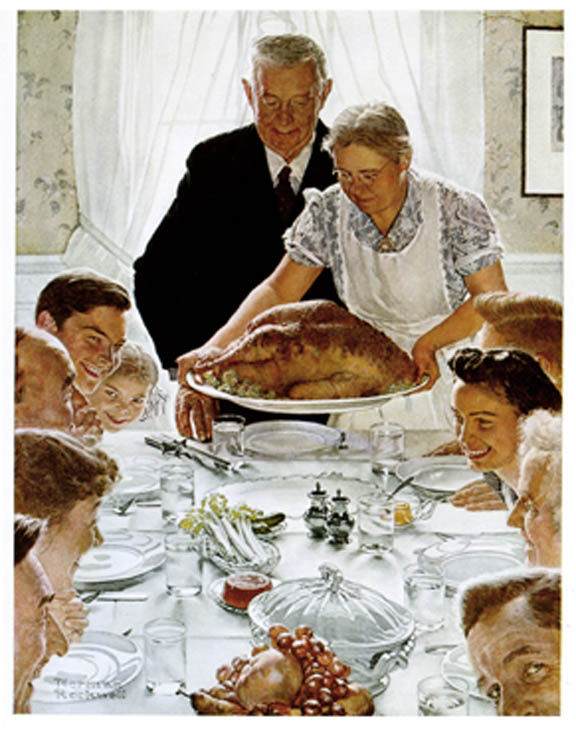
The fourth Thursday of November is the day each year when our nation takes time to express our gratitude for all the blessings that God has showered upon us from our inception until the present day.  Thanksgiving is a uniquely American holiday that is testimony to the fact that this country was founded by men who believed in the Christian faith.  No other nation on earth so openly acknowledges and celebrates its dependence upon God, or attributes its prosperity so directly to His blessing.

Unfortunately, the gratitude and spirit of thanksgiving that prompted our founders to acknowledge and honor God for His abundant blessings has greatly waned in recent years.  Society in general has become much more self-absorbed than at any time in our history.  As a result, people are much less likely to express even the most basic levels of gratitude which were at one time commonplace.  In addition to this, they are far less likely to honor and thank God for all He has done for them.  It is a sad commentary on how far we as a people have fallen from the lofty ideals upon which our nation was established, and to which we are called by the scriptures.

The principle of thankfulness is found virtually from cover to cover in the scriptures.  The psalms are a particularly powerful example of this.  The word “thanks” appears dozens of times in these spiritual songs and in each instance the songwriter’s intent is to glorify God by acknowledging His abundant blessings and thanking Him for them.  No Jew who sang these psalms could fail to see the importance of giving thanks to God.

During the Lord’s earthly ministry He drew attention to this principle when He cleansed ten lepers.  In Lk. 17:11-19 the scripture says that these men begged the Lord for mercy as He passed by them.  In response He told them to go and show themselves to the priests.  As they were going, they were healed.  In v. 15 Luke tells us that one of the men, upon seeing that he had been healed, immediately turned and went back to the Lord.  He fell at the Lord’s feet, giving praise to God and thanking the Lord for healing him.

The Lord accepted this man’s expression of gratitude, but asked about the other men.  In vs. 17-18 He said, “Were there not ten cleansed?  But the nine–where are they?  Was no one found who returned to give glory to God, except this foreigner?”  These questions show that the Lord was disappointed in the ingratitude of the nine men who failed to give thanks for their healing.  The fact that the lone man who did express thanks was a Samaritan only made this omission worse.  The other men were Jews, who should have been the first to give thanks because they were God’s covenant people.

The lesson for us to learn from this episode is that it is vital for us to express our gratitude to God for all He has done for us.  We must thank Him for the beautiful world in which we live, which He created to take care of all of our physical needs until the end of time.  We must thank Him for the blessing of forgiveness through the blood of His Son, by which we have the hope of eternal life.  We must thank Him for His promise to provide for all our needs if we seek Him first.  We must thank Him for hearing our prayers and answering them in the way that is best for us in every case.

If we take the time each day to do as the old hymn says, “Count your many blessings — name them one by one”, we cannot help but give thanks to the Lord.  We have received from God’s hand much more than we deserve, especially in view of the gift of eternal life.  Therefore, let us never fail to give thanks to Him every day.

Above Reproach


In Paul’s first letter to Timothy he outlined how the church should function.  Beginning in 1 Tim. 2:8 Paul, by apostolic authority, decreed that the men should lead the corporate worship of the church, and that the women should “quietly receive instruction with entire submissiveness” (1 Tim. 2:11).  He also gave details of the qualities that must be exhibited by those who would become elders and deacons in the church.  He began by saying that any man who desires the office of overseer (or elder), desires a good work (1 Tim. 3:1).  Then, he listed each of the qualities that a man should possess in order to do this good work.  The first of these is that he must be “above reproach” (1 Tim. 3:2).  Some translations say he must be “blameless”.

Without even considering the enormity of the responsibility to shepherd the souls of a congregation, this qualification alone will cause honest men to have second thoughts about accepting this work.  Who among us is so vain as to suggest that he is blameless before the Lord? Most of us have done things of which we are not proud.  Some of us still carry the stigma of previous indiscretions, and although we have repented of these sins and have been forgiven, we cannot escape the feeling that our reputation has not yet recovered.

How then can the apostle say that an overseer must be above reproach or blameless?  How is such a thing even possible?  When we look within ourselves for the answer, we cannot help but despair.  Like David we exclaim, “My sin is ever before me” (Psa. 51:3).  In such a state of mind, no matter how godly one’s life may have become, we will never consider ourselves qualified to shepherd God’s people.

The reason Paul could stipulate such a qualification, and the reason why imperfect men may accept the call to spiritual leadership, is because of what the Lord has done for us.  In Col. 1:21-23 Paul said, “And although you were formerly alienated and hostile in mind, engaged in evil deeds, yet He has now reconciled you in His fleshly body through death, in order to present you before Him holy and blameless and beyond reproach–if indeed you continue in the faith firmly established and steadfast, and not moved away from the hope of the gospel that you have heard, which was proclaimed in all creation under heaven, and of which I, Paul, was made a minister.”

By the blood of Jesus Christ our sins are washed away (Acts 22:16), and we are made blameless and beyond reproach before God.  Those who repent of their sins and seek God’s forgiveness are cleansed by the blood of the Lamb and their sins are remembered no more (Jer. 31:31-34).  Although we are weak and sin from time to time, we are nevertheless above reproach, we are blameless, because we continue to submit to the will of our God and Father in heaven.  And just like David, we can still be men after God’s own heart.

Some of our friends and neighbors in the world may still hold our past sins against us, but that does not change our status before God.  If they were obedient themselves they would no longer hold those things over us.  The fact that they do hold them against us shows that they are still in sin and in need of redemption.

Being above reproach or blameless is not about being perfect.  It is about being the kind of man who acknowledges his sins and constantly seeks forgiveness for them.  Such a man is building a reputation that cannot be assailed by frivolous accusation.  Good and honest people will see and recognize this, and such a man can indeed shepherd God’s people.

When Bad Things Happen To Good People


It seems that nearly every week we hear of another tragedy in which innocent lives have been taken in a senseless attack.  Whether the attacker wields a gun, a knife, a bomb, a motor vehicle, or some other weapon, innocent people end up wounded or dead.  Not so long ago most of these attacks occurred in other countries and in areas that have long been subject to such things.  Today, however, it seems that people are not even safe in places of worship in the backwaters of our land.  The pointless loss of life is heart-rending, and the physical and emotional scars borne by the survivors will linger for years.

We wonder why such terrible things happen, but we are shaken to the core when these things happen to good and innocent people.  It is not uncommon to hear people ask, “Where was God when this happened?”  Or to ask, “Why did God allow this to happen?”  Others may even go so far as to blame God for the tragedy simply because He didn’t intervene to keep it from happening.  None of these views reflects a proper understanding of God, or of how He deals with the world.  Neither do they reflect an understanding of the presence and effects of sin in the world.

When we search the scriptures we nowhere find a promise from God that He will intervene in the day to day affairs of mankind.  Nowhere do we find any indication that those who belong to Him will be miraculously spared from suffering, injury, or death.  Instead, the scriptures warn us not to place stock in the world or the things in it, because this world is not our goal, and everything in it will one day pass away (1 Jn. 2:15-17).  In fact, our Lord promised us that while we are in the world we will suffer tribulation (Jn. 16:33).

The bad things that happen to good people are not the work of God.  Neither are they due to His negligence.  They are the result of the presence of sin in the world, and the source of sin is Satan (cf. Gen. 3:1-7).  From the time he deceived Eve into eating the forbidden fruit, the world has been cursed by sin.  The perfect world that God created became marred and will remain so until the physical realm is destroyed when the Lord returns (2 Pet. 3:10-13).  Until that time, all who live on the earth will suffer the effects of sin.

Those who are believers will not be deterred by this fact of life.  This is because they understand that something far better awaits them on the other side of life.  The Lord promised the apostles that He was going away to prepare a place for them and that He would return one day to bring them to that place (Jn. 14:1-3).  All believers share in this promise, and therefore can cheerfully sing, “This world is not my home, I’m just a-passing through.”

Even so, our faith is sorely tested when bad things happen to good people, and we struggle with how to deal with it.  When all is said and done, there is only one solution to this dilemma, and that is for each of us to make sure we are right with God at all times.  If we obey the gospel and live faithfully for the Lord each day, we can say as Paul did, “For I consider that the sufferings of this present time are not worthy to be compared to the glory that is to be revealed to us” (Rom. 8:18).  We also can look forward to the promise that in heaven God the Father will wipe away every tear and there will no longer be any death, mourning, or crying (Rev. 21:1-4).

Satan wants us to blame God for the bad things that happen, but his goal is to keep us out of our eternal reward.  Let us not lose hope, though, but continue to trust in God, because heaven will certainly be worth it.

A Time For Everything


King Solomon of Israel was the wisest man who ever lived.  He received his wisdom as a gift from God early in his reign over Israel (1 Kgs. 3:3-14).  His wisdom was so renowned that the Queen of Sheba heard of it and came to see for herself.  After conferring with Solomon she exclaimed, “Behold, the half was not told me” (1 Kgs. 10:7).

Near the end of his life Solomon wrote a book that expressed the frustration and despair that had gripped him in his old age.  That book is called Ecclesiastes, and it is one of the most enigmatic books in the Bible.  The most striking theme of this book is the exclamation, “Vanity of vanities!  All is vanity” (Ecc. 1:2).  Even so, there is much of timeless value in the musings of “the preacher” (Ecc. 1:1).

One of the most well-known of Solomon’s reflections is his declaration that there is an appointed time for everything (Ecc. 3:1-8).  He said, “There is an appointed time for everything.  And there is a time for every event under heaven–a time to give birth and a time to die; a time to plant and a time to uproot what is planted.  A time to kill and a time to heal; a time to tear down and a time to build up.  A time to weep and a time to laugh; a time to mourn and a time to dance.  A time to throw stones and a time to gather stones; a time to embrace and a time to shun embracing.  A time to search and a time to give up as lost; a time to keep and a time to throw away.  A time to tear apart and a time to sew together; a time to be silent and a time to speak.  A time to love and a time to hate; a time for war and a time for peace.”

Solomon wrote Ecclesiastes about 900 years before the birth of Christ.  His reflections on the timeliness of certain activities were rooted in the agrarian culture in which he lived.  Nevertheless, the principle behind these reflections will be pertinent until the end of time.  This is because there are, in fact, appropriate times for certain actions.  For this reason we would do well to abide by the reflections of the wise man.

The fact that we can benefit from Solomon’s wisdom is evident all around us.  The lack of decorum at solemn occasions is a case in point.  The number of times that worship assemblies are interrupted by ringing cell phones is one example of this.  Solomon wouldn’t take away our cell phones.  He would simply remind us that there is a time for such calls, and worship isn’t that time.

The scourge of gossip is also evidence that we should heed Solomon’s wisdom.  Too many people, including professed believers, seem incapable of hearing something without repeating it.  We do not stop to consider the effects of passing along these juicy tidbits.  Then we wonder why feelings are hurt and relationships are broken.  Solomon would remind us that there is a time to speak and a time to be silent.

More and more people are engaging in sexual relations outside of marriage.  We see the damage of this promiscuity in the number of unwed mothers, the children raised in single-parent homes, and the continuing scourge of sexually transmitted diseases.  Solomon would not deny us this God-given pleasure, but he would remind us that the time for such activity is within the bounds of a monogamous marriage relationship.

Wisdom is a byproduct not only of age, but also of maturity.  Many old people still lack wisdom because they have not trained their minds to discern good and evil (Heb. 5:14).  The wise have spent long hours studying God’s word and then putting it into practice in their lives in order to become so.  It’s time we all did the same.

Sons of Hur


It has been said that the most difficult instrument to learn to play is second fiddle.  This is because we all would prefer being in the number one position.  The musician in the first chair not only plays the primary melody of the music, but may also be a featured soloist in some pieces.  As fine as the musician in the first chair may be, however, it takes all the musicians, including the “second fiddles”, melding their talents together to create the harmony that makes a piece of music moving and memorable.

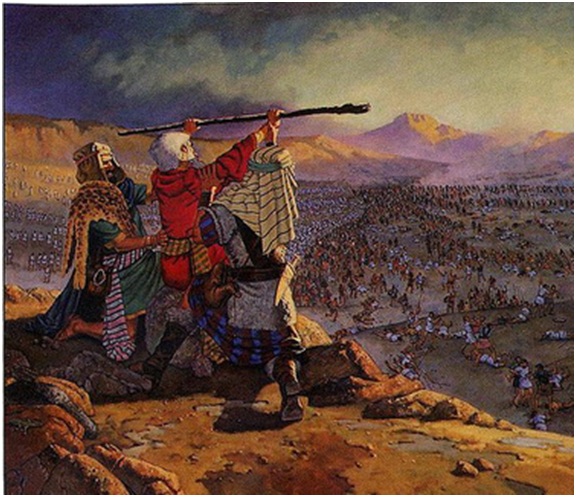
This is true in every field of endeavor, and is especially important in God’s kingdom.  Throughout the record of scripture supporting players, “second fiddles” as it were, have been there to help the more well-known figures in scripture accomplish God’s will.  One such person was a man named Hur.  In Ex. 17:8-13 the scripture tells us that the people of Israel were confronted by the nation of Amalek.  Moses sent Israel’s army out to meet them, under the leadership of Joshua.

As the battle raged, Moses stood on the top of a hill overlooking the battle site.  As long as Moses held the staff of God aloft, Israel prevailed.  Whenever he let the staff dip, Amalek would get the upper hand.  In Ex. 17:12-13 the scripture says, “But Moses’ hands were heavy.  Then they took a stone and put it under him, and he sat on it; and Aaron and Hur supported his hands, one on one side and one on the other.  Thus his hands were steady until the sun set.  So Joshua overwhelmed Amalek and his people with the edge of the sword.”

Joshua received credit for the victory, but it would not have happened without the help of Hur, who played “second fiddle” to perfection that day.  The glory was on the battlefield, but Hur willingly performed essentially a menial task in order to facilitate Israel’s victory.  We don’t know a lot about him, and after this incident Hur vanishes from the biblical text.  He did what needed to be done, and then quietly went back to his business, whatever it may have been, without further recognition.

When we consider this incident in the light of the work of the church, we realize that we need sons of Hur today.  The term “sons of” was often used in the Old Testament to describe followers or disciples, rather than actual offspring.  Thus, when we say we need sons of Hur today we are saying we need men and women who will emulate this good man.  We need men and women who will forego the spotlight in order to help accomplish God’s will in His church.

Obviously we need those have been trained and are qualified for public leadership in the church.  We likewise need those who have been trained and are qualified to publicly proclaim the good news in order to save the lost and to edify the saints.  However, we also need those who are willing to be the “second fiddles” in God’s spiritual orchestra.  These humble servants, who are content to labor out of the spotlight, are essential to sustain and to encourage those who are in the forefront of the work.

A New Testament son of Hur was Barnabas, whose name means “encourager” (Acts 4:36).  He started out serving quietly behind the scenes, but eventually became a well-known leader in the early church.  The same can be true of each of us today.  We just have to be content to begin our service in whatever capacity the church needs, whether we ever stand at center stage or not.

Human nature craves attention and recognition for what we do.  Godly nature, however, recognizes the Lordship of Christ, and the value of humble service.  Lord, grant us men and women who are “sons of Hur”.

Let’s Work Together


In 1970 a blues/rock group called Canned Heat released a song entitled, Let’s Work Together.  It was a modest commercial success, rising only to #26 on the U.S. charts.  However, the song struck a chord with many because of how deeply divided the country was at that time.  Its lyrics called on people of all ages to put their differences aside and to work together because, as the song said, “together we stand, divided we fall”.

While it is unlikely that any of the band members realized it, the idea of working together is one of the most fundamental principles in scripture.  The Lord referred to it when He was accused of casting out demons by the power of Beelzebul.  The Lord responded to this charge in Mt. 12:25, saying, “Any kingdom divided against itself is laid waste; and any city or house divided against itself will not stand.”

When Paul wrote to the church in Ephesus he also emphasized the importance of this principle.  In Eph. 4:11-16 he said that the Lord had placed apostles, prophets, evangelists, and pastors and teachers into the church in order to equip the saints for the work of service.  Then, he said that the purpose of this was so that, “the whole body, being fitted and held together by what every joint supplies, according to the proper working of each individual part, causes the growth of the body for the building up of itself in love” (v. 16).

Therefore, it is imperative that Christians work together within the body in order to accomplish the Lord’s purpose.  In 1 Cor. 12:12-26 Paul used the illustration of a human body to describe how each member of a local congregation plays an important part in the spiritual health and growth of that congregation.  The bottom line is that we are all essential to the good of the church and we must all do our part to help the church be all that it is intended to be.

To accomplish this, we must each commit to four basic principles.  First, we must be willing to submit to biblical authority.  Near the end of the Sermon on the Mount the Lord said, “Not everyone who says to Me, ‘Lord, Lord,’ will enter the kingdom of heaven, but he who does the will of My Father who is in heaven will enter” (Mt. 7:21).  If we commit to doing whatever God’s word requires of us, we will work together with our fellow Christians to build up the church.

Second, we need to start living by the Golden Rule.  In Mt. 7:12 Jesus said, “In everything, therefore, treat people the same way you want them to treat you, for this is the Law and the Prophets.”  This means being proactive in the exercise of our faith.  If we do this, the church will be better because of it.

Third, we need to look out for the interests of others instead of only looking out for our own interests.  In Phil. 2:3-7 Paul told the church in Philippi to have the same attitude as Christ in this regard.  He went to the cross because He was looking out for our interests more than His own.  If we focus on the needs of others, and they likewise focus on our needs, the church will be better off.

Finally, we need to be willing to personally do whatever the Lord requires for the good of His kingdom.  Isaiah the prophet answered God’s call by saying, “Here am I.  Send me!” (Isa. 6:8).  This should be our response as well.  God has not called us to be spectators, but to be active participants in the work of His church.  If we respond as Isaiah did, the church will be blessed by our actions.

The work of evangelizing and of edifying the saints is in our hands as the church.  The church is “us”, not “them”.  If we don’t do this work, it won’t get done.  If all of us don’t do our part, it won’t happen.  Therefore, let’s work together to get it done.