Some Assembly Required


Some years ago a cartoon appeared in a journal for preachers.  It showed an angel speaking to a preacher who was standing outside his study.  The angel was pointing into the study, where a Bible could be seen lying on the desk.  The caption read, “Your sermons are inside.  Some assembly required.”  The point of the cartoon is obvious.  If a preacher intends to deliver a sermon on Sunday he will have to work on it, assemble it, as it were, during the week.

Any preacher worth his salt knows that this is true.  Sermons do not come together miraculously, without any study and effort on his part.  Unless a preacher spends his time in diligent study of God’s word, he cannot proclaim it as it must be proclaimed.  Unless he spends time honing his skills, both in the knowledge of God’s word and in putting his sermons together so they are understandable to his audience, his preaching will be worse than useless.  It may even lead some astray.

“Some assembly required” does not apply solely to preachers, though.  It is, in fact, a requirement in every Christian’s life.  This truth is suggested by Peter’s command in 1 Pet. 2:1-3, where he said, “Therefore, putting aside all malice and all deceit and hypocrisy and envy and all slander, like newborn babies, long for the pure milk of the word, so that by it you may grow in respect to salvation, if you have tasted the kindness of the Lord.”

When we obey the gospel our sins are washed away (Acts 22:16), and we rise from baptism to walk in newness of life (Rom. 6:4).  Jesus called this the new birth (Jn. 3:3, 5), and thus, as Peter said, we are “like newborn babies”.  This means that we are beginning the process of “assembling” a life in Christ that will honor the Lord and fulfill His will for us.  In the same way that raising a physical baby to maturity is hard work, so also is the spiritual process of growing from infancy to maturity in Christ.

Many of us have known older men and women whose godly lives and encyclopedic knowledge of God’s word was awe inspiring.  We may have wished to ourselves that we knew the scriptures as they do.  We may have wished that one day our lives would model Christ as theirs do.  What we often overlook in such wishes is what it took for these godly men and women to reach such a mature state.

These men and women were not born this way.  Neither did they wake up one day, mature in years and gifted with an uncommon knowledge of God’s word.  The simple truth is that these men and women literally spent countless hours over many years in diligent study of God’s word, and in practicing the things they learned from it, in order to reach the level of maturity that we observe in them.  Ultimately, this is the key to replicating their results.

In Heb. 5:11-14 the scripture speaks of some Christians who had become “dull of hearing”.  They had not grown from infancy to maturity in Christ.  The writer of Hebrews chastised them for still needing milk when they should have by that time graduated to solid food.  He exhorted them to become mature by training their senses to discern good and evil.  In other words, he told them to get to the business of assembling their spiritual houses in accordance with God’s word.

In 2 Tim. 2:15 Paul commands, “Be diligent to present yourself approved to God as a workman who does not need to be ashamed, accurately handling the word of truth.”  The Lord expects us to be mature and to accurately handle His word.  To accomplish this goal we must acknowledge that “some assembly is required.”

A Perspective On Boasting


In 1 Kings 20 there is an interesting account of an incident during the reign of evil King Ahab of Israel.  The Arameans had come up against Samaria, the capital city of Israel, and Ben-hadad, king of Aram, had laid claim to all of Ahab’s personal wealth, along with his most beautiful wives and children.  Ahab initially agreed to this demand, but then Ben-hadad sent word that he wanted even more.

Ahab consulted with the elders of the land and they advised him to refuse to comply.  When Ben-hadad received Ahab’s refusal, he said, “May the gods do so to me and more also, if the dust of Samaria will suffice for handfuls for all the people who follow me” (1 Kgs. 20:10).  When Ahab learned of this threat, he replied, “Let not him who girds on his armor boast like him who takes it off” (1 Kgs. 20:11).  The point of Ahab’s reply was simple.  Ben-hadad should not boast until he had won the battle.

Ahab’s reply seems like so much empty saber rattling since he had only the day before been extremely fearful of Ben-hadad and his army.  However, as events unfolded God stood by Israel and Aram was soundly defeated.  Ben-hadad’s boast proved to be unfounded, but only because God intervened to protect His people.  As an added insult, God brought defeat on Aram at the hands of Israel a second time at the turn of the year (1 Kgs. 20:22-27).

This incident illustrates a timeless truth about boasting.  For a boast to be legitimate, it must be based upon actual accomplishment.  It is one thing to talk about the things one might do if given the opportunity, but until one has actually done those things, such talk is worthless.  Indeed, this kind of talk is rude and insulting, especially to those who have in fact accomplished great things in their lives.

Too often young people make this mistake.  They disregard and disrespect the accomplishments of their ancestors, while touting how much better their ideas and abilities are in comparison.  This was one of the fallacies of the unrest of the 1960s generation who protested “the establishment”.  They ignored the fact that “the establishment” had gone to war in the 1940s and had defeated Fascism in order to create the society in which these young people were free to protest the things they didn’t like.  Sadly, the generation that grew up in rebellion have not done nearly as much to make the world a better place as the generation against whom they protested.

The same is true in many respects in the church.  Many today deride and discount the efforts of Christians in the early to mid-20th century.  They point with disdain to the supposed flaws of those earlier generations and proudly proclaim how much better the church would be under their direction and influence.  The plain truth, however, is that were it not for the tireless and successful work of those previous generations, the church would not be as widespread across the world as it is today.  Just like the 1960s protesters, the current generation of detractors has done little in comparison to their predecessors.

The scriptures generally decry the idea of boasting.  It is easy to see why this is the case.  Too often boasting is all about personal aggrandizement.  Such is not becoming for those who belong to the Lord, especially in comparison to the giants of the faith to whom we are indebted.  One of the greatest apostles, whose achievements are far beyond anything any of us have done, said that we should only boast in the Lord (1 Cor. 1:31).  In Gal. 6:14 he said, “But far be it from me to boast except in the cross of our Lord Jesus Christ, by which the world has been crucified to me, and I to the world.”

We have done nothing worthy of boasting.  Therefore, if we must boast let us boast only in the Lord, who has in fact removed His armor, having defeated once for all time, the enemy of mankind.  To God be the glory!

Consider the Lilies


The largest single body of the Lord’s teachings are found in what we call the Sermon on the Mount.  Matthew records this message in Mt. 5-7.  Among the many topics that the Lord discussed in this great discourse was His exhortation to not be worried about the mundane affairs of life (Mt. 6:24-34).  Then, as now, many people were consumed with worry about how they would live from day to day.  This worry not only robbed them of the joy of living, but was also a sign that their priorities were not right.

In v. 24 the Lord said, “No one can serve two maters; for either he will hate the one and love the other or he will be devoted to one and despise the other.  You cannot serve God and wealth.”  He followed this statement in v. 25 with the exhortation to not be worried about the essentials of life.  This suggests that the two are related.  That is, if our master is wealth we will likely be consumed with anxiety over whether we have enough to take care of our needs.  This anxiety is due in large part to the fact that we are not truly servants of God.  It suggests that we don’t trust Him to provide for our daily needs.

The Lord illustrated the folly of such anxiety with the admonition to “Consider the lilies” (Mt. 6:28 — KJV).  He pointed out that these flowers of the field do not toil, and they do not spin.  Even so, the Lord said that even Solomon in all his glory was not clothed like one of them.  The imagery here is powerful.  Solomon was one of the wealthiest men to have ever lived, and the splendor associated with his reign is legendary.  Yet, in the Lord’s view the simple lilies of the field were more glorious and beautiful than he.

Most of us would agree that the beauties of nature far surpass any man-made beauty, no matter how ornate it may be.  The truth of this is seen in the fact that one rarely sees, much less buys, a calendar with photos of the lavish accoutrements of the rich.  Instead, we are more likely to see a calendar with photos of fields of wild flowers, or forest scenes, or snow-capped mountains.  This is because there is simply no beauty as wondrous as that which God created.

The Lord’s exhortation to consider the lilies was more than a call to enjoy the beauty of nature, however.  It was to show the people just how much God cares for them.  In v. 30 the Lord said, “But if God so clothes the grass of the field, which is alive today and tomorrow is thrown into the furnace, will He not much more clothe you?  You of little faith!”  Here’s the point: the flowers of the field are unimportant in God’s eternal purpose, yet He cares for them in spectacular fashion.  If He would do so for these expendable things, how much more so will He care for mankind, whose souls will live for eternity?

In v. 33 the Lord gave His divine prescription for the kind of anxiety that grips most of us.  He said, “But seek first His kingdom and His righteousness, and all these things will be added to you.”  If we have our priorities properly set, we will trust in the God who provides for the lilies of the field.  We will do so because we know He considers our souls to be much more important than flowers or any other aspect of nature.  As a result, we will not be obsessed with concern for our daily well-being.

It is easy to become caught up in the hamster-in-the-wheel grind of daily life.  If God is not our master, we can expect to worry.  However, if we consider the lilies we will remind ourselves that our Father in heaven has promised His providential care for all who belong to Him.  And with that knowledge, we will have peace.

ETC. Christians


The abbreviation “etc.” comes from the Latin phrase, et cetera, which means “and other similar things”, or “and so forth”.  We most often use this abbreviation when going through a long list of similar items.  We use it to indicate that many other items, like the ones named, belong in this list.  In the 1956 film, The King and I, Yul Brynner, playing the King of Siam, used this phrase to impress Anna with his great knowledge, and with the fact that he was too important to convey the details of that knowledge.

This abbreviation is common in all areas of life, even in religious or spiritual contexts.  Recently, a post on social media made an interesting and unique use of the abbreviation, “etc.”  In this post the writer said that “etc.” stood for, “Easter, Thanksgiving, and Christmas” Christians. Upon consideration, the writer appears to have hit the nail squarely on the head.

His definition is correct on two levels.  The most obvious is that there is a large body of professed believers who only show up for worship on the major holidays.  Easter Sunday, Thanksgiving weekend, and Christmas are all times when church buildings are generally filled.  The happy noise of children of all ages in the company of parents and grandparents is a heart-warming sound.  We are uplifted by the presence of so many on these special occasions.  However, the rest of the year many of these same children and adults are nowhere to be seen on the Lord’s Day.

The second way that “etc.” correctly defines some professed believers is in the realization that this abbreviation is somewhat of a “throw-away” term in our language.  Like the King of Siam, we cast this term around to mask deficiencies in our knowledge of some particular subject.  Or, we use it to show our general disinterest in the topic at hand.  It is this usage that makes “etc.” fit the holiday-only crowd.  They attend worship on special occasions to make a show of their professed faith, but their actions the rest of the year actually indicate their disinterest in spiritual things.

The Lord spoke of such attitudes in one of His confrontations with the scribes and Pharisees of His day.  In Mt. 15:8 He said of them, “This people honors Me with their lips, but their heart is far away from Me.”  In context, the Lord was speaking specifically of the many traditions which these Jews had implemented that were actually contrary to God’s word.  These traditions showed that they truly didn’t honor or respect God’s word.  The spirit which led them to do these things is, in fact, the same spirit which makes “etc.” Christians comfortable with their practices.  They say they love the Lord, but their actions show that they truly don’t respect God and His word.

The Lord told His disciples that unless their righteousness exceeded that of the scribes and Pharisees, they would not enter the kingdom of heaven (Mt. 5:20).  He said this, not to urge them to become better law-keepers than their leaders were, but rather to urge them to become genuine disciples instead of self-serving hypocrites, like them.  In practical application, this meant that they would follow God’s word, first, last, and always as they went about their daily walk.  They would put God first, and rely on Him to provide for all their needs (Mt. 6:33).  They would make God’s word a living part of their lives so it would truly be a lamp to their feet and a light to their path (Psa. 119:105).

Let each of us become whole-hearted followers of Jesus, instead of “etc.” believers.  Let us truly be faithful until death (Rev. 2:10), so we will be welcomed into heaven at the end of time.

We Refuse To Tamper With God’s Word


The English Standard Version (ESV) was first published in 2001.  In the preface to this work it is described as an “essentially literal” translation of the ancient Hebrew, Aramaic, and Greek languages in which the original scriptures were written.  The goal of this translation is to preserve and convey the exact meaning of the biblical text as originally written, while putting these words into easily understandable modern English.  This translation is based primarily on the Revised Standard Version (RSV) of 1971, and has been well received by conservative scholars, commentators, and preachers.

One particularly powerful illustration of the excellent work done by the ESV translators is found in 2 Cor. 4:2.  Here the ESV renders Paul’s words in this way: “But we have renounced disgraceful, underhanded ways.  We refuse to practice cunning or to tamper with God’s word, but by the open statement of the truth we would commend ourselves to everyone’s conscience in the sight of God.”  In the context of this letter Paul was defending his apostleship against some in Corinth who rejected his teaching and his standing as a legitimate apostle of Christ.  In this statement Paul both defended himself, and, by implication, condemned the false teachers who were trying to undermine his influence in this church.

An important part of Paul’s defense in this statement is his refusal to “practice cunning or to tamper with God’s word.”  In his first letter to the Corinthians, Paul reminded them that when he had first worked among them he had not used lofty speech or human wisdom (1 Cor. 2:1-5).  Instead, he had preached the simple gospel of Christ so that their faith would rest on the power of God rather than on the wisdom of men.

The Greek word from which the English word “tamper” is derived was used in the first century to refer to wine merchants who diluted their wares.  They “tampered” with their product by selling a watered-down version as though it were pure.  This imagery is a powerful illustration of some of the problems that Paul faced in Corinth.  His detractors were proclaiming a “watered-down” version of the gospel, but he, “by the open statement of truth”, was proclaiming the unadulterated word of God.  Paul could boldly commend himself to the brethren in Corinth because he had proclaimed the pure gospel of Christ to them.

This issue still exists today, and is perhaps even more widespread than it was in the first century.  We see it in the current trends to water-down the gospel in order to be more appealing to the unchurched.  Some practice what Paul would call cunning by hiding their denominational background or affiliation under the guise of being “non-denominational”.  Their teachings are, in fact, the same as those of the denomination from which they received their training and accreditation, but are masked from unsuspecting seekers.  In the same way they also water-down the gospel, refusing to teach the whole counsel of God (Acts 20:27) with respect to salvation by omitting or denying the importance of baptism for the forgiveness of sins (cf. Mk. 16:15-16; Acts 2:38-41; 22:16).

In the first century Paul renounced such practices and boldly proclaimed that he would not be a party to them.  He refused to practice cunning in his preaching.  He refused to tamper with God’s word.  For this reason he could rightfully commend himself to his hearers.  Today we desperately need more men like Paul.  We need men who renounce “disgraceful, underhanded ways”, who preach the gospel, the whole gospel, and nothing but the gospel.  God’s word will judge us at the last day (Jn. 12:48), and God’s word is truth (Jn. 17:17).  Therefore, let us refuse to tamper with it.

He Is Not Here


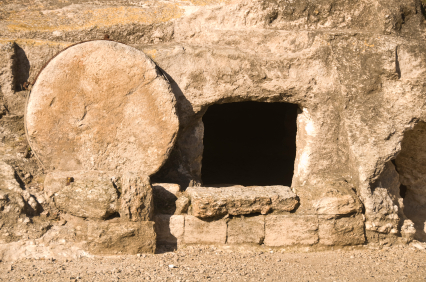
When Mary Magdalene and the other Mary came to the Lord’s tomb early on the morning of the first day of the week (Mt. 28:1), they found the stone rolled away and the tomb open.  In Mark’s account of this event (Mk. 16:3), he points out that the women were discussing who they might get to roll the stone away when they arrived at the tomb and found the open grave.  In Matthew’s record, he tells us that a severe earthquake occurred and an angle of the Lord rolled the stone away while the Roman soldiers fainted in fear (Mt. 28:2-4).  When the women arrived at the tomb an angel spoke to them and said, “Do not be afraid, for I know that you are looking for Jesus who has been crucified.  He is not here, for He has risen, just as He said.  Come, see the place where He was lying” (vs. 5-6).

Christians recognize these words as a description of the central feature of our faith:  the resurrection of our Lord and Savior Jesus Christ.  Skeptics, of course, take a different view, often making fun of this statement of scripture by suggesting that the angel was actually trying to direct the women to the correct location of the Lord’s body.  Even a cursory reading of these verses shows how ridiculous such an assertion is.

The risen and exalted Savior was the basis for the preaching done by the apostles on the first day of Pentecost after the Lord’s resurrection.  The truth or falsity of their proclamation could easily have been proven at the very moment they spoke.  In Acts 2:32 Peter said, “This Jesus God raised up again, to which we are all witnesses.”  If this statement were not true, all anyone would need to do in order to shame the apostles into silence was to direct the crowds to the tomb and show them the body.  It is not surprising that no one challenged Peter’s claim, because the rulers of the Jews knew the truth.  In Mt. 28:11 the scripture tells us that the Roman guards told them exactly what had happened.

“He is not here” is the declaration that Jesus was no longer in the tomb.  Death was unable to hold Him, as it had done all others before Him.  “He is not here” is the clarion call to all of honest heart to believe all that Jesus taught during His earthly ministry.  It is a call to believe all that His apostles taught as they established and led the Lord’s church thereafter.  “He is not here” declared that the Lord was alive and would soon be exalted to the right hand of God to reign until the end of time.  “He is not here” is the assurance that the Lord would be with His people always, even to the end of the age, just as He promised (Mt. 28:20).

There were others who had been resurrected before the Lord was.  He Himself had performed such miracles on several occasions.  No one, however, had ever been raised as He was.  In Rom. 6:9 Paul said, “Christ, having been raised from the dead, is never to die again.”  Because “He is not here” in the tomb, He ever lives to intercede on our behalf before the Father in heaven (Heb. 7:25).  And we who belong to Him, those who have been washed in the blood of the Lamb, have hope with regard to our own resurrection, which will come at the end of time.  Since our Lord lives, never to die again, we have the promise that we, also, will rise one day, never to die again.

As the world turns its yearly attention to the empty tomb of our Lord, let us pray that their hearts will be opened to the full truth about the resurrection, and to the fact that Jesus is now reigning as both Lord and Christ (Acts 2:36).  May these truths motivate us to obey the gospel and to live faithfully until death (Rev. 2:10).  For in heaven we don’t want anyone to ask about us, “Where is so and so?”, and have the answer be, “He is not here.”

Lead Me Gently Home, Father


Those who live most of their lives in the fellowship of the Lord’s church are blessed with a plethora of sweet memories associated with the worship of our Father in heaven.  Certain songs may remind them of when they were immersed into Christ.  Others may remind them of family members now passed.  Others still remind them of what the Christian life is all about.  One such song is Lead Me Gently Home, Father, which captures the earnest desire of godly people to reach the heavenly goal.

One of the most basic teachings of the Lord is that being His disciple is a journey.  In Mt. 7:13-14 the Lord said, “Enter through the narrow gate; for the gate is wide and the way is broad that leads to destruction, and there are many who enter through it.  For the gate is small and the way is narrow that leads to life, and there are few who find it.”  The implications of this statement are clear and easy to understand.  We all enter one of the two gates as we go through life.  Each gate leads to a certain destination.  As we live our lives we are making progress to one or the other of those destinations.  One destination is destruction, which is a term used here to describe eternal condemnation.  The other destination is life, which is used here to describe entrance into the heavenly abode.

It is up to each of us to choose the path his life will follow.  We are called by the gospel (2 Th. 2:14) to choose the path that leads to life.  We are called by the world to follow the crowd that is rushing, headlong, toward the abyss of hell.  We are free to choose either course, but the wise person will choose the path that leads to life.

Just making the choice to enter through the gate that opens onto the way that leads to life is not enough, however.  We do not secure eternal life by entering the small gate and then sitting down by the side of the road.  Once one becomes a Christian, he must continue down the path toward his heavenly reward until he reaches it.  There is much in the New Testament to indicate that this is the case, but Paul the apostle demonstrated it for us in his own life.  Near the end of his life he said, “I have fought the good fight, I have finished the course, I have kept the faith; in the future there is laid up for me the crown of righteousness, which the Lord, the righteous Judge, will award to me on that day; and not only to me, but also to all who have loved His appearing” (2 Tim. 4:7-8).  Paul was confident of receiving his reward because he had faithfully walked the path that leads to life.

We enter through the small gate that opens onto the narrow way for one purpose only.  That purpose is to make the journey, step by step, until we reach the final goal.  We do not have to travel as quickly as others, but we do have to move down the path.  There is no reward for sitting on the sidelines.  This is where the words of this beautiful song teach and admonish us.

As we sing this song we are asking the Father to lead us home.  The most important aspect of this sentiment is that it is the Father who does the leading.  He does so by means of His inspired word, which our Lord said is truth (Jn. 17:17).  Our Lord Jesus said that He spoke only what the Father commanded Him to speak (Jn. 12:49-50).  He, in turn, gave this word to His apostles, and to the inspired writers of the New Testament, through the power of the Holy Spirit (Jn. 16:13; 2 Pet. 1:20-21).  Therefore, when we follow the New Testament, the Father is leading us.

Secondly, in order for the Father to lead us home, we must be willing to follow Him.  This means that we must place our will under the control of His will.  It means that we must be ready to do everything that the Word of God requires of us in order to be obedient to our Father in heaven.  In Mt. 7:21-23 Jesus said that only those who do the will of the Father in heaven will enter there.  Therefore, let us resolve that we will let the Father lead us gently home by believing and obeying His inspired word.  If we do this, He will indeed lead us home.

April Fools


One of the more interesting holidays on the calendar is April 1st, “All Fools Day.”  Most of us think of this date simply as “April Fools’ Day”.  It is a day for pranks and practical jokes to be played on friends, or 0n any unsuspecting person we might be able to hoodwink in some way.  One of the best April Fools’ Day jokes ever pulled was done by a disc jockey at an oldies station in Portland, OR.  About midway through his morning show, and without any warning, he announced that the station was changing its format from oldies to all heavy-metal, all the time.  At that point he began playing the loudest, most obnoxious heavy-metal song in the station’s library.

The effect was immediate.  As the heavy-metal tune droned on, the station’s phone lines lit up like a Christmas tree.  Anguished listeners called in to complain, and to beg the station to return to its oldies format.  After some minutes had passed the DJ came back on the air with the word, “April Fools!”  He could hardly contain his laughter at having pranked the entire city of Portland, OR.

In cases such as this, where innocent fun is the sole objective, most of us are willing to be “fools”.  This is because there are no serious consequences to having been made a fool in such an instance.  On the other hand, though, there are occasions when being a “fool” is not funny.  King David of Israel spoke of one of these occasions in Psa. 14:1.  He said, “The fool has said in his heart, ‘There is no God.’  They are corrupt, they have committed abominable deeds; there is no one who does good.”  There is no way to mistake David’s point.  Knowing God as he did, David knew that to deny God’s existence was the height of folly.  Only a fool would take such a position.

Paul echoed this perspective in Rom. 1:18-20, where he said, “For the wrath of God is revealed from heaven against all ungodliness and unrighteousness of men who suppress the truth in unrighteousness, because that which is known about God is evident within them; for God made it evident to them.  For since the creation of the world His invisible attributes, HIs eternal power and divine nature, have been clearly seen, being understood through what has been made, so that they are without excuse.”

In other words, God left His unmistakable fingerprints all over creation so everyone on earth would know that He exists.  This evidence is so complete and clear that the inspired apostle said those who refuse to believe it are without excuse.  He went on in v. 22 to say of such people, “Professing themselves to be wise, they became fools.”  These are the ones whose abominable deeds are described in the ensuing verses of this chapter, and for whom the wrath of God is revealed from heaven against them (Rom. 1:18).

Another instance in which one may become a fool is to reject the counsel of God’s word.  In Prov. 1:7 Solomon said, “The fear of the Lord is the beginning of knowledge; fools despise wisdom and instruction.”  This is a powerful condemnation, especially considering the fact that Jesus said that God’s word is truth (Jn. 17:17), and that His word will judge us at the last day (Jn. 12:48).  In Mt. 7:21 the Lord made His strongest statement in this regard.  He said that only those who do the Father’s will are going to enter heaven.  Knowing these truths, then, it is absolute folly to ignore God’s commands.  Those who do so are fools in the most complete sense of this word.

Therefore, we must pay heed to the words of Paul, who said, “So then do not be foolish, but understand what the will of the Lord is” (Eph. 5:17).  Whatever month or day it may be, do not be a fool.  Believe in God and obey His word so you will be wise.  Those who do so will have a home in heaven at the end of time.

Good Soil


In Matt. 13:3-9 the Lord told a parable that we call the Parable of the Sower.  It is one of the most familiar and oft-quoted of the Lord’s parables.  The Lord drew on the manner in which seed was sown in His time to teach a lesson on how we should receive the word of God.  In that time fields were cleared of rocks and weeds to receive the seed.  These fields were generally bordered by hard paths from which farm workers could access any area of the field.  Near these paths were strips where the rocks that were removed from the field would be left.  This is where weeds tended to grow, just as in our gardens today.

In that time period seed was cast by hand across the field.  In order to adequately cover the cleared portion of the field the seed was cast so that some of it landed in the rocky and weedy borders as well as on the paths that separated one field from another.  The Lord used this well-known fact of life to illustrate how different people respond to the gospel.

As He explained this parable to His disciples, the Lord said that only the good soil was productive.  The hard pathway did not allow the seed to penetrate the surface so it could germinate.  The rocky and weedy soils both allowed the seed to sprout, but it was not productive because it could not compete with the rocks and weeds.  These three soils represent the majority of people who hear the gospel.  Some will not allow it into their hearts and reject it outright.  Others gladly receive the word, but other issues in their lives choke it out and thus, in time, they fall away.

Only one soil in the parable was productive.  That was the good soil.  The reason why the good soil was good is that it had nothing else in it to compete with the seed.  This soil was broken up so the seed could penetrate it and germinate.  It was also free of rocks and weeds so there was nothing to keep it from reaching its full potential, and producing, as the Lord said, “some a hundredfold, some sixty, and some thirty” (v. 8).

The point of this parable is to exhort us to have the right kind of heart as we hear God’s word.  We must break down the hard shell of pride and selfishness in order to let God’s word into our hearts.  We must dig out all the rocks and weeds of worldly interests and pursuits so there is nothing to compete with it in our lives.  This means that we must be willing, not only to receive God’s word, but also to learn it and to meditate upon it so that it may have its fullest effect on our lives.  Only when we do this will we truly be good soil and productive in the Lord’s kingdom.

We often speak of this parable in an evangelistic context.  That is, we use it to encourage the lost to believe in the Lord and to obey His will.  Certainly it is appropriate for this use.  However, we need to remind ourselves that we must continue to be good soil even after obeying the gospel.  In 1 Pet. 2:1-3 Peter exhorts Christians to put aside all malice and desire the pure milk of the word so we may grow in respect to salvation.  In 2 Pet. 1:5-8 he further exhorts us to grow by adding what we call the Christian virtues to our faith.  V. 8 in this passage is particularly important because it tells us why we must do so.  Peter says, “For if these qualities are yours and are increasing, they render you neither useless nor unfruitful in the true knowledge of our Lord Jesus Christ.”  Therefore, as long as we live we must continue to dig out the rocks and weeds that may crop up in our hearts.  If we do this we will always be good soil, and we will always be productive in the Lord’s kingdom.

Just A Vapor


When the patriarch Jacob came before Pharaoh, the Egyptian ruler asked how long he had lived.  Jacob’s reply revealed his perspective on life in very clear terms.  He said, “The years of my sojourning are one hundred and thirty; few and unpleasant have been the years of my life, nor have they attained the years that my fathers lived during the days of their sojourning” (Gen. 47:9).  In this statement Jacob expressed his dissatisfaction with the length of his life because it did not compare to the number of years his ancestors had lived.  Such an attitude from a man who had lived one hundred thirty years seems incredible in our time, since most of us will never see ninety years, much less one hundred thirty years.  We’re also taken aback by Jacob’s characterization of his days as “few and unpleasant”, since he was a very wealthy man who had been abundantly blessed by God.

About four hundred years after Jacob and his family entered Egypt, Moses was ordained by God to bring Israel out of bondage and to lead them to the Promised Land.  Moses was eighty years old at that time, and was one hundred twenty years old when he died.  Sometime before his passing Moses wrote a psalm that offers his perspective on the length of our lives.  In Psa. 90:10 Moses said, “As for the days of our life, they contain seventy years, or if due to strength, eighty years, yet their pride is but labor and sorrow; for soon it is gone and we fly away.”

The decrease in lifespan from Jacob’s time to Moses’ time is interesting.  Even though Moses lived much longer than the seventy or eighty years of which he wrote, it seems certain that by the time he wrote Psalm 90 the lifespan of humans had greatly diminished from ancient times.  It is striking that nearly 3,500 years after Moses wrote this psalm, human life is still generally limited to seventy or eighty years.  Also striking is that Moses’ observation about the quality of life still rings true today.  Most of us would agree that even today life is generally marked by labor and sorrow, and then it’s over.

A third perspective on the length of life is seen in the letter written by the Lord’s half-brother James.  In Jas. 4:14 he said, “Yet you do not know what your life will be like tomorrow.  You are just a vapor that appears for a little while and then vanishes away.”  James’ point of view is disconcerting to us, and most of us are unwilling to face up to it.  When we are young we live as though we are bullet-proof and will live forever.  As we age, we may act more circumspectly, but we generally continue to live as though we will never die.  This despite James’ warning that our lives, no matter how many years they may encompass, are just a vapor.

This imagery is powerful.  A vapor is, first of all, of very short duration.  Warm breath blown into cold air appears for only moments and then is gone.  James is warning us that our lives are just that short in the big picture of things.  Second, a vapor is extremely fragile.  It has no inherent strength or structure to resist the forces that work upon it.  So, also, are our lives.  It only takes a moment for one’s life to end. This is a reality that should be sobering to us, especially with a view toward eternity.

The bottom line is that no matter how many years one may live, they are just a point on the timeline of life.  In addition to this, we are not guaranteed even the seventy to eighty years of which Moses wrote.  We are not guaranteed any time beyond the moment that we draw breath.  As quickly as a vapor vanishes, one’s life can end.  For this reason we must insure that we are ready to face God when our vapor vanishes away.  Eternity is forever, and we must live our lives in such a way that we will be able to live with the Lord forever in heaven.