
This program aired on KIUN 1400 AM in Pecos, TX on January 24, 2014.
This program aired on KIUN 1400 AM in Pecos, TX on January 24, 2014.

In Paul’s first letter to Timothy he outlined how the church should function. Beginning in 1 Tim. 2:8 Paul, by apostolic authority, decreed that the men should lead the corporate worship of the church, and that the women should “quietly receive instruction with entire submissiveness” (1 Tim. 2:11). He also gave details of the qualities that must be exhibited by those who would become elders and deacons in the church. He began by saying that any man who desires the office of overseer (or elder), desires a good work (1 Tim. 3:1). Then, he listed each of the qualities that a man should possess in order to do this good work. The first of these is that he must be “above reproach” (1 Tim. 3:2). Some translations say he must be “blameless”.
Without even considering the enormity of the responsibility to shepherd the souls of a congregation, this qualification alone will cause honest men to have second thoughts about accepting this work. Who among us is so vain as to suggest that he is blameless before the Lord? Most of us have done things of which we are not proud. Some of us still carry the stigma of previous indiscretions, and although we have repented of these sins and have been forgiven, we cannot escape the feeling that our reputation has not yet recovered.
How then can the apostle say that an overseer must be above reproach or blameless? How is such a thing even possible? When we look within ourselves for the answer, we cannot help but despair. Like David we exclaim, “My sin is ever before me” (Psa. 51:3). In such a state of mind, no matter how godly one’s life may have become, we will never consider ourselves qualified to shepherd God’s people.
The reason Paul could stipulate such a qualification, and the reason why imperfect men may accept the call to spiritual leadership, is because of what the Lord has done for us. In Col. 1:21-23 Paul said, “And although you were formerly alienated and hostile in mind, engaged in evil deeds, yet He has now reconciled you in His fleshly body through death, in order to present you before Him holy and blameless and beyond reproach–if indeed you continue in the faith firmly established and steadfast, and not moved away from the hope of the gospel that you have heard, which was proclaimed in all creation under heaven, and of which I, Paul, was made a minister.”
By the blood of Jesus Christ our sins are washed away (Acts 22:16), and we are made blameless and beyond reproach before God. Those who repent of their sins and seek God’s forgiveness are cleansed by the blood of the Lamb and their sins are remembered no more (Jer. 31:31-34). Although we are weak and sin from time to time, we are nevertheless above reproach, we are blameless, because we continue to submit to the will of our God and Father in heaven. And just like David, we can still be men after God’s own heart.
Some of our friends and neighbors in the world may still hold our past sins against us, but that does not change our status before God. If they were obedient themselves they would no longer hold those things over us. The fact that they do hold them against us shows that they are still in sin and in need of redemption.
Being above reproach or blameless is not about being perfect. It is about being the kind of man who acknowledges his sins and constantly seeks forgiveness for them. Such a man is building a reputation that cannot be assailed by frivolous accusation. Good and honest people will see and recognize this, and such a man can indeed shepherd God’s people.

This program aired on KIUN 1400 AM in Pecos, TX on October 25, 2017.
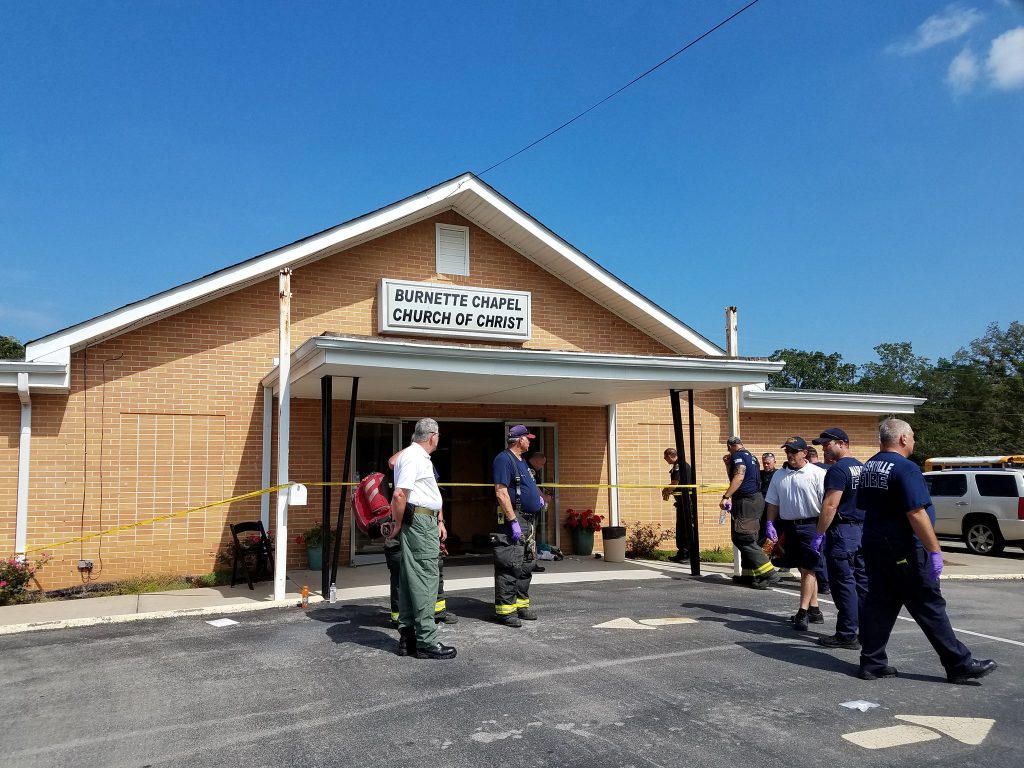
It seems that nearly every week we hear of another tragedy in which innocent lives have been taken in a senseless attack. Whether the attacker wields a gun, a knife, a bomb, a motor vehicle, or some other weapon, innocent people end up wounded or dead. Not so long ago most of these attacks occurred in other countries and in areas that have long been subject to such things. Today, however, it seems that people are not even safe in places of worship in the backwaters of our land. The pointless loss of life is heart-rending, and the physical and emotional scars borne by the survivors will linger for years.
We wonder why such terrible things happen, but we are shaken to the core when these things happen to good and innocent people. It is not uncommon to hear people ask, “Where was God when this happened?” Or to ask, “Why did God allow this to happen?” Others may even go so far as to blame God for the tragedy simply because He didn’t intervene to keep it from happening. None of these views reflects a proper understanding of God, or of how He deals with the world. Neither do they reflect an understanding of the presence and effects of sin in the world.
When we search the scriptures we nowhere find a promise from God that He will intervene in the day to day affairs of mankind. Nowhere do we find any indication that those who belong to Him will be miraculously spared from suffering, injury, or death. Instead, the scriptures warn us not to place stock in the world or the things in it, because this world is not our goal, and everything in it will one day pass away (1 Jn. 2:15-17). In fact, our Lord promised us that while we are in the world we will suffer tribulation (Jn. 16:33).
The bad things that happen to good people are not the work of God. Neither are they due to His negligence. They are the result of the presence of sin in the world, and the source of sin is Satan (cf. Gen. 3:1-7). From the time he deceived Eve into eating the forbidden fruit, the world has been cursed by sin. The perfect world that God created became marred and will remain so until the physical realm is destroyed when the Lord returns (2 Pet. 3:10-13). Until that time, all who live on the earth will suffer the effects of sin.
Those who are believers will not be deterred by this fact of life. This is because they understand that something far better awaits them on the other side of life. The Lord promised the apostles that He was going away to prepare a place for them and that He would return one day to bring them to that place (Jn. 14:1-3). All believers share in this promise, and therefore can cheerfully sing, “This world is not my home, I’m just a-passing through.”
Even so, our faith is sorely tested when bad things happen to good people, and we struggle with how to deal with it. When all is said and done, there is only one solution to this dilemma, and that is for each of us to make sure we are right with God at all times. If we obey the gospel and live faithfully for the Lord each day, we can say as Paul did, “For I consider that the sufferings of this present time are not worthy to be compared to the glory that is to be revealed to us” (Rom. 8:18). We also can look forward to the promise that in heaven God the Father will wipe away every tear and there will no longer be any death, mourning, or crying (Rev. 21:1-4).
Satan wants us to blame God for the bad things that happen, but his goal is to keep us out of our eternal reward. Let us not lose hope, though, but continue to trust in God, because heaven will certainly be worth it.
This program aired on KIUN 1400 AM in Pecos, TX on October 23, 2017.

King Solomon of Israel was the wisest man who ever lived. He received his wisdom as a gift from God early in his reign over Israel (1 Kgs. 3:3-14). His wisdom was so renowned that the Queen of Sheba heard of it and came to see for herself. After conferring with Solomon she exclaimed, “Behold, the half was not told me” (1 Kgs. 10:7).
Near the end of his life Solomon wrote a book that expressed the frustration and despair that had gripped him in his old age. That book is called Ecclesiastes, and it is one of the most enigmatic books in the Bible. The most striking theme of this book is the exclamation, “Vanity of vanities! All is vanity” (Ecc. 1:2). Even so, there is much of timeless value in the musings of “the preacher” (Ecc. 1:1).
One of the most well-known of Solomon’s reflections is his declaration that there is an appointed time for everything (Ecc. 3:1-8). He said, “There is an appointed time for everything. And there is a time for every event under heaven–a time to give birth and a time to die; a time to plant and a time to uproot what is planted. A time to kill and a time to heal; a time to tear down and a time to build up. A time to weep and a time to laugh; a time to mourn and a time to dance. A time to throw stones and a time to gather stones; a time to embrace and a time to shun embracing. A time to search and a time to give up as lost; a time to keep and a time to throw away. A time to tear apart and a time to sew together; a time to be silent and a time to speak. A time to love and a time to hate; a time for war and a time for peace.”
Solomon wrote Ecclesiastes about 900 years before the birth of Christ. His reflections on the timeliness of certain activities were rooted in the agrarian culture in which he lived. Nevertheless, the principle behind these reflections will be pertinent until the end of time. This is because there are, in fact, appropriate times for certain actions. For this reason we would do well to abide by the reflections of the wise man.
The fact that we can benefit from Solomon’s wisdom is evident all around us. The lack of decorum at solemn occasions is a case in point. The number of times that worship assemblies are interrupted by ringing cell phones is one example of this. Solomon wouldn’t take away our cell phones. He would simply remind us that there is a time for such calls, and worship isn’t that time.
The scourge of gossip is also evidence that we should heed Solomon’s wisdom. Too many people, including professed believers, seem incapable of hearing something without repeating it. We do not stop to consider the effects of passing along these juicy tidbits. Then we wonder why feelings are hurt and relationships are broken. Solomon would remind us that there is a time to speak and a time to be silent.
More and more people are engaging in sexual relations outside of marriage. We see the damage of this promiscuity in the number of unwed mothers, the children raised in single-parent homes, and the continuing scourge of sexually transmitted diseases. Solomon would not deny us this God-given pleasure, but he would remind us that the time for such activity is within the bounds of a monogamous marriage relationship.
Wisdom is a byproduct not only of age, but also of maturity. Many old people still lack wisdom because they have not trained their minds to discern good and evil (Heb. 5:14). The wise have spent long hours studying God’s word and then putting it into practice in their lives in order to become so. It’s time we all did the same.

I have been a die-hard Los Angeles Dodgers fan as long as I can remember. When they won their first World Series championship in Los Angeles in 1959, I burst out the door of our house shouting to the world that the Dodgers had won! I have lived and died with the Dodgers until this very day. There was a brief period in the early 1960s when the Dodgers were always near or at the top of the heap in the National League. They won three World Series championships from 1959 through 1965, including a memorable four-game sweep of the hated New York Yankees in 1963.
After a dry-spell of twenty-nine years, the boys in blue made it to the World Series this year. My expectations were high. And then the roof fell in on them. Lacking the consistency and killer instinct that carried them to the World Series, the Dodgers fell in seven games to the Houston Astros, who proved themselves to be the better team. Hats off to them.
I’m reflecting on this history and on these recent events because I’m unhappy with the results of the series. That’s always the case with the losing side in any contest. However, as I have mourned this latest disappointment from my beloved home-town team, and as I have tolerated the joyous celebration of Astros fans, I suddenly realized how out of kilter all this madness is.
I was deliriously happy when my team won games, and totally bummed when they lost. My spirits would rise and fall with each pitch, each home run, each out. The day after each game my mood could be measured by the final score the night before. I found myself frustrated and annoyed with things which might otherwise not concern me, and deep in my heart I realized it was all because of the outcome of a game.
As I reflect on this realization, I suspect that I have let sports have an undue influence in my life. In all fairness, I don’t think I’m as immersed in sports as some are, but comparison is always a tricky thing. Someone else’s excesses do not excuse my own. I am embarrassed and ashamed to have let this happen.
Upon further reflection, I cannot help but consider my devotion to sports in light of my profession of faith in Jesus Christ. Is it possible that my love of sports has robbed my Lord of the devotion I should give to Him? Has my worship been hindered because my mind has been distracted by the anticipation of an upcoming sporting event, or by the progress of that event? Am I more passionate about my favorite team than I am about the Lord’s church and His gospel? Do I allow the results of a sporting event to rob me of the joy of being in Christ, even if only momentarily? All of these are worthy questions, and each person must answer for himself or herself.
I’m not saying that it is sinful to enjoy sporting events, to attend games, or to passionately follow one’s favorite team. I’m simply asking if we haven’t allowed our priorities to get out of order. Whether my team ever wins the World Series pales in comparison to the sacrifice of my Lord on the cross. I should mourn the necessity of that sacrifice far more than the loss of a championship. I should rejoice more at the gift of eternal life through His blood than a victory on a sporting field.
Until I restore my priorities to what the Lord wants them to be, I’ll continue to fall far short of the prize of the upward call of God in Christ (Phil. 3:14). The Lord calls us to put God first in all we do (Mt. 6:33). This includes our passion for sports.
P.S. These reflections would still be true, and even more so, if my team had won.
God bless you!

This program aired on KIUN 1400 AM in Pecos, TX on October 20, 2017.
It has been said that the most difficult instrument to learn to play is second fiddle. This is because we all would prefer being in the number one position. The musician in the first chair not only plays the primary melody of the music, but may also be a featured soloist in some pieces. As fine as the musician in the first chair may be, however, it takes all the musicians, including the “second fiddles”, melding their talents together to create the harmony that makes a piece of music moving and memorable.
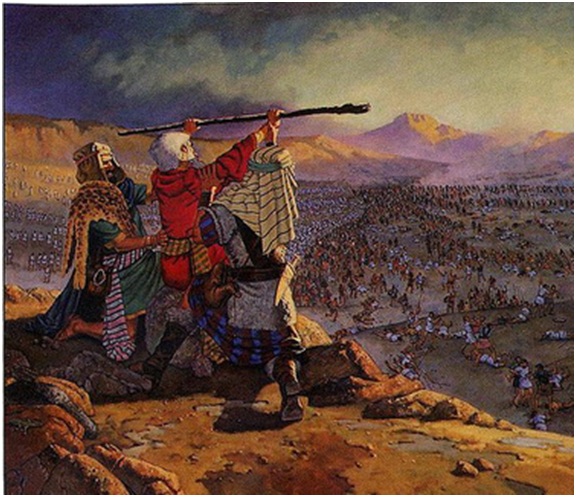
This is true in every field of endeavor, and is especially important in God’s kingdom. Throughout the record of scripture supporting players, “second fiddles” as it were, have been there to help the more well-known figures in scripture accomplish God’s will. One such person was a man named Hur. In Ex. 17:8-13 the scripture tells us that the people of Israel were confronted by the nation of Amalek. Moses sent Israel’s army out to meet them, under the leadership of Joshua.
As the battle raged, Moses stood on the top of a hill overlooking the battle site. As long as Moses held the staff of God aloft, Israel prevailed. Whenever he let the staff dip, Amalek would get the upper hand. In Ex. 17:12-13 the scripture says, “But Moses’ hands were heavy. Then they took a stone and put it under him, and he sat on it; and Aaron and Hur supported his hands, one on one side and one on the other. Thus his hands were steady until the sun set. So Joshua overwhelmed Amalek and his people with the edge of the sword.”
Joshua received credit for the victory, but it would not have happened without the help of Hur, who played “second fiddle” to perfection that day. The glory was on the battlefield, but Hur willingly performed essentially a menial task in order to facilitate Israel’s victory. We don’t know a lot about him, and after this incident Hur vanishes from the biblical text. He did what needed to be done, and then quietly went back to his business, whatever it may have been, without further recognition.
When we consider this incident in the light of the work of the church, we realize that we need sons of Hur today. The term “sons of” was often used in the Old Testament to describe followers or disciples, rather than actual offspring. Thus, when we say we need sons of Hur today we are saying we need men and women who will emulate this good man. We need men and women who will forego the spotlight in order to help accomplish God’s will in His church.
Obviously we need those have been trained and are qualified for public leadership in the church. We likewise need those who have been trained and are qualified to publicly proclaim the good news in order to save the lost and to edify the saints. However, we also need those who are willing to be the “second fiddles” in God’s spiritual orchestra. These humble servants, who are content to labor out of the spotlight, are essential to sustain and to encourage those who are in the forefront of the work.
A New Testament son of Hur was Barnabas, whose name means “encourager” (Acts 4:36). He started out serving quietly behind the scenes, but eventually became a well-known leader in the early church. The same can be true of each of us today. We just have to be content to begin our service in whatever capacity the church needs, whether we ever stand at center stage or not.
Human nature craves attention and recognition for what we do. Godly nature, however, recognizes the Lordship of Christ, and the value of humble service. Lord, grant us men and women who are “sons of Hur”.

This program aired on KIUN 1400 AM in Pecos, TX on October 18, 2017.
 ". . . let God be found true, though every man be found a liar."