This program aired on KIUN 1400 AM in Pecos, TX on June 24, 2016.
This program aired on KIUN 1400 AM in Pecos, TX on June 24, 2016.

Our Lord and Savior Jesus Christ is described in many ways in scripture. One of the most beautiful is found in Isa. 9:6, where the scripture says, “For a child will be born to us, a son will be given to us; and the government shall rest on His shoulders; and His name will be called Wonderful Counselor, Eternal Father, Prince of Peace.” Our Lord is also called, “The Lamb of God who takes away the sin of the world!” (Jn. 1:29). It would be difficult to choose a name that best describes the Lord because each name by which He is identified in scripture speaks to some aspect of His role in God’s eternal plan to save mankind.
The name that perhaps fits Him best after His resurrection and ascension is the one used by Paul to describe Him in 1 Tim. 6:15. Here Paul called the Lord, “the blessed and only Sovereign, the King of kings and Lord of lords.” The phrase “King of Kings and Lord of lords” is used only three times in the New Testament. Each time it is used exclusively in reference to Jesus. In Rev. 17:14 John used this phrase to describe the Lamb who overcomes the beast. He did so because the Lamb is “Lord of lords and King of kings”. Later, in Rev. 19:16, when John saw the Lord coming, riding on a white horse, he said that on His robe and on His thigh was written, “King of kings and Lord of lords”.
The power of this designation for our Lord is that He is the supreme authority in heaven and on earth. There may be kings and lords on earth, but our Lord is the King over all the kings. He is the Lord over all lords, whoever they may be, or however powerful they may be. This, of course, is a biblical truth to which our Lord Himself testified. When the Lord appeared to the apostles for one of the last times before His ascension to heaven, He told them, “All authority has been given to Me in heaven and on earth” (Mt. 28:18).
This truth coincides perfectly with the fact that Jesus Christ is now reigning over His kingdom. The climax of Peter’s sermon on the first Pentecost after the Lord’s resurrection was that God had raised Jesus from the dead and made Him “both Lord and Christ” (Acts 2:36). Paul also testified to this truth in Col. 1:13, where he told Christians in Colossae that God “rescued us from the domain of darkness, and transferred us to the kingdom of His beloved Son”. Paul also showed that Christ is now reigning in 1 Cor. 15:20-28. There he said that at the end of time the Lord would “hand over the kingdom to the God and Father”. The Lord, Paul said, must reign until all His enemies had been put under His feet. The last enemy to be subdued will be death, at which time God the Father will resume supreme authority.
The implication of this truth is simple and powerful. We now live in the reign of the King of kings and the Lord of lords. We live in the time when Jesus Christ is the supreme authority in heaven and on earth. Only God the Father is not subject to Him (1 Cor. 15:28). As a result, we owe our allegiance and obedience to Jesus Christ and to no other.
Because Jesus is King of kings and Lord of lords, we must respond to Him in a way that is appropriate to what He is. He is not the baby in the manger. He is not the passive, almost feminine figure that so many portray Him as being. He is “the blessed and only Sovereign, the King of kings and Lord of lords”. Therefore we must bow the knee before Him, and make confession with our lips and with our lives, that He is THE Lord. We must do so because He has the name that is above every name (Phi. 2:9-11), and one day we will stand before Him in judgment (2 Cor. 5:10).

This program aired on KIUN 1400 AM in Pecos, TX on July 8, 2016.
Recent events have drawn attention to one of the baser elements of human nature. From the halls of Congress to the Oval Office to State Houses and the streets of our cities there seems to be an unending stream of vitriol that is fanning the flames of hatred in our country. This harsh and generally unfair criticism has stirred up the emotions of so many people that reasonable discussion of the legitimate issues facing us is nearly impossible. In response to these tensions many well-meaning people are simply calling for an end to the hate. This is certainly a worthy goal, and greatly to be desired, but it is clear that most people have no idea how to achieve it.
On the one hand, many professed believers suggest that we can only end the hate if we begin to love our neighbors as ourselves, just as the Lord commanded. In Mt. 22:37-40, in response to a question from a lawyer as to which commandment was the greatest, the Lord said that the foremost commandment is to love the Lord our God with all our heart, soul, and mind. The second, He said, is to love our neighbor as ourselves. Certainly if all of us obeyed these two commands all the hatred would end.
On the other hand, there is another aspect of biblical teaching that applies to this discussion. It is something that in large measure has been overlooked, and which many people might dismiss without a second thought. This biblical truth is that there are some things that we must hate. The reason we must hate them is because God Himself hates them.
In Prov. 6:16-19 Solomon wrote, “There are six things which the Lord hates, yes, seven which are an abomination to Him: haughty eyes, a lying tongue, and hands that shed innocent blood, a heart that devises wicked plans, feet that run rapidly to evil, a false witness who utters lies, and one who spreads strife among brothers.” These seven sins are at the root of virtually every problem we face as individuals and as a nation. The magnitude of these sins is seen in the Lord’s response to them. Solomon says that God hates them, and they are an abomination to Him. This means these are things we cannot tolerate if we want to be right with Him.
We generally recoil from the idea of hatred, but in the context of Solomon’s wisdom, surely we can see that there are times when it is appropriate, and necessary, to hate. The consequences of not doing so are evident in the scriptures. Part of the reason for the condemnation of Judah was because their spiritual leaders were prophesying falsely (sinning) and the people loved it instead of opposing it (Jer. 5:31). In a similar way, we have tacitly given our approval to the things God hates by our silence about them. These things have been on display in our land for far too long without any serious challenge from godly people. As a result, we are reaping the fruit of our silence.
We must understand, however, that while it is appropriate to hate certain things, hating these sins does not mean we hate the ones who commit them. God the Father hates these things, but He so loved the ones committing them that He sent His only Son to die on the cross in order to forgive their sins. This is the model that we must follow. We must condemn sin in every instance that we encounter it. But we must do so with the ultimate goal of saving the sinner by means of the blood of Jesus Christ. This is why we call people to repent of sin in whatever form it may be manifested. This is the highest form of loving one’s neighbor as oneself, and it is the only way the sinner can be saved.
Clearly, if more of us hated the things that God hates, we would no longer tolerate the sins that have created the evil environment in which we live. If we all hated the things God hates, the other kind of hatred would absolutely cease.

This program aired on KIUN 1400 AM in Pecos, TX on June 29, 2016

A Pew Research Center survey in 2014 found that 72% of Americans believe in heaven. The same survey found that only 58% of Americans believe in hell. When surveyed according to denominational affiliation, the percentages were significantly higher among evangelicals and mainstream Protestants. The highest percentages were registered by Mormons. Surprisingly, only about 40% of Jews surveyed said they believe in heaven, and only about 20% said they believe in hell.
It is not surprising that such a large majority of Americans believe in heaven. From the things they say it seems that nearly everyone expects to go there when they die. It is surprising, however, that such a large number of people choose not to believe in a corresponding place of eternal punishment. Even more surprising are the concepts that some have concerning hell. Some act as though hell is just an extension of life on earth, and if they go there they expect to just “tough it out.” Others make jokes about it as though it will be little more than an inconvenience. In an old Twilight Zone episode hell was portrayed as a place where a petty criminal was driven crazy because he could steal with impunity and have everything his heart desired without any threat of being caught or prosecuted. Of course the truth of scripture refutes such views.
Most people would be surprised to discover that our Lord Jesus spoke more about hell than anyone else in the New Testament record. Of the twelve times the word “hell” is used in the New Testament, Jesus spoke it eleven times. His brother James used it the other time. In some of our English translations the word appears one more time, in 2 Pet. 2:4. However the Greek word in this verse is tartaros, which is actually the place where the unrighteous dead await final judgment.
When the Lord spoke about hell, He conveyed several truths about this place. First, He confirmed that it does indeed exist. He warned His disciples that they should put out their eye, or cut off their hand rather than to enter hell with their body intact (Mt. 5:29-30; 18:9; Mk. 9:45, 47). Second, He warned that some will indeed be sent there by God the Father. He told His disciples not to fear those who could kill the body, but rather they should fear the one who could send both body and soul into hell (Mt. 10:28; Lk. 12:5). Third, He depicted hell as a place of fire. In Mt. 18:9 He warned about being cast into “the fiery hell”.
In addition to these warnings, the Lord taught the reality of hell when he spoke of the judgment that will occur when He returns. In Mt. 25:31-46 the Lord said He will divide the sheep from the goats at that time. The sheep will be welcomed into the heavenly kingdom, but the goats will be turned away. They will be sent “into the eternal fire which has been prepared for the devil and his angels” (Mt. 25:41). In the parable of the talents, the Lord referred to the place of eternal punishment as “the outer darkness; in that place there will be weeping and gnashing of teeth” (Mt. 25:30).
When the Lord gave the Revelation to John on the island of Patmos, He showed him a vision of what final judgment will be. In Rev. 20:11-15 John wrote that all the dead will be judged by what is written in the books. Those whose names are found in the book of life will enter heaven. The rest will be cast into the lake of fire, which is the second death (vs. 14-15). In the lake of fire they will be tormented day and night forever and ever, along with the devil himself (Rev. 20:10).
Hell is a real place. It, like heaven, is a prepared place (Mt. 25:41). It is prepared for those who chose to disobey God in life. It is a place of unspeakable anguish from which there is no escape, and in which there is no relief. Knowing the truth about hell, why would anyone choose to live in such a way that they will go there at judgment? Let us therefore resolve to always obey God’s will so we will not go to that horrible place.
This program aired on KIUN 1400 AM in Pecos, TX on July 4, 2016.
On July 4, 1776 our forefathers published a document that they called a Declaration of Independence. It represented the collective dreams and aspirations of a loosely confederated group of English colonies stretched along the eastern seaboard of North America. The signatories of this document could not have envisioned how great this new nation would one day become. In fact, at the time it was signed there was considerable doubt if this new nation would indeed become independent of Great Britain.
Independence is an idea that is almost revered in our country. As a child grows up he is taught to be independent, that is, to learn how to subsist on his own and to care for himself in every aspect of life. Those who refuse to do so are typically looked down upon with scorn for their refusal. Those who are physically or mentally unable to be independent are looked upon with genuine pity. Generally speaking, we want to be independent, especially with regard to the decisions we make about our lives.
This spirit of independence pervades virtually every area of our thinking, including our spiritual pursuits. We sometimes hear professed believers refer to themselves as “free men and women in Christ.” Typically, this declaration is made as a justification for proposed changes to the faith and practice of the church. Such men and women use this statement to declare their independence from spiritual leaders who do not share their views on some matter of faith. Interestingly, the phrase “free men and women in Christ” appears nowhere in scripture. This omission is significant.
The closest reference to such an idea is found in Gal. 5:1, where Paul said, “It was for freedom that Christ set us free”. If this is where the idea of “free men and women in Christ” originates, it is interesting to see that in the context Paul was not talking about the kind of freedom that many assert today. He was instead speaking of freedom from the slavery of the Mosaic Law. The Christians of Galatia were not subject to that law, and no one could make them subject to it without severing them from Christ (Gal. 5:4).
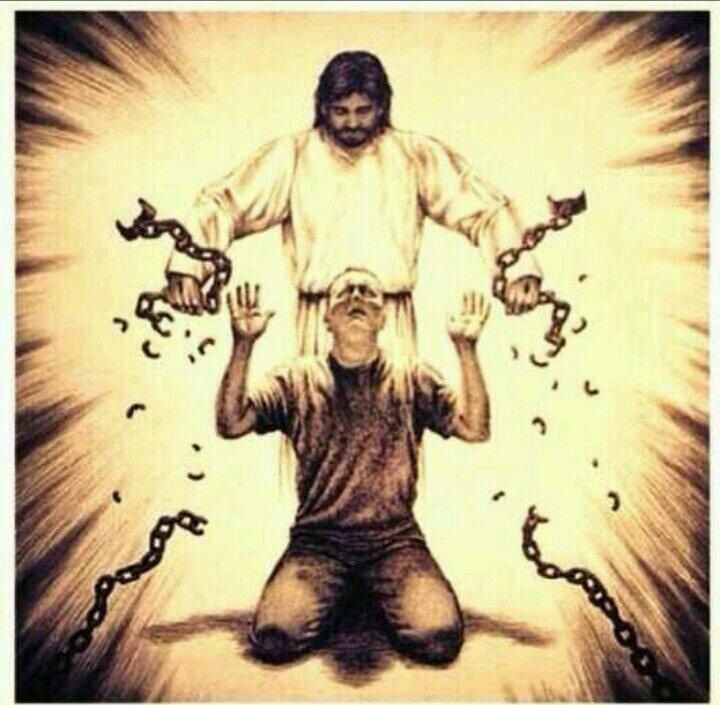
When we consider the biblical concept of freedom in Christ, we discover that it is freedom from slavery to sin. Paul spoke of this in Rom. 6:16-18. He said that we are slaves of the one we obey, either of sin resulting in death, or of obedience resulting in righteousness. He also said that when the Romans had become obedient from the heart to the gospel, they then became freed from slavery to sin. They did not, however, become free and independent of any moral or spiritual constraints.
In v. 22 Paul said, “But now having been freed from sin and enslaved to God, you derive your benefit, resulting in sanctification, and the outcome, eternal life.” Here is the fundamental truth of our relationship to God through Jesus Christ. All Christians are slaves God. They are also slaves of Christ (Eph. 6:6) and slaves of righteousness (Rom. 6:18). They are, therefore, bound to the dictates of their Lord and Master, Jesus Christ. The bottom line is that we are not “free men and women in Christ” as some use this phrase today. Instead, our freedom is a very specific thing.
Those who are Christians have been delivered from the domain of darkness and transferred into the kingdom of God’s beloved Son (Col. 1:13). We have been set free from the power of the evil one. Our independence day is the day we obeyed the gospel. This is the day we were set free from the consequences of our sins. This is the independence that we should celebrate and honor each day, even as we daily bow the knee as slaves to the Lord of lords and King of kings.

This program aired on KIUN 1400 AM in Pecos, TX on June 17, 2016.

When a round object is dropped into a pool of water, a fascinating effect occurs. As the water which is displaced by the object returns to its former place it pushes mini waves across the surface of the water. These waves spread out from the point of impact in ever-growing circles to the farthest reaches of that body of water. We call these waves ripples, and we call the cumulative process the ripple effect.
One of the realities of a physical ripple effect is that we cannot always tell what the full effect of those ripples will be. In a large body of water the ripples may disappear from sight before they reach the opposite shoreline. The tsunamis of 2004 are the most horrible example of this fact. The earthquake which spawned these tsunamis occurred near the island of Sumatra, but the tsunamis traveled nearly 3,000 miles to the west, bringing death and destruction with them all the way.
This same truth is evident in spiritual matters. The ripple effect caused by certain spiritual decisions generally spreads far beyond the ability of anyone to foresee. This was the case when Jeroboam the son of Nebat erected idols in Dan and in Bethel to keep the northern tribes from worshiping God at the temple in Jerusalem (1 Kgs. 12:25-33). The ripple effect of this action was that the nation of Israel became more and more wicked in each generation. Finally, after nearly 200 years of this rebellion, God brought His wrath upon Israel in the form of the Assyrians, who carried the ten tribes into captivity.
Although Jeroboam did not live to see the destruction of his nation, the guilt for what happened to Israel is laid squarely upon him. In more than a dozen instances in the history of Israel, the wicked kings of that nation were said to have continued in the sins of Jeroboam the son of Nebat (2 Kgs. 3:3, et al). The ripple effect of Jeroboam’s sin was that it condemned future generations of his people because he led them away from God.
This is a lesson that should make us stop and think about the actions we take each day. We may think that what we are contemplating is just a small thing. We may think it will only affect ourselves, but we would be wrong to think so. It may seem a small thing to choose to be absent from the assembly when we could otherwise be present, but can we foresee the ripples that action will create? It may seem a personal thing to indulge in some questionable activity, but can we foresee what the end result of that action will be? The truth is that we cannot foresee these things. We cannot tell what effects our sinful actions may cause.
The same can be said for the good we may do. When the Lord commissioned His apostles to take the gospel to the whole world, He said it would start in Jerusalem, spread through Judea and Samaria, and finally reach the remotest parts of the earth (Acts 1:8). The ripple effect of the gospel being dropped into Jerusalem on the first Pentecost after the Lord’s resurrection is still being felt today as Christians preach the good news all over the world.
Therefore, we should give careful consideration to every decision we make. We should take the time to consider what the ripple effect will be, and what the spiritual outcome may be for ourselves and for others who look to us for an example. Let us not be like Jeroboam the son of Nebat, whose ripple effect caused the destruction of a nation. Instead, let us always make wise and godly decisions in our lives so the ripples our actions create will be ripples of good that will lead others to eternal life.
 ". . . let God be found true, though every man be found a liar."