
Many years ago, I came across a short poem that every father should take to heart. It is entitled, “A Little Fellow Follows Me.” The words of the poem are:
A careful man I want to be, a little fellow follows me.
I do not dare to go astray, for fear he’ll go the selfsame way.
I cannot once escape his eyes, whate’er he sees me do, he tries.
Like me he says he’s going to be, the little fellow who follows me.
He thinks that I am good and fine, believes in every word of mine.
The base in me he must not see, the little fellow who follows me.
I must remember as I go, through summer’s sun and winter’s snow,
I am building for the years that be, for that little chap who follows me.
The unknown author of these words understood and appreciated the nature of how we teach our children, especially in the case of fathers and sons. His words should strike deep within our hearts so we will consider the things we do each day. While we may not give a second thought to many of the things we do, our children and grandchildren are watching and taking note of it all. We may tell them not to do as we do, but deep down inside we know that our words are useless in this regard. Our children idolize us as fathers, and even if they do not like certain aspects of our character, they will very likely copy them as they grow to maturity. This thought should sober us all.
As fathers we have an awesome responsibility, even if our only interest were in worldly matters. It takes wisdom and tenacity to raise children to be good citizens and hard-working contributors to the good of society. If it were easy, there would be no slackers in the world. But the responsibility, and the challenge, is even greater when we take a spiritual perspective on life. When we think spiritually, we are not just preparing our children for life. We are, in fact, preparing them for eternity.
What we need today are more fathers like the patriarch Job. Of all the earthly fathers mentioned in scripture, he is perhaps the greatest, and the reasons are pretty clear. In Job 1:1 the scripture says that Job was “blameless and upright, fearing God and turning away from evil”. In v. 8 God Himself testified to this truth. So as a father, Job gave his children the best possible example of what it means to be a godly man.
Secondly, Job was conscientious about his children’s conduct, and led them in proper devotion to God. In Job 1:5 the scripture says that after Job’s children had completed their days of feasting, he would offer burnt offerings for them before God, in case one of them had sinned against God in some way. The scripture says, “Thus Job did continually.” So not only did Job’s children see the godly conduct of their father, they also saw, and were led by him, in continual expressions of worship to God.
Third, when Job was mercilessly attacked by Satan, and suffered many afflictions by his hand, the scripture says that in all of this, “Job did not sin nor did he blame God” (Job 1:22). Job’s first children did not live to see this example, but his later children were surely aware of it. In these ways Job presented the best possible human example of what a father should be.
Let all of us who are fathers do our best each day to be like the patriarch Job. Let us strive to be blameless and upright before God, so our children will see the best possible example in our lives. Let us also continually lead our children in devotion to God so they will see what it means to properly love and honor Him.

This program aired on KIUN 1400 AM in Pecos, TX on June 10, 2016.
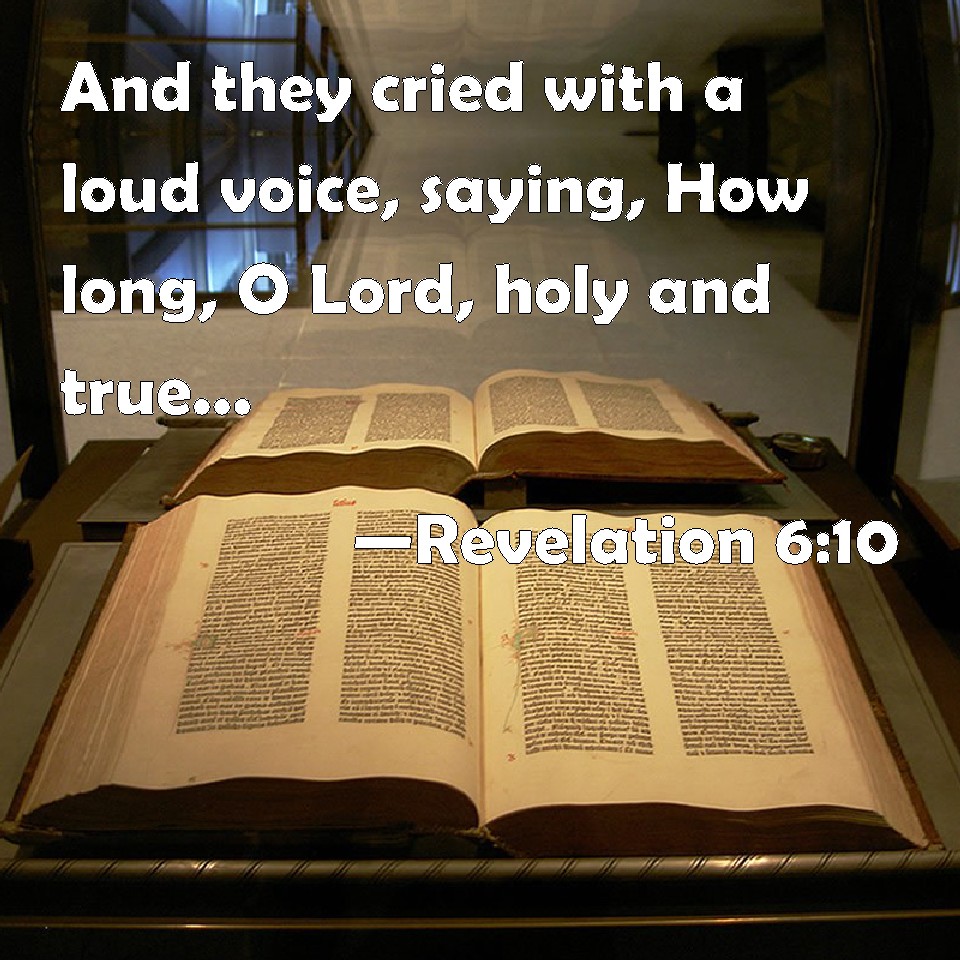
In the book of Revelation when the Lamb opened the fifth seal, John saw the souls of the martyrs underneath the altar in the throne room of God. In Rev. 6:10 the scripture says, “And they cried out with a loud voice, saying, ‘How long, O Lord, holy and true, will You refrain from judging and avenging our blood on those who dwell on the earth?'” This plea for God to execute His judgment on the wicked may surprise some of us. It may even offend some. God, however, did not condemn this plea. Instead, He comforted these martyrs and told them that they must rest a while longer until the number of martyrs would be completed (v. 11). The implication is that God will at some point do as these martyrs requested.
The sentiment of the martyrs in Rev. 6 was primarily the result of the persecution Christians were then suffering at the hands of the Roman Empire. For many generations, especially here in the United States, the idea of persecution and a resultant plea for God to execute judgment on the wicked were only theoretical exercises. We have lived in relative peace and security as believers because our system of government recognized the value of the Christian religion and generally avoided any intrusion into the exercise of our faith. That time appears to be over. Not only are Christians under assault from the generally recognized forces of evil, but we are now also beginning to see overt persecution from our government. As these things accelerate, we worry about what will ultimately befall us.
Some Christians remain aloof and seemingly unconcerned about the current state of affairs in our country. There is no adequate explanation for such blindness. As surprising as this is, however, there are other professed believers who seem to be aiding and abetting the enemy in this struggle. They do so by accepting the notion that certain kinds of behavior no longer fall under condemnation as sin. They do so also by supporting and endorsing candidates for public office whose stated agendas are contrary to biblical truth. They seem oblivious to the fact that they are by their actions letting the wolf into the sheepfold.
On the other hand, faithful Christians recognize the dangers that we face today from ungodly influences. Like the martyrs in Rev. 6, they cry out, “How long, O Lord, holy and true, will You refrain from judging and avenging our blood on those who dwell on the earth?” Faithful Christians wonder how long God will allow the world to further debase itself. When they view the situation in the world today, they can see that we must be as close as any previous generation has been to the conditions that prompted the great flood of Noah’s day. In Gen. 6:5 the scripture says that at that time every intent of the thoughts of mankind were only evil continually. This certainly seems to be the case today.
The sentiment of Rev. 6 is understandable. Christians are salt and light in the world (Mt. 5:13-16). Their desire, like that of their Father in heaven, is that all people would be saved and come to the knowledge of the truth (1 Tim. 2:4). They want only to live in peace and to influence as many as possible for good. The actions of the wicked in every segment of society make these goals more difficult to attain, and so we wonder how long the Lord will wait to make things right.
Even so, Christians have a hope that no others possess. We are promised that the suffering of life will not compare to the glory of heaven (Rom. 8:18). We are promised that when we enter heaven God will wipe away all tears (Rev. 21:4). We are also promised that the wicked will not go unpunished (2 Th. 1:7-8). Therefore, like the martyrs in Rev. 6, we must remain faithful and wait a while longer for God to make things right. And we know that He will.

This program aired on KIUN 1400 AM in Pecos, TX on May 30, 2016.

In Lk. 18:1-8 the Lord told a parable “to show that at all times they ought to pray and not to lose heart” (v. 1). The crux of the parable is that a widow persisted in bringing her petition before the judge in her city. This judge, the Lord said, “did not fear God and did not respect man” (v. 2). Initially the judge was unwilling to act on behalf of the widow, but she continued to come before him anyway. Finally the judge gave in to her and settled her case in her favor.
In vs. 6-8 Luke recorded the point of this parable. He wrote, “And the Lord said, ‘Hear what the unrighteous judge said; now will not God bring about justice for His elect who cry to Him day and night, and will He delay long over them? I tell you that He will bring abut justice for them quickly. However, when the Son of Man comes, will He find faith on the earth?'”
The lesson for disciples to understand from this parable is that God does not have to be nagged in order to act on behalf of His people. He will, in fact, bring about justice for His people, and He will not delay His response to their prayers. Our God is not like the unrighteous judge. He is already inclined in our favor because we have been purchased by the blood of His one and only Son. His desire is to respond favorably to our petitions, so long as those requests are in accordance with His revealed will.
This truth should be of great comfort to Christians. As we struggle with the many challenges of life, we are not left without recourse by our God. He stands ready to act on our behalf, if we will only bring our needs before Him in prayer. Unlike the gods of the pagans, or the unrighteous judge in the parable, our God does not have to be goaded into answering our prayers. All we have to do is to ask in faith, nothing doubting. This is what James said in Jas. 1:5-8. In context James was speaking about asking for wisdom from God, but the principle still stands. If we expect God to answer our prayers, we must ask in faith.
This is a principle that the Lord alluded to in the parable in Lk. 18. In v. 8 as the Lord declared that God would bring justice quickly for His people, He asked, “However, when the Son of Man comes, will He find faith on the earth?” His question points us squarely to the matter of faith. As we make our requests to the Lord in prayer, we must believe that He will answer our prayers and grant them. For the Lord to wonder if He would find faith on the earth at His return suggests that we need to give this more attention than perhaps we have previously done.
There is another aspect of this parable that is interesting, and which bears upon the question of prayer. In v. 7 the Lord said that God would bring justice for His elect “who cry to Him day and night”. This phrase suggests that the prayers of the elect will be offered continually until an answer is received from the Lord. While we do not have to nag God in order to get a response from Him, it is clear that He expects us to repeatedly offer our petitions to Him. This repetitive asking demonstrates our dependence upon Him, and also indicates our faith in Him. Too often we pray about something once or twice and give up on it. Then we wonder why our request was denied.
If we truly have faith in God, we will pray continually until our petitions are answered. We will pray in confidence that God will answer in the way that is best for us, and in confidence that He will not delay long over our requests.

This program aired on KIUN 1400 AM in Pecos, TX on May 25, 2016.
At the end of the book of Revelation, the Lord said, “Yes, I am coming quickly,” to which John replied, “Amen. Come, Lord Jesus” (Rev. 22:20). Anyone who has read the scriptures understands that the Lord may return at any time. Most of us, however, tend to overlook, or ignore, His statement that He is coming quickly. Fewer still of us, it seems, think about, or pray, as John did, “Amen. Come, Lord Jesus!”
Why is this the case? There may be many reasons why we do not utter these words in prayer, not all of which are motivated by unholy concerns. Obviously the wicked are not anxious for the Lord to return, but even godly people, being human, don’t know what the other side of life is like. Therefore, we’re not generally anxious to get there. We know the world, and we know life on earth. So we want to cling to it as long as possible, whether it is because of our fear of death, or of our uncertainty about the Lord’s return.
This reality aside, though, there are at least three reasons for us to pray every day for the Lord to come. In the first place, when the Lord comes again, He will deal out retribution to the wicked (2 Th. 1:7-8). One of the most difficult aspects of life on earth is the fact that justice is not always meted out on the wicked. In too many cases, it seems as though the bad guys are winning, and this makes life much harder. However, when the Lord returns, justice will be rendered to the wicked. This is something many psalmists prayed for in ancient times, and it will happen when the Lord returns.
Secondly, when the Lord comes the godly will receive relief from all the suffering that they have endured here on earth. 2 Th. 1:7 promises that the Lord “will give relief to you who are afflicted,” even as He deals out retribution to the wicked. We are also promised that when the godly are taken into heaven, the Father Himself “will wipe every tear from their eyes; and there will no longer be any death; there will no longer be any mourning, or crying, or pain; the first things have passed away” (Rev. 21:4). This is also an important reason for us to pray for the Lord to come quickly.
Third, when the Lord comes the righteous will be taken into the heavenly realm, where the Lord has been preparing a place for them to reside for eternity. This is the promise that Jesus made to His disciples on the night of His betrayal (Jn. 14:1-3), and it is the promise that each and every Christian has from Him. In 1 Pet. 1:3-4 Peter blessed the God and Father of our Lord Jesus Christ, because we have been born again in order to receive an inheritance that is “imperishable and undefiled and will not fade away, reserved in heaven for you.” For this reason we should pray for the Lord to come, so we may quickly reach our final reward.
We live in troubling times. There is so much evil in the world. There is so much opposition to our Lord and to His word. In so many instances, it appears that the wicked are winning, and we may wonder about the promises of God in which we have placed our hope. The scriptures declare that God is faithful, who will not allow us to be tempted beyond what we are able to bear, but will provide a way of escape so we may endure it (1 Cor. 10:13). “He is faithful and righteous to forgive us our sins and to cleanse us from all unrighteousness” (1 Jn. 1:9), and His desire is for all men to be saved and to come to the knowledge of the truth (1 Tim. 2:4).
Our faithful Father in heaven hears our prayers and responds to our needs in every way, in accordance with His divine will. If we pray for our Lord to come, God the Father will respond to that prayer as well. Therefore, let us earnestly pray, “Come, Lord Jesus!”

This program aired on KIUN 1400 AM in Pecos, TX on May 18, 2016
There is no question that Peter was one of the foremost among the apostles. When the gospel was proclaimed on the first Pentecost after the Lord’s resurrection, Peter was the chief spokesman. His words are the ones we read in the record of this event in Acts 2. He was also the first to proclaim the gospel to the Gentiles. In addition to this, he is the primary character in the first half of the book of Acts. This prominence in the record of the early church as led some to give Peter special status in the history of the church.
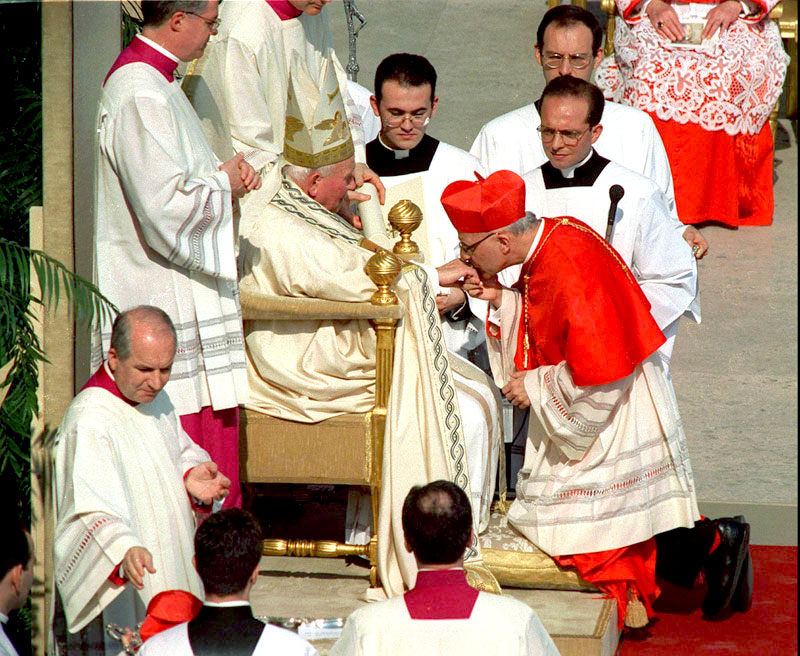
The leader of a large religious body today believes himself to be the direct descendant of Peter as the head of the church on earth. This man is accorded special honor and reverence by members of this body, and is addressed in terms that signify his exalted status. It is customary to see even high-ranking officials of this church bowing before him and kissing his ring of office. He is called “The Vicar of Christ”, and is considered to be above all others in this church.
While it is claimed that Peter is the origination point for this office, Peter’s life belies that claim. In Acts 10:25-26 when Peter entered the home of the Gentile Cornelius, the scripture says, “When Peter entered, Cornelius met him, and fell at his feet and worshiped him. But Peter raised him up, saying, ‘Stand up; I too am just a man.'” The last words in this statement are powerful. Peter refused to accept Cornelius’ worship and declared that he was just a man. In other words, it was not appropriate for Cornelius to worship him, or for Peter to accept such worship.
This, of course, is a fundamental truth of scripture. We are not to worship any man, no matter how great, or important, or dear to us he may be. Jesus declared this truth during His temptation by Satan. When Satan offered to give the Lord all the kingdoms of the world if He would fall down and worship him, the Lord replied, “Go, Satan! For it is written, ‘You shall worship the Lord your God, and serve Him only.'”
This same truth was declared when John received the revelation from the Lord on the island of Patmos. Twice during this revelation an angel spoke directly to John. Both times John fell down at the angel’s feet to worship him, and both times the angel told John not to do that. In both cases the angel said, “Worship God” (Rev. 19:9-10; 22:8-9). Angels are important beings as special messengers of God. But it is clear that not even they are to be worshiped.
If angelic beings will not accept worship, then how much less so should humans? Peter was indeed one of the greatest of the apostles, but by his own admission he was just a man. Who among us today can claim to be anything more? In point of fact, we cannot. Peter could not accept worship, no matter how innocently or sincerely it was offered. This is something reserved only for deity.
The veneration that Roman Catholics offer to the Pope is perhaps the most extreme example of humans accepting worship, but it is not the only example. Many religious people accord special status to their preachers, addressing them as “reverend”. While they may suggest that this is a term of respect rather than of worship, the fact is that this word is reserved in scripture only for God. In Psa. 111:9 in the King James Version, the scripture says of God, “Holy and reverend is His name.” No apostle, not even Peter, used such a title, or accepted the use of such a title to refer to himself. They were just men. They were servants of God, and were unworthy of such veneration. So it must be still today. Even the greatest among us is just a man. Therefore, worship God and serve Him only.
 ". . . let God be found true, though every man be found a liar."