
This program aired on KIUN 1400 AM in Pecos, TX on April 8, 2016.
This program aired on KIUN 1400 AM in Pecos, TX on April 8, 2016.

From time to time Christians may be prompted by events in the nation to question what their obligations are to civil government. Some may be drawn to the libertarian point of view that sees government as essentially evil and advocates virtually no governmental control in our lives. Others, leaning more toward the socialist perspective, may support the idea of expansive governmental intervention in the lives of its citizens. At tax time, however, nearly everyone tends to wish, if not openly advocate, that government would just go away and leave us alone. It is interesting that this tension exists in a country such as ours, for we have been, until recently, blessed with a government that was generally supportive of Christian values and that was not an impediment to the pursuit of faith in Jesus Christ. Few in the world’s history have lived in such a political environment, certainly not the first Christians, who lived under the thumb of the Roman Empire.
During the Lord’s ministry on the earth, the Jews used every possible means to have something with which they could accuse Him. In one attempt, they asked Him if it were lawful to pay the poll-tax (Mt. 22:15-21). His answer, they assumed, would with put Jesus at odds with the Roman government, or at odds with the Jewish people. His response, however, did neither of these things. Instead, it put His accusers to flight.
In Mt. 22:19 the Lord asked the Jews to show Him the coin used to pay the poll-tax. In v. 20 He asked whose image was on the coin. The answer, of course, was Caesar’s image. It was at this point that the Lord said, “Then render to Caesar the things that are Caesar’s; and to God the things that are God’s” (vs. 21).
This simple, yet profound, answer is still our guide today. As the Lord’s people, we are bound by our obedience to the gospel to follow every command of the Lord (Mt. 28:20). Therefore, we too are to render to Caesar (our government) the things that belong to Caesar. In context this means that we must pay our taxes in accordance with the laws of our land. We don’t have to be happy about it, but we must do it because our Lord requires it of us. In application this means the we must always conduct ourselves in accordance with the laws of society, as good citizens ought to do. Christians should never be law-breakers, but rather should be an example of how godly people live.
There is, however, more to our obligation. The Lord also said to render “to God the things that are God’s.” The things that are God’s are our lives spent in obedience to His word. This most certainly refers to our souls, which His Son purchased with His blood (1 Cor. 6:19-20; Acts 20:28), but it also includes our earthly possessions, which His Son promised to provide to us if we seek first His kingdom and His righteousness (Mt. 6:33). In addition to this, rendering to God the things that are His involves the focus of our minds upon His word so we will handle it accurately (2 Tim. 2:15), and so we will share it with others so they will have the opportunity to be saved (Mt. 28:19-20).
Understood in all of this, of course, is that when Caesar’s things contradict God’s things, our first obligation is to God. Human governments will always tend toward things that violate God’s will. We are seeing more and more of this very thing in our current government. Nevertheless, God’s word instructs us that “we must obey God rather than men” (Acts 5:29). We are, after all, citizens of God’s kingdom first (Phil. 3:20). Then we are citizens of our earthly nation. If we keep this priority straight, then we will be good citizens of both realms.

This program aired on KIUN 1400 AM in Pecos, TX on March 28, 2016.

At the end of the Lord’s message to the church in Ephesus, He said, “He who has an ear, let him hear what the Spirit says to the churches. To him who overcomes I will grant to eat of the tree of life which is in the Paradise of God” (Rev. 2:7). This exhortation was the incentive the Lord offered this church if they would repent as He instructed them in v. 5. In the context, of course, the Lord was referring to their eternal reward in heaven. His characterization of it as the “Paradise of God” is an interesting imagery.
The word “paradise” originated in the ancient Persian language. It was incorporated into the Hebrew, Aramaic, and Greek languages, and from these into modern English. The term originally referred to an enclosure and came to mean a park surrounded by a wall. Such an enclosure was an especially appealing site because it typically contained lush, beautiful plants and trees. Being enclosed by a wall separated it from the mundane and less beautiful landscape beyond the wall, and also protected it from many predators. In time, the term “paradise” came to refer to the garden of a king, which would be far more beautiful than any other park.
When Jewish scholars translated the Hebrew Scriptures into Greek, they used the Greek word paradeisos to refer to the Garden of Eden. They also used this term several times in Isaiah and Ezekiel to refer to a garden of God. Thus in Jewish thinking this term began to take on a spiritual meaning. One of the ways in which this was so is that “paradise” became the preferred designation for the resting place of the righteous dead. The righteous, then, could look forward to a beautiful resting place where all the pain of life would be forgotten. The Lord Himself used this word in Lk. 23:43 when He told the thief on the cross that he would be with Him in Paradise.
The imagery of the final resting place of the righteous dead as paradise provides a strong incentive for us. The Lord’s story about the rich man and Lazarus (Lk. 16:19-31) shows us the stark contrast between the waiting place of the wicked dead, versus that of the righteous dead. In this story the Lord said Lazarus went to “Abraham’s bosom”, while the rich man went into “torment”. Although He did not use the word in this story, there is no question that Lazarus was in paradise.
As wonderful as this imagery is, however, the Paradise of God, as the Lord used it in Rev. 2:7, is even more wonderful. The Paradise of God in this sense is the place that is prepared for the righteous in heaven. In Jn. 14:1-4 the Lord told the apostles that He was going to prepare a place for them in His Father’s house. In that place God the Father will dwell with His people, and He will wipe away every tear from their eyes. In that place there will no longer be any death or mourning or crying or pain (Rev. 21:3-4). The righteous will dwell there in peace and security because no evil person or thing will ever enter there (Rev. 21:27). In that place the redeemed of earth will have free access to the tree of life and to the river of the water of life, which flows from the throne of God (Rev. 22:1-2). There is simply no other king’s garden to compare with the Paradise of God.
The contrast to the Paradise of God is the Lake of Fire, into which the unrighteous will be thrown after judgment (Rev. 20:11-15). Therefore, it behooves us to make the right choices in life so that our names will be found written in the Lamb’s book of life at judgment. There is a paradise awaiting all those who obey the gospel and live faithfully for the Lord. It is the ultimate paradise. It is the Paradise of God.

This program aired on KIUN 1400 AM in Pecos, TX on March 25, 2016.
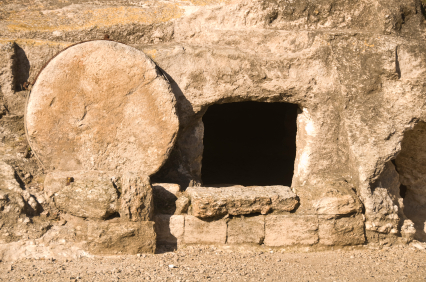
When the Lord appeared to John on the island of Patmos to deliver His revelation of the things that were soon to take place, He identified Himself in a powerful way. In Rev. 1:17-18 Jesus said, “Do not be afraid; I am the first and the last, and the living One; and I was dead, and behold, I am alive forevermore, and I have the keys of death and of Hades.” In the midst of this brief statement is the bedrock of Christian faith. Our Lord was dead, but now is alive forever more! This essential truth sets Christianity apart from every other religious belief. Our founder is alive and will never die again!
This was the argument that Paul made to validate our hope of eternal life. In Rom. 6:8-11 he said, “Now if we have died with Christ, we believe that we shall also live with Him, knowing that Christ, having been raised from the dead, is never to die again; death no longer is master over Him. For the death that He died, He died to sin once for all; but the life that He lives, He lives to God. Even so consider yourselves to be dead to sin, but alive to God in Christ Jesus.”
When Paul wrote his first letter to the church in Corinth, he told them that the gospel was the death, burial, and the resurrection of Christ (1 Cor. 15:1-4). His death was necessary in order to atone for our sins. Without His shed blood, God’s justice could not be satisfied. However, a dead Savior is no Savior at all. Our Lord had to come back from the dead in order to complete His exaltation as “Lord of Lord and King of Kings”. He did this on the third day, according to the scriptures (1 Cor. 15:4), and now He is the master of death and of Hades (Rev. 1:18).
Because our Savior lives, we have hope in life as well as in eternity. We have hope because He is alive to mediate between us and our Father in heaven (1 Tim. 2:5). We have hope because He lives to make intercession for us (Heb. 7:25). We have hope because He holds us in His hands and no one can snatch us away from Him (Jn. 10:28). We have hope because He reigns over His kingdom and will continue to reign until He hands over the kingdom to God the Father at the last day (1 Cor. 15:24-26).
Because our Savior lives, we also have obligations in life. Since we know our Savior lives, we must live for Him in everything we do. In Rom. 12:1-2 Paul said we must present our bodies as a living and holy sacrifice in order to prove what the will of God is. In Col. 3:22-24 Paul said we must do everything we do as though we were doing it for the Lord, because it is He whom we serve. Because He lives, we must let our light shine so that others will see our good works and glorify our Father in heaven (Mt. 5:16).
A prominent theologian of the last century said that Christianity stands or falls on the resurrection of Christ. If the Lord did not come back from the dead on the third day, then we have no reason to believe in him. As Paul said, “and if Christ has not been raised, your faith is worthless; you are still in your sins” (1 Cor. 15:17). If, however, He was raised from the dead, then we must believe in Him. To refuse to do so would be foolish, for one day our living Lord will call all the dead from the tombs for judgment (Jn. 5:28-29).
Therefore, let us rejoice in the fact that our Savior and Lord lives. Let us live in such a way that honors our living Lord and thereby secures eternal life for us. Let us look with joy at the empty tomb. And let us sing with heartfelt sincerity, “Because He lives I can face tomorrow, Because He lives all fear is gone; Because I know He holds the future, And life is worth the living just because He lives.”

This program aired on KIUN 1400 AM in Pecos, TX on March 16, 2016.

One of our favorite hymns is entitled, This World Is Not My Home. It is an uplifting song that makes our hearts soar as we sing its words. The theme of the song is the joyous anticipation we have of the time when we will enter the heavenly city to live with our God and Father for eternity. That theme is summarized in the line that precedes the chorus: “And I can’t feel at home in this world anymore.”
As we sing this song, we are not expressing displeasure with the place God created for us to live. The world that He created was “very good” (Gen. 1:31). It was, in fact, perfectly prepared for humans to inhabit, but it was never intended to be our final destination. God’s plan from before the beginning of the world was to redeem a people for Himself to live with Him in heaven. How people live while upon the earth determines who among them will receive this great reward.
Those who are Christians should understand this better than any others. When we obey the gospel by being baptized into Christ, we commit ourselves to walk through the small gate that opens onto the narrow way that leads to life (Mt. 7:14). We have been purchased by the cleansing blood of Christ to be His slaves, and we are not our own (1 Cor. 6:19-20). Our citizenship is no longer upon the earth, but is instead in heaven, where our names are written in the Lamb’s Book of Life (Phil. 3:20; Rev. 20:11-15).
Nevertheless, we are residents of the earth and must live on it and within its many constraints until our time here is done. This reality often poses challenges for us, as it has for Christians since the church began. In the first century some in the city of Thessalonica were so anxious for the Lord to return, and so ready to be freed from the bounds of earth, that they stopped taking care of their physical responsibilities. In 2 Th. 3:6-13 Paul chastised them for what he called their unruly and undisciplined behavior. The point then, and now, is that we must take care of all our physical responsibilities on earth, even as we anticipate going home to be with the Lord.
Another of the challenges that we face as residents of the earth is the presence of suffering and pain. Too many times our lives are marked by sickness, disease, and death. Too often we suffer the pain of the actions of sinful people around us. Nearly every day we may wonder why God allows our hearts to be broken by the things that happen in life.
There are at least two reasons for these things. One is the fact that sin exists on the earth. From the time of Adam and Eve we have been afflicted by its presence, either because of our own sinful conduct, or because of the sins of others. Sickness, disease, natural disasters, and man-made mayhem of all kinds are the results of sin being present in the world. God is not responsible for these things, and He will hold the guilty accountable at judgment (Ex. 34:7).
The second reason for these things is to constantly remind us that we must not fall in love with this world. In 1 Jn. 2:15-17 John tells us that all that is in the world (that is, the sinful things) is not from the Father, and if we love the world, the Father is not in us. John also said that all that is in the world is passing away. What he means by this is that it will one day be destroyed at God’s command (2 Pet. 3:10-13). Only those who have done the will of God will live forever.
We are going to suffer while we are here on the earth, but that suffering will not compare to the glory awaiting us in heaven (Rom. 8:18). Christians know this because this world is not our home.
This program aired on KIUN 1400 AM in Pecos, TX on March 9, 2016.
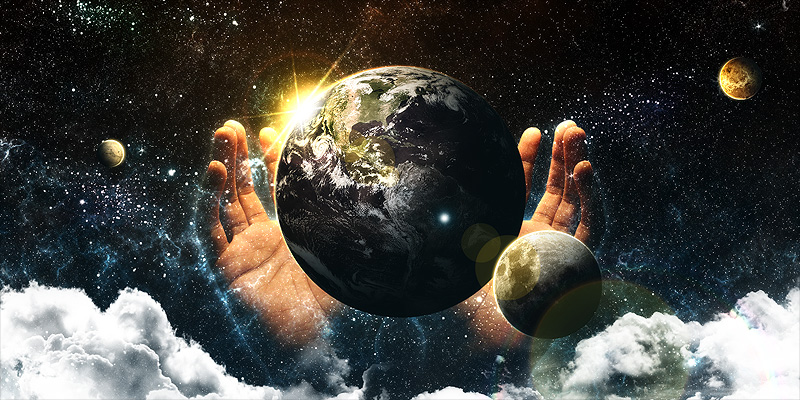
In recent years much ado has been made by alarmists who claim that mankind is destroying the earth. On the one extreme are those who believe mankind must essentially give up all modern technology and conveniences, and curtail population growth in order to save the earth. On the other extreme are those who live in constant fear that mankind will destroy the planet in a nuclear holocaust. In either case the underlying belief is that mankind will indeed one day destroy itself and the world on which we live.
Such beliefs and fears are the product of ignoring a simple truth of scripture. That truth is that the world’s destiny rests solely in the hands of God. The Bible begins with the magnificent statement, “In the beginning God created the heavens and the earth” (Gen. 1:1). The record of Genesis 1 continues with a description of how God turned nothing into a perfect home for the man and woman He created on the sixth day of creation week. The plants, animals, and Adam and Eve, were created full grown and able to reproduce (Gen. 1:12, 22, 28). God spoke it all into existence in six days, and at the end of that time the scripture says, “God saw all that He had made, and behold, it was very good. And there was evening and morning, the sixth day” (Gen. 1:31).
God created the world as a place for mankind to live in preparation for eternal life with Him. By His own command mankind is supposed to multiply and fill the earth and subdue it (Gen. 1:28). This means everything on earth is for our use as we live here. This does not mean we should be wasteful or wantonly destructive of our beautiful home, but it means that it is not inherently wrong to use these resources for the betterment of our lives.
If we believe in God and in His word, we know that this planet will not run out of resources to sustain human life. If we believe in God and in His word, we know that mankind will never destroy the earth. We know this because the scriptures tell us the ultimate fate of the world is in God’s hands, not ours. In 2 Pet. 3:5-7 the scripture says that the ancient world was formed out of water and by water by the word of God. That world was also destroyed by water at the command of God. Peter then says that the present heavens and earth are being reserved for fire by the same word of God (2 Pet. 3:10-13). This world is indeed going to end, but it will only end when God commands it to end.
The simple truth is that we cannot destroy the earth. Even with all the nuclear weapons we might ever create, or with all the billions who might populate it, we do not have the power or the authority to do so. Only God has this power, and only God has the authority, to destroy the world. Only He, who made it all at the beginning, can make it all go away at the end.
In the beginning was God, and at the end is God. All of earth’s history is bookended by this fundamental truth. It is this truth that gives us our only hope for eternity.
 ". . . let God be found true, though every man be found a liar."