God Looks At The Heart

10646842_1667956306764860_846679667309978834_n


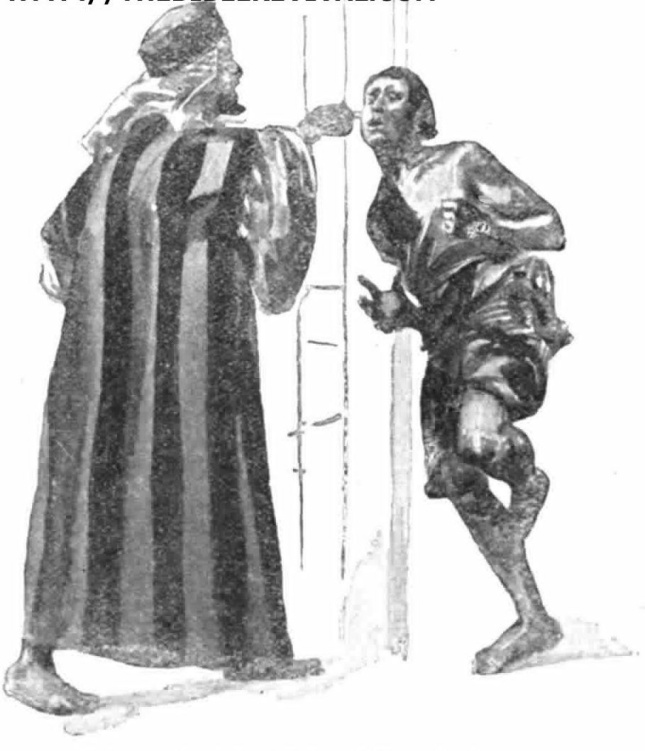
The picture above recently appeared on Facebook.  It depicts Adam and Eve in the Garden of Eden at the moment they sinned against God by eating from the tree of the knowledge of good and evil.  The comment attributed to Eve in the caption at the bottom of the picture is a common attitude expressed by many today.

While we may not have heard this idea in reference to Adam and Eve in the Garden, most of us have indeed heard it in other contexts.  It is the trump card usually played by one whose conduct or attitude has come under criticism.  In the face of reproof from God’s word, the offending party will often brush the criticism aside by asserting that God does not care about rules, but only about the condition of one’s heart.  The implication is that if one loves God in his or her heart, then God is pleased, no matter what that person may or may not do.  Also implied in this statement is that “rule keepers” are actually hypocrites who really don’t love God in their hearts.

As is the case with most lies, there is a kernel of truth in this assertion.  The Pharisees were the premier rule keepers of their day, but the Lord correctly identified them as hypocrites, whose hearts were far away from God (Mt. 15:8, 9).  They were hypocrites, not because of their insistence on obedience to God’s commands, but because they were voiding God’s commands by their human traditions.  This is very different from the sincere chastisement given to one who has strayed from God’s will.

It is true, of course, that God looks at the heart.  In 1 Sam. 16:7 Samuel the prophet learned this when he looked upon the sons of Jesse trying to determine which one of them God wanted to be king of Israel.  The Lord said, “Do not look at his appearance or at the height of his stature, because I have rejected him; for God sees not as man sees, for man looks at the outward appearance, but the Lord looks at the heart.”  Samuel was impressed with the physical attributes of Jesse’s older sons, but God had chosen the youngest, David, to be king because he was a man after God’s own heart (1 Sam. 13:14).

The fact that God looks at the heart does not, however, discount the fact that He requires mankind to obey His commandments.  David is an excellent example of this truth.  David was a man after God’s own heart because he obeyed God’s commands.  His good heart led him to respect God’s will and to do his very best to always obey it.  The love he held in his heart for God was demonstrated by his obedience.  If he had done otherwise, he would not have had the right kind of heart.

This is what is lost on those who claim that their hearts are right with God even as they do their own thing in their worship and walk with Him.  The one who loves God obeys His commands.  The one who disobeys God’s commands does not love Him.  Our Lord and Savior made this very point on the night of His betrayal.  In Jn. 14:15 Jesus said, “If you love Me, you will keep My commandments.”  He made the same point using different words in Jn. 4:24.  Jesus told the woman at the well, “God is spirit, and those who worship Him must worship in spirit and truth.”

God is not pleased by actions performed superficially, no matter how correct their form.  Neither is He pleased by warm, heartfelt actions that have the appearance of love, but which violate His revealed will.  God requires us to love Him sincerely, from the heart, and to demonstrate that love by our obedience to His commands.

No Greater Love

No_greater_love


On February 14th we celebrate a special day to commemorate our love.  We give flowers and candy, we plan romantic dinners and we send cards that express our devotion for that one special person in our life.  We sing songs that extol the fervency of our affection, and we make a special effort to demonstrate the love that we hold for that person the year round.  Even the most “macho” of men will find ways to express tenderness on this one day of the year.

The gifts we give on such an occasion, no matter how expensive or how simple, are usually accepted with great joy.  Everyone appreciates being loved, and even the smallest expressions of love touch us deeply.  This is one reason why mothers tend to keep and to cherish the little hand-made cards and trinkets that their children give them.  It is also why a wife will keep every Valentine card her husband has ever given her.

We understand that true love is much more than the size or monetary value of a gift given on a special occasion.  In fact, we treasure the daily expressions of love, and count them to be more indicative of love, than even the most elaborate and expensive of gifts.  A fancy gift on a special day does not make up for unspoken love the rest of the time.  What we desire more than anything is a demonstration of love in all the ups and downs of life.  We want to know that our husband or wife is giving his or her very best each and every day.  This is how it works in the most successful marriages (although gifts on special occasions are also appreciated and must not be neglected!).

As Christians, we are the recipients of the best of both worlds in this regard.  We have the daily gift of God’s love as He blesses our lives with all that we need (Mt. 6:33).  We have the ongoing presence of His Holy Spirit, who has been given to us as the pledge of our inheritance (Eph. 1:14).  We have His promise that He will not allow us to be tempted beyond our ability to resist it (1 Cor. 10:13), and we have the assurance that He will never desert us or forsake us (Heb. 13:5).  All of these things demonstrate God’s love for us each and every day of our lives.

In addition to this, He has given us the greatest gift that could possibly be given to us.  “For God so loved the world, that He gave His only begotten Son, that whoever believes in Him shall not perish, but have eternal life” (Jn. 3:16, NASB).  Jesus told His disciples that there is no greater love than to lay down one’s life for his friends (Jn. 15:13).  This He did for each of us when He shed His precious blood on Calvary as the atoning sacrifice for our sins.  He did it because God loved us, even while we were yet sinners, and because He loved us as well (Rom. 5:8).  There is no greater love that could be shown to us.

As the recipients of such love, it behooves us to do two things.  First, we must show our appreciation for it by always obeying the Lord’s commands.  Jesus said, “If you love Me, you will keep My commandments” (Jn. 14:15).  If we do this, the Lord’s sacrifice of love will not have been in vain.  Second, we will love one another, even as our Father and His Son have loved us.  John said, “Beloved, let us love one another, for love is from God; and everyone who loves is born of God and knows God.  The one who does not love does not know God, for God is love” (1 Jn. 4:7, 8).  What God has done for us, we must do for each other, for there is no greater love than this.

Flee Immorality

In Gen. 6:5 the scripture says, “Then the Lord saw that the wickedness of man was great on the earth, and that every intent of the thoughts of his heart was only evil continually.”  These words describe the sorry conditions that led God to destroy all life on the earth, except for those who were saved in the Ark.  The text does not tell us the specific wickedness that was prevalent on the earth, but we may safely conclude that it involved every kind of ungodly behavior that is common to mankind.

If we wonder what it must have been like in that long-ago time, all we have to do is take a look at the state of things today.  There is no question that our current culture is very much like that described in Gen. 6:5.  All around us we see wickedness and ungodly behavior glorified in society.  One of the most obvious evidences of this fact is our culture’s obsession with sex, and its shameless promotion of ungodly sexual conduct.  It has gotten so bad that even the advertising on television is flooded with sexually-charged images and innuendos.

The influence of this ungodliness cannot be overstated.  The more we are exposed to these things, the more likely we will become tolerant of them.  When we become more tolerant of such things, we will be more likely to engage in them ourselves.  This is a fact of human nature that our God fully understands.  This is why His word is so outspoken against sexual immorality.

In Eph. 5:3-5 Paul said, “But immorality or any impurity or greed must not even be named among you, as is proper among saints; and there must be no filthiness and silly talk, or coarse jesting, which are not fitting, but rather giving of thanks.  For this you know with certainty, that no immoral or impure person or covetous man, who is an idolater, has an inheritance in the kingdom of Christ and God.”  He went on in vs. 11-12 to say that we must not participate in such unfruitful deeds of darkness, but should rather expose them.  He added that it is disgraceful even to speak of such things.

The Greek word that is translated “immorality” in these verses is porneia.  This is the word from which our English word “pornography” is derived.  It is a word that refers to any kind of sexual immorality.  In the context, then, Paul is telling us that we cannot be sexually immoral and expect to enter the kingdom of Christ.  This flies in the face of our culture, which wants us to believe that there is nothing wrong with “a little sex”.  God’s word, however, warns us that sexual activity is a blessing that is limited to a man and his wife within the bounds of holy matrimony.  Any other sexual activity is immorality, and it will keep those who practice it out of heaven at the end of time.

In 1 Cor. 6:18-20 Paul tells us to flee sexual immorality because our body is a temple of the Holy Spirit and we are not our own.  He says, “Flee immorality (that is, sexual immorality).  Every other sin that a man commits is outside the body, but the immoral man sins against his own body.  Or do you not know that your body is a temple of the Holy Spirit who is in you, whom you have from God, and that you are not your own?  For you have been bought with a price: therefore glorify God in your body.”  We have been bought by the blood of Jesus Christ, and we must glorify God in all that we do.  And here is the key to achieving this: we must flee from sexual immorality.  We cannot expose ourselves to sexually immoral images and themes lest they lead us into sin.  Those who do such things place their souls in eternal jeopardy.

Thankfully, sexual immorality can be forgiven if we confess our sins and seek the Lord’s forgiveness in accordance with His word.  In 1 Cor. 6:9-11 Paul said some of the Corinthians had been sexually immoral before they became Christians, but they had been washed by the blood of Christ.  Their sins were forgiven when they were baptized into Christ (Acts 2:38; Acts 22:16; Rom. 6:3-7), and they were made new creatures in Christ (2 Cor. 5:17).  For this reason, they were no longer their own but the Lord’s, and the apostle commanded them to live sexually pure lives.

Do not be seduced by our ungodly society.  Flee sexual immorality in all its forms.  Those who live sexually pure lives will enjoy richer lives here on earth, and eternal life in heaven at the end of time.

The Eleventh Hour

clock

In Mt. 20:1-16 the Lord told the parable of the workers in the vineyard.  The essence of the parable is that the landowner went out at various times of the day and hired men to work in his vineyard.  He did so right up to the eleventh hour of the work day.  This was unusual because workers were typically hired early in the morning and not thereafter.  At the end of the work day all the workers were paid the same amount, including those who had been hired at the eleventh hour.

This parable illustrates the graciousness of God in two ways.  First, He will continue to call us to come into His vineyard right up until the very end.  In other words, the opportunity for salvation is open to everyone until the “work day” of life is done.  Second, those who are saved at the very last will receive the same reward as those who have spent a lifetime in the kingdom.  All of the saved will be in heaven, no matter at what point of life they obeyed the gospel.

When we ponder this aspect of God’s character, we see that He is giving us every possible opportunity to be saved.  Like the workers who were hired early in the morning, God wants us to go to work in His vineyard at the earliest possible time.  However, like the landowner in the parable, God keeps coming back to offer us the opportunity to enter His vineyard.  Day after day, year after year, God calls us to obey the gospel and to come work in His vineyard, which is the kingdom of Christ, the church that the Lord purchased with His own blood (Acts 20:28).

Like the workers in the parable, who needed work in order to survive, we need the salvation that only our Lord and Savior Jesus Christ can provide.  Like the workers in the parable, we must answer the call in order to enter His vineyard.  A worker who refused an offer of work could not expect to be paid at the end of the day.  One who refuses to answer the call of the gospel cannot expect to enter heaven at the end of time.  Therefore, it is essential that we obey the gospel just as soon as we hear its call.

This is where we learn the most important lesson from this parable.  The men who were not present to be hired at the beginning of the day had no guarantee that they would be hired later in the day.  When the landowner hired men at the third, sixth, ninth, and eleventh hour, this was an unexpected and unwarranted blessing to them.  In the same way, when God calls us by His gospel at various stages of our lives, it is the very epitome of what grace is.  It is an unwarranted opportunity that we have done nothing to merit.  For this reason we must not ignore it.

Someone once said, “The opportunity of a lifetime must be grasped in the lifetime of the opportunity.”  The point of this statement is that even the best of opportunities will one day be gone and once they are gone they cannot be recovered.  The Lord illustrated this truth in the context of salvation by declaring that no one knows the day or hour at which He will return for judgment (Mt. 24:36).  To this James added that human life is a vapor that appears for a little while and then vanishes away (Jas. 4:14).

Even though the Lord will accept us even at the eleventh hour of our lives, we have no idea when that hour may be.  Therefore, we must obey the gospel at our very first opportunity, lest our eleventh hour come and go while we remain disobedient.

The God Who Forgives

When Moses interceded on behalf of the Israelites after their sin with the golden calf, he begged God to show him His glory.  God promised that he would pass before Moses, shielding him with His hand until He had passed by.  Then God would remove His hand and Moses could see God’s back (Ex. 33:17-23).  God kept this promise when He called Moses back up to the mountain top to give him the second set of stone tablets containing the Ten Commandments.  As God passed by Moses on that occasion He declared who He was in words that are comforting and encouraging, but which also sound a warning to mankind.

In Ex. 34:6, 7 the scripture says, “Then the Lord passed by in front of him and proclaimed, ‘The Lord, the Lord God, compassionate and gracious, slow to anger, and abounding in lovingkindness and truth; who keeps lovingkindness for thousands, who forgives iniquity, transgression and sin; yet He will by no means leave the guilty unpunished, visiting the iniquity of fathers on the children and on the grandchildren to the third and fourth generation.'”  Many people think of God in the Old Testament only in terms of His great wrath that He from time to time poured out on the nations.  This does Him a great injustice, especially in light of His own testimony about Himself in the verses above.

When Moses asked God to reveal Himself, God began with the fact of His compassion and mercy.  The God of the Old Testament is the God who “forgives iniquity, transgression and sin.”  He is the God who shows His lovingkindness (or steadfast love) to thousands.  How interesting it is that the so-called God of wrath revealed Himself first as the God who forgives.  While He is the God who will not allow the guilty to go unpunished, He is first of all a forgiving God.

There is an important reason why our God is the God who forgives.  It is because He wants all of us to live with Him in heaven for eternity.  In 1 Tim. 2:4 Paul tells us that God “desires all men to be saved and to come to the knowledge of the truth.”  At the heart of salvation and the knowledge of the truth is the fact that God provided the means for all mankind to be forgiven of their sins through the blood of His Son Jesus Christ.  In Eph. 1:7 Paul said, “In Him (that is, Christ) we have redemption through His blood, the forgiveness of our trespasses, according to the riches of His grace.”  This forgiveness is what Paul calls the “eternal purpose which He carried out in Christ Jesus our Lord” in Eph. 3:11.

We receive this blessing when we are baptized into Christ for the forgiveness of our sins, as Peter commanded the Jews on Pentecost (Acts 2:38), and as the Lord Himself required in Mk. 16:16, when He said, “He who has believed and has been baptized shall be saved; but he who has disbelieved shall be condemned.”  This forgiveness continues after baptism if we walk in the light and confess our sins (1 Jn. 1:7-10).  The God who forgives will always forgive, so long as we seek His forgiveness according to His revealed word.

This is why we are commanded to be forgiving to one another.  The Lord made this point very strongly.  In Lk. 17:3, 4 He said, “Be on your guard!  If your brother sins, rebuke him; and if he repents, forgive him.  And if he sins against you seven times a day, and returns to you seven times, saying, ‘I repent,’ forgive him.”  He also warned that if we do not forgive others, our sins will not be forgiven (Mt. 6:14, 15).  Therefore, “Be kind to one another, tender-hearted, forgiving each other, just as God in Christ also has forgiven you” (Eph. 4:32).