
This program aired on KIUN 1400 AM in Pecos, TX on December 8, 2014.
This program aired on KIUN 1400 AM in Pecos, TX on December 8, 2014.

One of the most beautiful Christian hymns of all time is “How Great Thou Art.” The words reflect the awe that comes from observing the majesty of God’s creation, and from recognizing the gracious gift of His Son as the sacrifice for the sins of mankind. The author of this great hymn felt the same reverence for God that David expressed in Psa. 8:3, 4 when he said, “When I consider Your heavens, the work of Your fingers, the moon and the stars, which You have ordained; what is man that You take thought of him, and the son of man that You care for him?”
The last stanza of this great song says, “When Christ shall come with shout of acclamation and take me home, what joy shall fill my heart! Then I shall bow in humble adoration and there proclaim, my God, how great thou art!” The chorus adds the exclamation point to this song of praise. “Then sings my soul, my Savior God to Thee; how great Thou art, how great Thou art!” These moving words are enhanced by the soaring musical score which has been applied to them. One cannot sing this wonderful hymn without his heart being stirred.
Obviously in the time of David looking up at the starry sky at night just naturally led one to exclaim the greatness of God. There was no question in David’s mind where all the majesty of the universe originated. He knew it came from the hand of God. In 1886, when Carl Boberg penned the words to “How Great Thou Art,” most people still had the same reaction as David when they observed the physical realm in which they lived. They knew and acknowledged that it came from God, and they were moved to extol His name for having created it.
In the years since “How Great Thou Art” was written a fundamental shift in attitude has taken place. The world has become less favorably inclined toward God. Modern science has played a large role in this transformation, although the secular philosophy of humanism has played an equally important role in turning society away from God. The result is that many people today no longer think of God as the originator of life. They are inclined either to not think about our origins, or to accept the idea that we evolved from lower forms of life. Society, like a ship without a rudder, has drifted aimlessly toward the chaos and degradation that is now prevalent.
The fact that many now ignore the greatness of God and the majesty of His creation does not change who He is, or what He has done for us. Even if the whole world chooses to deny Him, He is still the one and only, true and living God, who made heaven and earth and all that is in them. Even if the whole world denies Him, He is still the one who will pass judgment at the end of time on all who have ever lived on the earth.
When we see the beauty of the earth and when we ponder the complexities of nature and the abundance of life-sustaining elements that are present only on this place in the entire universe, we must exclaim, “My God, how great thou art!” When we consider the gift of His Son, by whose blood we are saved from our sins, we must exclaim, “My God, how great thou art!” No other response is sufficient.
God does not need our affirmation of His greatness in order to be great, but how can we refuse to give it? We are compelled by all that He is and by all that He has done to affirm the truth that there is no other God but Him. We are compelled by all that He is and by all that He has done to always proclaim, “How Great Thou Art!”
This program aired on KIUN 1400 AM in Pecos, TX on November 12, 2014
Sunday morning, December 7, 1941 dawned bright, clear, and beautiful over the island of Oahu in the U.S. territory of Hawaii. The ships of the U.S. Seventh Fleet lay at anchor in Pearl Harbor. Although there had been rumors of impending war with the empire of Japan, the United States was still at peace and many of our soldiers, sailors and marines were ashore on liberty that Sunday morning. A little before 8:00 a.m. local time, the peace and quiet of that Sunday morning was shattered as Japanese planes began to attack Pearl harbor and its surrounding bases. When the attack ended some 90 minutes later, over 2,400 Americans were dead and nearly 1,200 were wounded, and the U.S. Seventh Fleet and Army Air Corps bases were in shambles.
The next day President Franklin Roosevelt addressed a joint session of Congress to ask for a declaration of war against Japan. He called December 7, 1941 a date that would live in infamy. “Remember Pearl Harbor” became the rallying cry for the rest of the war, and for years thereafter school children were instructed about this terrible event so they would never forget it. The battleship U.S.S. Arizona, which was sunk with the loss of nearly 1,200 lives, was left in its resting place as a perpetual memorial to those who died that day. Each year on the anniversary of the sneak attack ceremonies are held to commemorate those who lost their lives.
The value of remembering important historical events is so that we may learn from them and, in the case of Pearl Harbor, never again be caught unprepared by an enemy. The necessity for remembering such events is seen in the fact that our collective memory is so short. The generation that experienced Pearl Harbor has no trouble remembering it, but now, some 73 years after the events of that day, most Americans have little awareness of it. As tragic as this is, there is a more important event that we must always remember.
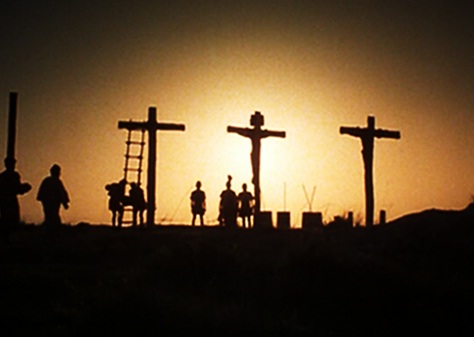
That event took place nearly 2,000 years ago at a place just outside the walls of the city of Jerusalem. On that terrible day the one and only Son of God, Jesus of Nazareth, was crucified by Roman soldiers at the instigation of the leaders of the Jews. This was according to God’s eternal purpose, of course, but it is no less a tragedy because God intended it to happen. It is a tragedy because the sinless Son of God died to pay a debt He did not owe. He willingly died in order to pay for our sins, so that we might have the opportunity to receive eternal life. Without His sacrifice, we would have no hope of reaching heaven.
Before He made this sacrifice, the Lord instructed His apostles to do something so that every generation of Christians would always remember what He had done for them. That memorial is the Lord’s Supper, which the early Christians observed every first day of the week (Acts 20:7). When Paul wrote to correct the abuses of this memorial that were then prevalent in the church in Corinth, he reminded them that the Lord commanded that this meal be eaten “in remembrance of Me” (1 Cor. 11:24, 25). When we eat the bread and drink the cup, we proclaim the Lord’s death until He comes (1 Cor. 11:26), and we keep in memory the terrible price that was paid to free us from our sins.
We often lament the fact that many today do not remember the sacrifices of those who died on December 7, 1941. How much more so should we lament those who do not keep in remembrance the sacrifice of Christ on the cross that sets us free from the consequences of our sins? May we always keep His sacrifice in remembrance by observing the Lord’s Supper each Lord’s Day. Let us never forget.
This program aired on KIUN 1400 AM in Pecos, TX on November 26, 2014.
 The nation has been on edge for weeks as a grand jury in Ferguson, MO weighed the evidence in the case of a police shooting that took place in that community some months ago. The media coverage of the shooting and of the rioting that ensued has focused so much on the racial aspects of this story that the facts in the case have been difficult to discern. Agitators have done their best to frame this tragic event in terms of racial bigotry, and opportunists have taken advantage of the tension to loot and burn businesses. A small, but vocal segment made it clear that anything less than an indictment for murder against the police officer would be a miscarriage of justice. When the grand jury’s decision not to indict the officer was announced, rioting once again broke out in protest. This incident, like so many others that have taken place in our country, demonstrates how far we have sunk as a people from the principles of scripture.
Justice is often portrayed as a blindfolded woman holding a set of scales in one hand and a sword in the other. The blindfold symbolizes fairness in weighing the evidence so that both sides in the case receive an equitable hearing. It also indicates that the decision is to be made without regard for the status of either of the sides in the case. This is a principle based upon the commands of scripture.
In Lev. 19:15 the scripture says, “Do not pervert justice; do not show partiality to the poor or favoritism to the great, but judge your neighbor fairly” (NIV). This is an important principle established by God in the Law of Moses. This provision was included in the Law because God foresaw that people tend to let their biases affect their decision making. The Lord God knew that some people would bend in favor of the wealthy or powerful. He also knew that some would bend in favor of the poor and weak in matters of law. Neither of these is acceptable to God. He demands that all decisions be made on the basis of truth. Only in this way will justice be served.
Our Lord Jesus Christ reinforced this principle during His earthly ministry. In Jn. 7:24, as He was facing an increasingly hostile crowd at the Feast of Booths, the Lord had to defend Himself because He had healed a man on the Sabbath. The Lord pointed out the hypocrisy of the Jews who were criticizing Him, because they themselves violated the Sabbath by circumcising on the Sabbath. Then He said, “Do not judge according to appearance, but judge with righteous judgment” (NASB).
With statements from God the Father, and from Jesus His Son, there can be no doubt that justice is to be rendered without regard to the status of the opposing sides. Justice, by divine decree, is achieved when a judgment is based upon righteousness that fairly assesses either guilt or innocence. While we understand and admit that people sometimes make mistakes, this is not an excuse to pervert justice in favor of one side or another for any reason.
God commands that we must not pervert justice in any way. Therefore our desire should always be for truth to prevail in every circumstance. The only way that we can consistently accomplish this is to always follow the principles of God’s word in everything we do. If more people were willing to obey God’s directions in such matters, there would be far less injustice in our world, and we would all be better off. May it always be our practice to judge with righteous judgment.
This program aired on KIUN 1400 AM in Pecos, TX on November 10, 2014.
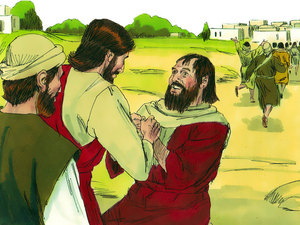
In Lk. 17:11-19 Luke recounts an incident in which ten leprous men encountered Jesus as He entered a village while traveling between Samaria and Galilee on His way to Jerusalem. The text says, “While He was on the way to Jerusalem, He was passing between Samaria and Galilee. As He entered a village, ten leprous men who stood at a distance met Him; and they raised their voices, saying, ‘Jesus, Master, have mercy on us!’ When He saw them, He said to them, ‘Go and show yourselves to the priests.’ And as they were going, they were cleansed. Now one of them, when he saw that he had been healed, turned back, glorifying God with a loud voice, and he fell on his face at His feet, giving thanks to Him. And he was a Samaritan. Then Jesus answered and said, ‘Were there not ten cleansed? But the nine — where are they? Was no one found who returned to give glory to God, except this foreigner?’ And He said to him, ‘Stand up and go; your faith has made you well.'”
This incident is interesting in several respects. First, the Lord performed an incredible miracle when He cleansed these men of their leprosy. What makes this so powerful is that He didn’t openly do anything to heal them. He simply told them to go and show themselves to the priests and they were healed as they went on their way. This certainly demonstrates His great power. The Lord didn’t have to do or say anything in order to heal the sick.
Second, the occasion of this miraculous healing became an object lesson in gratitude. We generally assume that those who were healed by the Lord were grateful for their healing, but the accounts rarely make mention of it like this one does. Ten men with a serious disease asked the Lord for mercy. He responded by healing them, but when only one of them returned to give thanks, the Lord took special note of it. His reaction tells us that He was disappointed in the nine who failed to give thanks. While it might be argued that the nine were doing exactly what the Lord told them to do by going to show themselves to the priests, it is obvious that the Lord would have been more pleased if they had delayed going to the priests long enough to return and say, “Thank You.”
The attitude of the Samaritan who returned to thank the Lord is a model for all of us. He did not take the Lord’s blessing for granted. He so appreciated the healing the Lord bestowed upon him that he could not do anything else until he had expressed his gratitude for it. When we consider the manner of his expression, it makes the ingratitude of the nine all the more disturbing. Luke says the Samaritan “turned back, glorifying God with a loud voice.” There can be no question that the nine heard his cries, but they were unmoved to join him in giving thanks to God.
The Lord made no other statement about the nine, but His question, “Where are they?”, should jar us from any complacency about our gratitude for God’s blessings. The absence of any further comment about the nine suggests that they didn’t return to thank the Lord even after they had shown themselves to the priests. The nine should have been as grateful as the Samaritan was. The fact that they were not says a lot about their character. It says they did not have the faith that the Samaritan had. It says they did not have faith that was grateful for God’s goodness.
As we go about our business from day to day, we must take care that we do not become faithless like these nine men. We are abundantly blessed in many ways, and we should daily give thanks to our Father in heaven for all He does for us. May we never become so complacent about expressing our gratitude that our Father in heaven is prompted to ask, “Where are they?”

This program aired on KIUN 1400 AM in Pecos, TX on November 5, 2014.
Belief is a fundamental requirement to be pleasing to God. In Heb. 11:6 the scripture says, “And without faith it is impossible to please Him, for he who comes to God must believe that he is and that He is a rewarder of those who seek Him.” During His earthly ministry Jesus said essentially the same thing. In Jn. 8:24 He told the Jews, “Therefore I said to you that you will die in your sins; for unless you believe that I am He, you will die in your sins.” Everyone who claims to be a Christian today espouses this important truth and requires it of anyone who wishes to be right with God.
As it is practiced by many today, however, the expression of belief in God and belief in Jesus Christ is only an expression. An individual states that he or she believes that Jesus is the Son of God, and on the basis of this statement alone is deemed to be saved. That person might have to repeat some version of the “Sinner’s Prayer,” or some other formulaic statement to claim salvation, but the point is that his or her acceptance as a believer is solely upon the strength of an oral statement.
When we turn to the pages of the New Testament, especially in the book of Acts, we find a very different presentation of the idea of a believer. The first thing we notice is that nowhere can we find any version of the “Sinner’s Prayer.” Neither do we find believers identified solely on the basis of an oral profession of faith. There is no question that people professed their faith in Jesus Christ, but according to the scriptures, true believers acted on their faith by obeying the gospel.
In Acts 8:12, 13 as Luke recorded the evangelistic work of Philip in the city of Samaria, he made this statement about what happened: “But when they believed Philip preaching the good news about the kingdom of God and the name of Jesus Christ, they were being baptized, men and women alike. Even Simon himself believed; and after being baptized, he continued on with Philip, and as he observed signs and great miracles taking place, he was constantly amazed.” Later, in Acts 11:21, Luke tells of the response of the Gentiles to the preaching of the gospel in Antioch. He says, “And the hand of the Lord was with them, and a large number who believed turned to the Lord.” The same language is used about the proconsul, Sergius Paulus, in Acts 13:12. All of these believers were baptized in the name of Jesus Christ to have their sins forgiven, just as the 3,000 were on Pentecost (Acts 2:38-41).
What this demonstrates is that true believers did not simply profess their faith in the Lord, but also obeyed the gospel as the apostles had commanded since the first Pentecost after the Lord’s resurrection. To the believing Jews on Pentecost, Peter said, “Repent, and each of you be baptized in the name of Jesus Christ for the forgiveness of your sins; and you will receive the gift of the Holy Spirit” (Acts 2:38). In every other instance of conversion in the book of Acts baptism was required for salvation. This requirement was emphatically stated by Paul as he recounted his own conversion in Acts 22:16. The preacher Ananias told the penitent, believing Saul of Tarsus, “Now why do you delay? Get up and be baptized, and wash away your sins, calling on His name.”
In the New Testament true believers did more than simply profess faith in Christ. They obeyed the command to be baptized in His name in order to have their sins washed away. The Lord Himself stipulated this requirement in Mk. 16:16, where He said, “He who has believed and has been baptized shall be saved; but he who disbelieves shall be condemned.” This statement illustrates the fact that in the scriptures belief and obedience go hand in hand. In Jn. 3:36 John the Baptist said, “He who believes in the Son has eternal life; but he who does not obey the Son will not see life, but the wrath of God abides on him.” One who truly believes will obey. The one who disobeys does not truly believe.
No one is called a believer in the New Testament who had not been baptized for the forgiveness of his sins. Those who wish to be true believers today must also obey this essential command.
 ". . . let God be found true, though every man be found a liar."