
This program aired on KIUN 1400 AM in Pecos, TX on December 25, 2017.
This program aired on KIUN 1400 AM in Pecos, TX on December 25, 2017.

One of the classic movies of the Christmas season is the 1946 film, It’s A Wonderful Life. It starred James Stewart as George Bailey, a man whose dreams were always derailed by some calamity not of his making. After spending most of his life helping others while putting his own desires on hold, George suffered what appeared to be the final blow. His savings and loan company was short on its accounts and he was about to be arrested for bank fraud. Believing that his life had been meaningless, George’s despair led him to the brink of suicide. Only the intervention of an unlikely angelic visitor prevented George from taking his own life. In a heart-rending final sequence, the film concludes with dozens of townspeople giving George the money to balance his books and avoid prison. In the closing scene George’s brother offered a holiday toast to his big brother, “the richest man in Bedford Falls,” as everyone sang Auld Lang Syne.
It’s A Wonderful Life was one of the last of a genre of films in the 1930s and 1940s that extolled the basic goodness of the American people. However idealized these portrayals may have been, we believed that this is the kind of people we ought to be, even if we sometimes failed to live up to these ideals. Sadly, it is not so certain that we are this kind of people today.
Most of us hope for happiness and success and all the things that moviemakers have often portrayed as being the signs of a wonderful life. The nature of human life is such, however, that we sometimes wonder if we can ever achieve it. We expect ups and downs, successes and failures, good times and bad. We hope that as we weigh them on the scales of time that the good will outweigh the bad. If so, we may look upon our life and say it was good, even if not as wonderful as common culture defines it.
Christians on the other hand have a different perspective. The Lord promised that He came so we “may have life, and have it abundantly” (Jn. 10:10). The English word “life” translates several Greek words. Two of these words are bios and zoe. These are the words from which “biology” and “zoology” are derived. While both of these terms may be used to describe one’s physical life or one’s material possessions, the Lord used zoe in a particular sense in His teachings. Zoe is the word that is always used in scripture with reference to eternal life. Thus, it has come to have a more significant meaning and application to Christians.
Some have made their careers preaching a “health and wealth” gospel from Jn. 10:10, but this is not what the Lord intended. When the Lord said He came so we may have life abundantly, He was not referring to our physical life and material possessions. We may indeed lead healthy and successful lives and amass great fortune in life, but the Lord’s purpose in coming was for us to have a better life which is eternal in nature.
To have abundant life is to be safe in the fold that is guarded and provided for by the Good Shepherd, Jesus Christ. In this fold, we are under His watchful care. He knows us by name and He calls us to follow Him. We know Him and we respond to His call. Living in the fold of Christ is a wonderful life. It is so, not because of the absence of trials, troubles, sickness, or failure. It is a wonderful life because we know that what happens to us here cannot compare to the glory that will be revealed to us at the end of time (Rom. 8:18). It is a wonderful life because godliness holds promise for the present life and also for the life to come (1 Tim. 4:8). If we belong to Christ we live better here, and we will live better in eternity. This, truly, makes it a wonderful life!

This program aired on KIUN 1400 AM in Pecos, TX on December 1, 2017.

The Law of Moses consisted of much more than the Ten Commandments. Commentators have identified in excess of six hundred specific commands within it. The enormity of this law staggers our minds, and we wonder how the Jews could have managed to keep up with all its many demands. The Law of Moses was intended to bring mankind to the Savior, Jesus Christ, and to the new covenant that He would implement. However, God made it clear that He intended the Jews to keep the Law until the Savior came.
One of the ways that He did so was to command Jewish parents to teach the Law to their children. In Deut. 6:6-9 Moses said, “These words, which I am commanding you today, shall be on your heart. You shall teach them diligently to your sons and shall talk of them when you sit in your house and when you walk by the way and when you lie down and when you rise up. You shall bind them as a sign on your hand and they shall be as frontals on your forehead. You shall write them on the doorposts of your house and on your gates.”
The point of this command was to show that each generation must be taught to obey God. If this responsibility was not met, a generation would arise that did not know God or know His law. This is exactly what happened after Joshua died (Jdg. 2:10). The result was a chaotic period that lasted more than three hundred years. During that time Israel repeatedly disobeyed God and suffered oppression from their enemies because of it. So the importance of parents diligently teaching God’s word to their children cannot be overstated.
Today we live under the law of Christ, not the Law of Moses. His law is written in our hearts and is much simpler in comparison to the Law of Moses. However, we are no less responsible for obeying it than the Jews were for obeying the Law of Moses. Near the conclusion of the Sermon on the Mount the Lord said, “Not everyone who says to Me, ‘Lord, Lord,’ will enter the kingdom of heaven, but he who does the will of My Father who is in heaven will enter” (Mt. 7:21).
The importance of knowing and obeying God’s law is further emphasized by Paul in 2 Th. 1:7-8. There he said that when the Lord returns He will do so with His angels, “in flaming fire, dealing out retribution to those who do not know God and to those who do not obey the gospel of our Lord Jesus.” Can there be any doubt that there are serious consequences if we do not obey God’s will?
This being true, we certainly have just as great a responsibility to diligently teach God’s law to our children and grandchildren as the Jews did in the time of Moses. In that time, under a law which was only a shadow of the good things to come (Heb. 10:1), the Jews suffered physical consequences for failing to teach their children to obey God’s law. In our time, under the law of Christ, if we fail to teach our children to obey God’s will they are going to pay spiritual and eternal consequences for our failure.
It is not coincidental that the command to diligently teach children was given to parents. They are the ones to whom the precious souls of their children are entrusted by God. Lest there by any question about it, this command applies just as surely to Christians as it did to the Jews. In Eph. 6:4 Paul told fathers to bring up their children in the discipline and instruction of the Lord. Therefore we must be diligent to prepare their souls for eternity. In order to do this, we today must do what God required of the Jews. We must have His word in our hearts (Deut. 6:6). If we truly have God’s word in our hearts we will not fail to diligently teach it to our children.
This program aired on KIUN 1400 AM in Pecos, TX on September 2, 2016.

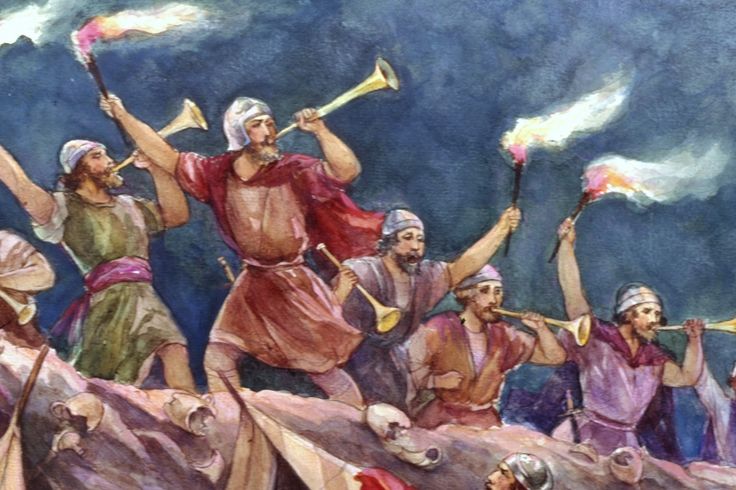
There is a tension between the need to obey all that God commanded us, and the reality of human nature. Some people, after all, are just rebels. If they are restricted in any way, or for any reason, they chafe against the restraints in open disobedience. Others are so zealous in their insistence on obedience that they become unsympathetic toward any who falter in any way. Some in this category interpret obedience so narrowly that it is nearly impossible for anyone, except themselves, to be obedient. This is where the Pharisees were during the Lord’s ministry on the earth.
On at least two occasions they complained about the actions of the Lord and of His disciples. Once, when the Lord attended a dinner at Matthew’s house, they condemned Him for associating with “sinners” (Mt. 9:10-13). On another occasion, the disciples plucked heads of grain and ate them as they passed through some grain fields on the Sabbath (Mt. 12:1-7). The Pharisees considered this to be a violation of the Sabbath prohibition against work, and condemned them for it. The Lord’s reaction in both instances shows us that there is more to our relationship with God than check-list obedience.
In each situation the Lord quoted scripture, saying, “I desire compassion, and not a sacrifice”, and told the Pharisees that if they understood what this meant, they would not be so condemning. Had these teachers of the Law understood the scriptures, they would have known that it was their attitude, not the Lord’s or the disciples’ actions, that violated God’s will. They had become so arrogant in their adherence to the Law that they had forgotten God’s grace and mercy.
This is where the tension arises for us. We recognize that we must obey God’s word in order to be right with Him. From the earliest times God has required this. This principle was so important that Moses drew special attention to it in Deuteronomy. He told Israel that they must diligently keep God’s commandments, saying, “So you shall observe to do just as the Lord you God has commanded you; you shall not turn aside to the right or to the left” (Deut. 5:32). He repeated this command in Deut. 17:20 and in Deut. 28:14.
There is no question that this principle is true because even the Lord stressed it in His own teaching. In Mt. 7:21, at the conclusion of the Sermon on the Mount, the Lord said, “Not everyone who says to Me, ‘Lord, Lord,’ will enter the kingdom of heaven, but he who does the will of My Father who is in heaven will enter.” He underscored this truth in vs. 22-23 by telling of well-intentioned, sincerely religious people who would be turned away at judgment because they had failed to obey God’s will.
Even so, the scriptures are also clear that we are incapable of perfectly obeying God’s will. Here is where His grace and mercy come in. This is what the Lord tried to get the Pharisees to understand. None of us can so perfectly keep God’s will as to earn our salvation. We all depend upon His grace and mercy to be saved. Therefore we must treat each other with compassion and mercy as we try to obey God’s will.
Compassion toward those who sin does not mean that we condone or excuse their sin. It simply means that we recognize that without compassion no one will be saved. Having received God’s grace and mercy ourselves, we cannot withhold it from anyone who is seeking God’s way. In Jas. 2:13 James said, “For judgment will be merciless to one who has shown no mercy”. Therefore, let us be compassionate and merciful toward each other in all that we do.
This program aired on KIUN 1400 AM in Pecos, TX on November 29, 2017.

Most children look forward to the day when they become adults. They do not do so because they are anxious to take on the responsibilities of adulthood, such as going to work every day, paying taxes, and taking care of a family. Instead, they anticipate this stage in life because they believe that when they become adults they will be able to do whatever they please.
Wanting to have one’s own way about things is a natural part of human nature. Very few of us are so compliant and amiable that we are content to let others always have their way about things. No matter how kind-hearted one may be, we will all at some point insist on our preference being met. There is nothing inherently wrong with this, so long as the choices under consideration are not illegal, immoral, or in any other way contrary to God’s will.
This makes sense, of course, but it is where we so often fail. We have been created by God with the ability to make choices in life. From the time of Adam and Eve in the Garden of Eden, mankind has been free to choose to do things God’s way or their own way. Most of the time, people have chosen their own way and the results have been disastrous. This is one reason why the scriptures call on us to let God have His way in our lives.
The wise man Solomon put it very simply. In Prov. 14:12 he said, “There is a way which seems right to a man, but its end is the way of death.” He was so convinced of this truth that he repeated it in Prov. 16:25. Even though he did not always follow his own advice, Solomon knew that when humans have their own way about the direction of their lives they will go astray from God’s will.
Jeremiah the prophet was another who spoke plainly about the futility of humans guiding their own steps. In Jer. 10:23 he said, “I know, O Lord, that a man’s way is not in himself. Nor is it in a man who walks to direct his steps.” Jeremiah saw this truth played out before his very eyes. He admonished the leaders of Judah to repent of their evil ways and return to the Lord, but to no effect. They walked in their own way and God brought His wrath down upon them in the form of the Babylonian captivity.
The futility of his efforts is summarized by the call of the Lord that Judah rejected. In Jer. 6:16 the scripture says, “Thus says the Lord, ‘Stand by the ways and see and ask for the ancient paths, where the good way is, and walk in it; and you will find rest for your souls. But they said, “We will not walk in it.”‘” Even though God spoke directly to them through His prophet, the people of Judah refused to let Him have His way. They suffered terribly for it during the siege of Jerusalem, and then for seventy years of exile in Babylon.
Many years before the time of Jeremiah, King David recognized the value of letting God have His way in his life. In Psa. 25:10 David said, “All the paths of the Lord are lovingkindness and truth to those who keep His covenant and His testimonies.” This is a timeless truth that is as pertinent today as it was a thousand years before the birth of our Lord. The Lord underscored this truth in His condemnation of the religious leaders of His day. In Mt. 15:14 the Lord called them blind guides and said that they, and those who followed them, would fall into a pit.
This being true, perhaps we can see the wisdom of the words of the great old hymn that says, “His love can fill your soul, and you will see ’twas best for Him to have His way with thee.” May this always be so in our lives.
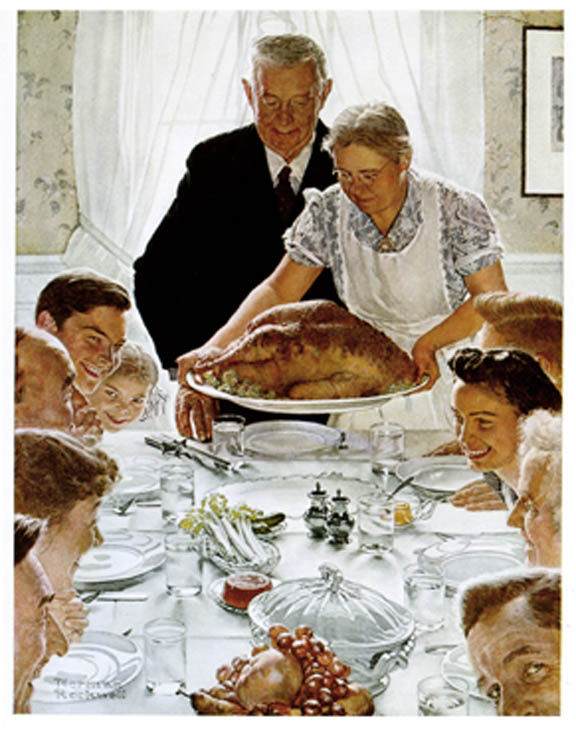
The fourth Thursday of November is the day each year when our nation takes time to express our gratitude for all the blessings that God has showered upon us from our inception until the present day. Thanksgiving is a uniquely American holiday that is testimony to the fact that this country was founded by men who believed in the Christian faith. No other nation on earth so openly acknowledges and celebrates its dependence upon God, or attributes its prosperity so directly to His blessing.
Unfortunately, the gratitude and spirit of thanksgiving that prompted our founders to acknowledge and honor God for His abundant blessings has greatly waned in recent years. Society in general has become much more self-absorbed than at any time in our history. As a result, people are much less likely to express even the most basic levels of gratitude which were at one time commonplace. In addition to this, they are far less likely to honor and thank God for all He has done for them. It is a sad commentary on how far we as a people have fallen from the lofty ideals upon which our nation was established, and to which we are called by the scriptures.
The principle of thankfulness is found virtually from cover to cover in the scriptures. The psalms are a particularly powerful example of this. The word “thanks” appears dozens of times in these spiritual songs and in each instance the songwriter’s intent is to glorify God by acknowledging His abundant blessings and thanking Him for them. No Jew who sang these psalms could fail to see the importance of giving thanks to God.
During the Lord’s earthly ministry He drew attention to this principle when He cleansed ten lepers. In Lk. 17:11-19 the scripture says that these men begged the Lord for mercy as He passed by them. In response He told them to go and show themselves to the priests. As they were going, they were healed. In v. 15 Luke tells us that one of the men, upon seeing that he had been healed, immediately turned and went back to the Lord. He fell at the Lord’s feet, giving praise to God and thanking the Lord for healing him.
The Lord accepted this man’s expression of gratitude, but asked about the other men. In vs. 17-18 He said, “Were there not ten cleansed? But the nine–where are they? Was no one found who returned to give glory to God, except this foreigner?” These questions show that the Lord was disappointed in the ingratitude of the nine men who failed to give thanks for their healing. The fact that the lone man who did express thanks was a Samaritan only made this omission worse. The other men were Jews, who should have been the first to give thanks because they were God’s covenant people.
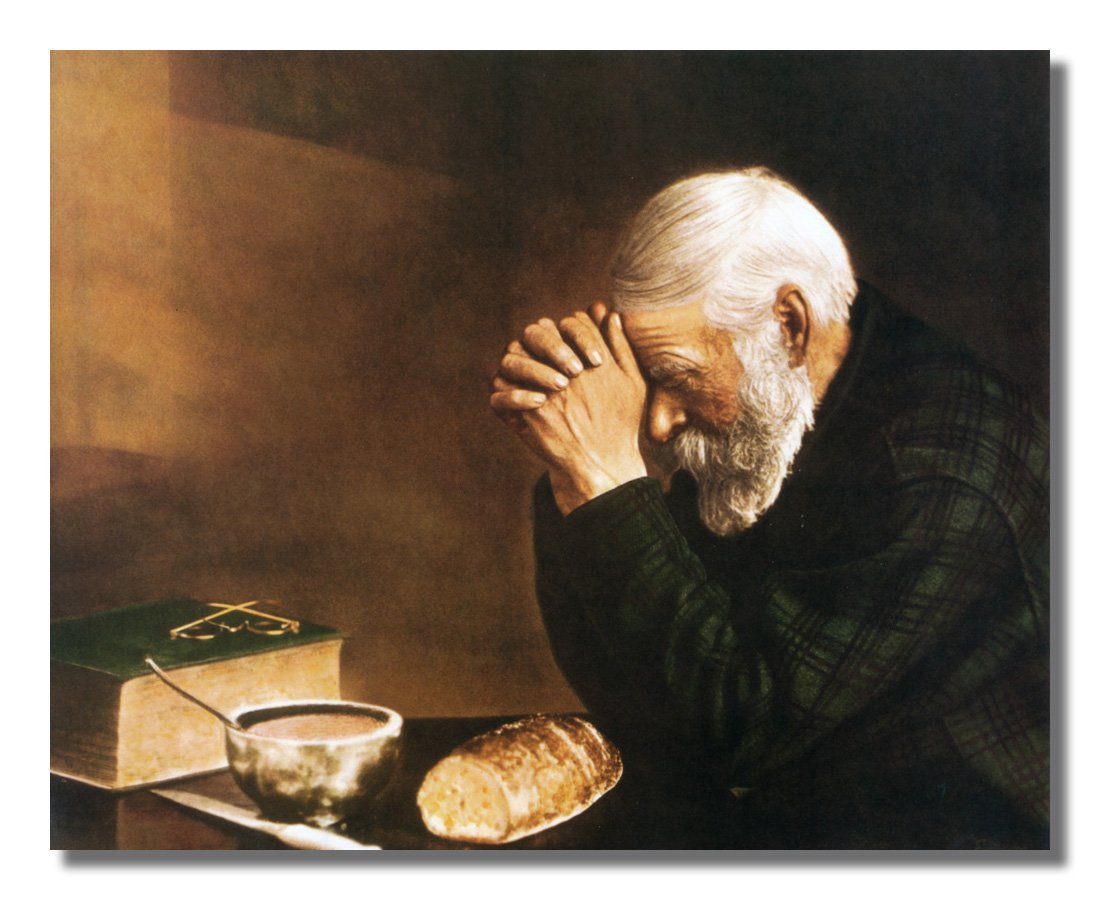
The lesson for us to learn from this episode is that it is vital for us to express our gratitude to God for all He has done for us. We must thank Him for the beautiful world in which we live, which He created to take care of all of our physical needs until the end of time. We must thank Him for the blessing of forgiveness through the blood of His Son, by which we have the hope of eternal life. We must thank Him for His promise to provide for all our needs if we seek Him first. We must thank Him for hearing our prayers and answering them in the way that is best for us in every case.
If we take the time each day to do as the old hymn says, “Count your many blessings — name them one by one”, we cannot help but give thanks to the Lord. We have received from God’s hand much more than we deserve, especially in view of the gift of eternal life. Therefore, let us never fail to give thanks to Him every day.
This program aired on KIUN 1400 AM in Pecos, TX on November 22, 2017.
 ". . . let God be found true, though every man be found a liar."