What A Friend!

Cross-FS


One of the popular text-messaging abbreviations today is BFF.  It stands for “best friend forever” and designates a person with whom one has had a long-term or life-long relationship.  BFFs are those who stand by their friends through thick and thin, and can be depended upon in every situation that might arise.  Not everyone has a BFF, and some of us may think we don’t need one, but there is no question that those who do have BFFs are blessed.

Friendship is an important part of life, at whatever level we may experience it.  It is part of our DNA, as it were.  We are social creatures who need and crave interaction with others, especially those who share similar interests.  The primary basis of friendship is what we often describe as the “give and take” of it.  Friendships are founded and maintained by the exchange of good things within that friendship.  This exchange might include actual gifts and such, but is more often demonstrated in acceptance, encouragement, consolation in times of loss, and personal involvement in each other’s lives.  To be a friendship, however, both parties must do these things.

Sometimes we sing a song in worship entitled, “What a Friend We Have in Jesus.”  This hymn is primarily focused on the importance of prayer, but there is no question that we have no friend like our Lord and Savior.  He has never failed us and will never fail us in time of need.  He has never done and will never do anything to hurt us or to discourage us.  He is the epitome of what a friend should be in every sense of the word.

The greatest demonstration of the Lord’s friendship for us is His death on the cross to pay the debt for our sins.  On the night of His betrayal He told the apostles, “Greater love has no one than this, that one lay down his life for his friends” (Jn. 15:13).  Then, the very next day, He did exactly that.  He who knew no sin, went to the cross and bore the sins of all mankind for all time on His own shoulders.  He suffered excruciating physical pain, and the unbelievable spiritual anguish of being separated from His Father, so we might have the hope of eternal life in His name.  Even the soldier whose life was spared by a comrade sacrificing his own life on the battlefield has not had a friend like this.

We understand that friendship requires actions on the part of both parties, and our friendship with the Lord is no exception.  The Lord Himself dictated what He requires in order for us to be His friends.  In Jn. 15:14 He said, “You are My friends if you do what I command you.”  Earlier the same evening in which He said these words, the Lord also said, “If you love Me, you will keep My commandments” (Jn. 14:15).  Thus, we see that for us to be friends with Jesus, we must obey His commands.

This makes sense, of course, because it is impossible to be friends with those of opposing points of view.  We recognize and practice this in our human friendships, and have no qualms about doing so.  How much more so, then, in spiritual matters? In Jas. 4:4 the scripture says that friendship with the world is hostility toward God.  We cannot be on good terms with worldly things and still be friends with the Lord because the two are diametrically opposed to each other.  Only one can be our friend, and we must choose who that friend will be.

The choice should be an easy one, for friendship with the world cannot offer us what friendship with the Lord does.  The world has done nothing, and can do nothing, for our eternal good.  The Lord, however, gave His life to be our Savior and friend.  Because of this we can truly say, “What a friend we have in Jesus!”  How can we reject such friendship?
Not By Bread Alone

61qzgxode9L._SL1100_

When Moses was preparing Israel to enter the Promised Land under the leadership of Joshua, he restated for them the entirety of the Law that God had given them on Mt. Sinai.  He also reminded them of all that God had done for them up to that time.  A key feature of this reminder is found in Deut. 8:3.  Here Moses said, “He humbled you and let you be hungry, and fed you with manna which you did not know, nor did your fathers know, that He might make you understand that man does not live by bread alone, but man lives by everything that proceeds out of the mouth of the Lord.”

Moses wanted Israel to understand that there was a spiritual foundation for all that God had done for them, and for all that He required of them.  He was not interested solely in physically sustaining them in the wilderness.  He wanted their souls to be bound to Him by their reliance upon His word to guide every step they took in life.  This principle was validated by our Lord Jesus Christ when He faced temptation from Satan.

Satan began his temptation by telling the Lord to turn stones into bread because after forty days of fasting He was hungry.  The Lord responded to Satan by quoting Moses’ words from Deut. 8:3.  In Mt. 4:4 Jesus said, “It is written, ‘Man shall not live on bread alone, but on every word that proceeds out of the mouth of God.'”  Then, to underscore this truth, the Lord quoted scripture to defeat each of the other temptations that Satan placed before Him on that occasion.

The Lord’s reliance on the word of God to sustain Him in the face of temptation is a practical example of the principle of which Moses spoke so long ago.  While our bodies need physical food to sustain them, the most important need that we have is the word of God.  It is our most important need because it sustains our souls all the way to our home in heaven at the end of time.  Without it, we will perish.  It is just this simple.

The anonymous psalmist who wrote Psalm 119 said, “Your word is a lamp to my feet and a light to my path” (Psa. 119:105).  There is no more simple or more profound statement in all of scripture.  Without the word of God we stumble about in the darkness, unable to see the path before us.  With God’s word firmly in hand, we can clearly see the path before us, and will find our way to the place being prepared in heaven for the faithful.

Some today mock those who rely solely on the inspired scriptures to guide their steps in life.  However, the scriptures declare that they are sufficient for this important task.  In 2 Tim. 3:16-17 Paul said that all scripture is inspired by God and that it equips us for every good work.  In 2 Pet. 1:3 Peter said that God has granted to us all things pertaining to life and godliness through the knowledge of Him who called us by His own glory and excellence.  Therefore, we can turn to no other source in order to reach eternal life.

James called upon his readers to “receive the word implanted, which is able to save your souls” (Jas. 1:21).  Paul reminded Timothy that from a child he had learned the sacred writings which “are able to give you the wisdom that leads to salvation through faith which is in Christ Jesus” (2 Tim. 3:15).  For these reasons we must commit ourselves to diligently feast on the spiritual sustenance that God has provided for us by means of His inspired word.  Today, as it was in the time of Moses, we do not live by bread alone, but we live by everything that proceeds out of the mouth of the Lord.

It is Well

1390523_634701102804126250-1


Fabeled Ohio St. football coach Woody Hayes was an advocate of running the ball.  His teams were characterized as “three yards and a cloud of dust.”  When asked about passing the football, Hayes is reputed to have said, “When you throw the ball three things can happen, and two of them are bad.”  As successful as his teams were, Woody Hayes had a decidedly pessimistic view of an important part of the game of football.

The men who envisioned and created our nation were men of great insight, and given the circumstances in which they lived must have been generally optimistic in their outlook.  Even so, one of the founding fathers, Benjamin Franklin, is credited with expounding one of the most pessimistic observations about life.  He said that there are only two things certain in life: death and taxes.  It’s hard to imagine the great things he accomplished having this point of view.

These examples illustrate perhaps the greatest challenge of life.  That is, remaining content and upbeat in the face of all the calamities that befall us.  As soon as we are born, we begin to die.  Along the way, we experience sickness and disease, disappointment and discouragement, and any number of other hardships that are typical of human life.  It is easy to see why some think that life is basically bad — and then you die.  This kind of pessimism is born from a general sense that one can do little or nothing to affective outcome of his life.

Christians, however, have a hope that more than overcomes the setbacks of life.  Paul spoke of this hope in his first letter to the church in Thessalonica.  Many of them were concerned about their loved ones in Christ who had died before the Lord’s return.  To comfort them, Paul said, “But we do not want you to be uninformed, brethren, about those who are asleep, so that you will not grieve as do the rest who have no hope” (1 Th. 4:13).  He then went on to describe how the dead in Christ will rise first when the Lord returns, and that they will be joined in the air with the Lord by those who remain alive at the Lord’s return (vs. 14-17).  He closed his exhortation with this statement: “Therefore comfort one another with these words” (v. 18).

Those who are Christians have a comfort that non-Christians do not have.  They have the comfort that there is more after life and death, and that what awaits them on the other side is much better than anything in life.  It is so much better, in fact, that Paul told the Christians in Rome that all the suffering of life cannot be compared to the glory that will be revealed to us (Rom. 8:18).

Christians have the hope of eternal life in the presence of God the Father.  Scripture promises us that when we get there, God Himself will wipe away every tear, and there will no longer be any of the painful things that characterized earthly life (Rev. 7:17; 21:3-4).  Christians have this hope because they have been washed in the blood of the Lamb, and their sins have been forgiven.  They have this hope because their names have been written in the book of life and the Lord has prepared a place for them in heaven.

We often sing a song entitled, “It Is Well With My Soul.”  This beautiful hymn captures our hope and our comfort in life.  When bad things happen, including the death of a loved one, we can still sing, “It is well with my soul,” because we know our souls are safe in the hands of Jesus.  We who are Christians can endure whatever life throws at us and still say, “It is well,” because we have the hope that only the blood of our Lord provides.  May everyone learn and obey the Lord’s will so that they, too, may have this hope and comfort.

A Better Person


integrity

The approach of a new year is always a time of great anticipation.  We generally look forward to a new year as a time to wipe the slate clean and start afresh.  Our desire to do so may be expressed in a general sense in broad wishes for things to be better in the upcoming year than they were in the last one.  They may also be stated in very specific terms in the form of resolutions to undertake particular actions in order to improve one’s health or skills or conduct.  In whatever form our desires may be voiced, we all genuinely want things to be better today than they were yesterday.

The challenge of our New Year’s wishes is illustrated by the story of an old man and his dog.  They spent long hours on the front porch, the old man rocking in his chair, and the dog lying on the wooden planks that made up the porch.  One day as the man’s grandson was visiting he observed the dog as he whined and wriggled and then would lie still again.  This process repeated itself many times over the course of an hour.  Finally, the boy asked his grandfather what was wrong with the dog.  The man replied that the dog was lying on a nail that poked him and made him uncomfortable.  Unfortunately, it did not make the dog uncomfortable enough to get up and move to a different spot on the porch.

This is our problem when it comes to self-improvement.  We may be unhappy with some aspect of our lives, but we’re not unhappy enough to change that circumstance.  Like the dog, we whine and complain, and then settle back into the same habits again.  We seem oblivious to the fact that for our circumstances to change, we have to change.  As one man said, “If you keep on doing what you’re doing, you’ll keep getting what you’ve got.”  This is true in every part of our lives, but is no more so true than in our relationship with the Lord.

If asked the question, most people will readily say that they want to go to heaven.  They sincerely mean it, of course, but when it comes down to doing what God requires in order to get there, they aren’t willing to obey Him.  They are uncomfortable with their sins, but not uncomfortable enough to change the way they live.  Then they wonder why their lives never seem to improve.

In order for our spiritual lives to improve, we have to be willing to change whatever is keeping us from being all that the Lord intends for us to be.  For those who are not yet Christians, this means being willing to hear, believe, and obey the gospel of Jesus Christ.  The Lord said that He was going to prepare a place for His disciples (Jn. 14:1-3).  He also said that only those who do the will of the Father in heaven will enter there (Mt. 7:21).  If one is not yet doing the will of the Father, he must begin to do so in order to receive this reward.

In addition to this, the scriptures teach that those who are disciples must grow and mature in the faith (2 Pet. 1:5-11; Heb. 5:12).  If one is not growing as a Christian, he must begin to do so in order to be pleasing to the Lord.  He cannot simply wish that he were more mature and capable as a disciple, he must change his attitudes and actions in order to become such.

Most of us are not satisfied with where we are in our spiritual pursuits.  This does not mean that we are evil and rebellious toward God.  It just acknowledges that we all wish we were doing a better job of following the Lord.  All our wishes, however, are meaningless until we get off the nail in the porch and change what we’re doing.  Only then will we begin to achieve our spiritual goals, and become a better person today than we were yesterday.

Wise Men Still Seek Him

Wise-Men


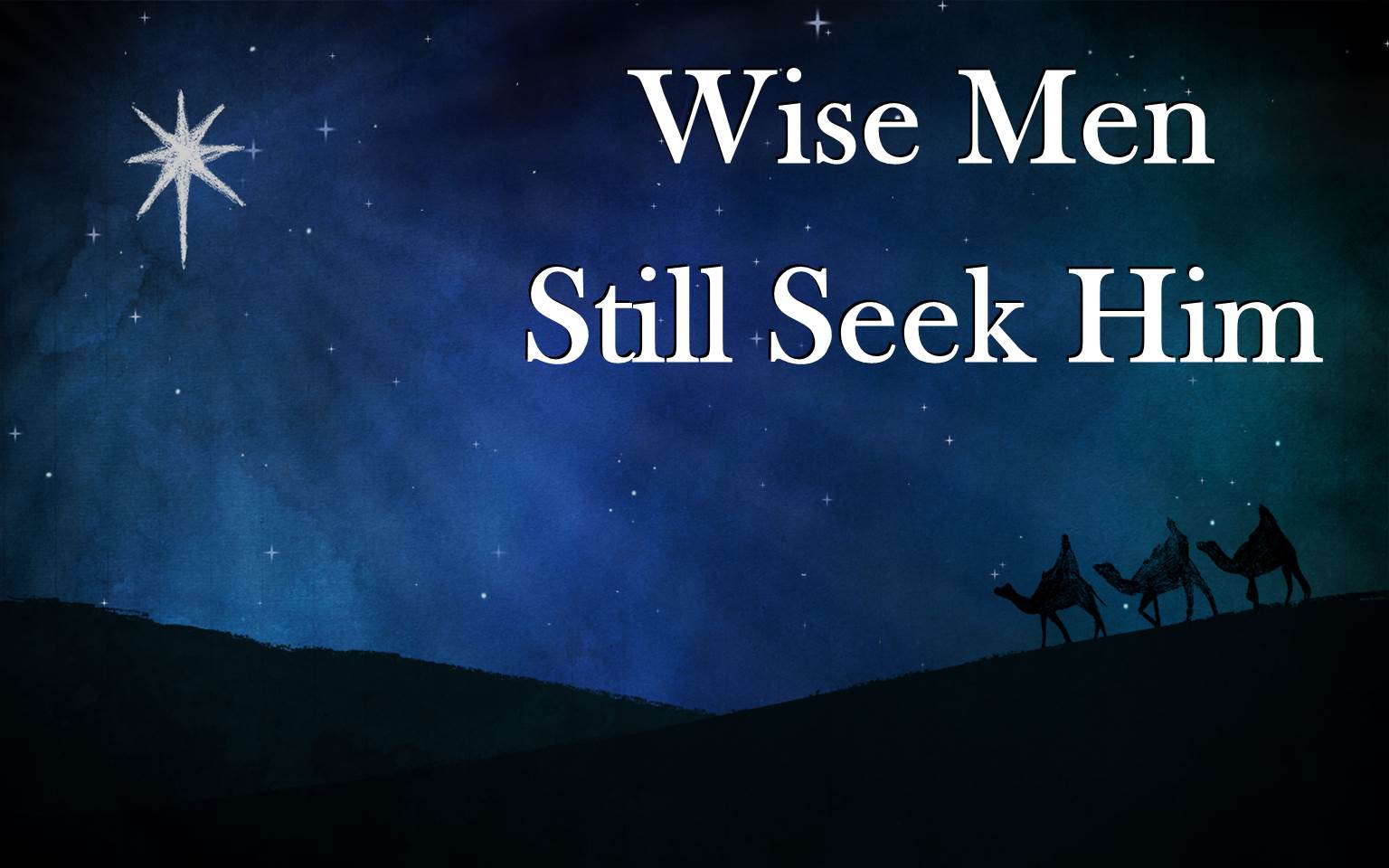
One of the most endearing expressions of the Christmas season is the signs, cards, and bumper stickers depicting the wise men following the star toward Bethlehem where the Savior was born.  The caption says it all: “Wise Men Still Seek Him.”  This imagery is based on the account in Mt. 2:1-2.  There the scripture says, “Now after Jesus was born in Bethlehem of Judea in the days of Herod the king, magi from the east arrived in Jerusalem, saying, ‘Where is He who has been born King of the Jews?  For we saw His star in the east and have come to worship Him.'”

The term “magi” in the New American Standard Bible (NASB) refers to a class of men in ancient times who were typically counselors to kings.  These men were highly educated, often in areas such as astronomy, astrology, and natural sciences.  This is the reason why the term “wise men” is so often used to describe them.  These men were thought to have particular insight into the workings of the universe and thus were invaluable aides to monarchs in virtually every ancient culture.

In the case of the wise men in Matthew’s account, they were from an unnamed eastern nation and were led to the birthplace of the Lord by a special star.  The scriptures do not explain to us the extent of their understanding about Jesus’ identity, or the means by which they were led by the star.  All we know is that they recognized this star as the sign of the birth of the king of the Jews.  This was sufficient motivation for them to follow it in order to worship this new king.

These men are called wise men because they belonged to the special class of advisors who served ancient kings.  However, they were wise in another sense as well.  We consider them to be wise men because they were seeking the Savior of the world in order to worship Him.  In this sense, they are the model for all who would be wise in every generation of mankind.

When Paul spoke to the Athenians on the Areopagus, he told them that God had made every nation of mankind so they might seek Him and find Him, even though He is not far from each one of us (Acts 17:26-27).  Unlike the pagan gods who stood aloof from their subjects and shrouded themselves in mystery, the true and living God has clearly revealed Himself in creation and in His word.  Having left this evidence for us, He calls on us to seek Him in accordance with His word so He can take us home with Him to heaven at the end of time.

Several statements of scripture underscore this truth.  In Mt. 6:33 Jesus called on His audience to seek first God’s kingdom and His righteousness.  In Mt. 7:7 He told them to seek and they would find.  In Isa. 55:6 the prophet said, “Seek the Lord while He may be found; call upon Him while He is near.”  The promise of scripture is that if we seek God, we will find Him, and when we find Him, we will find eternal life.

Unlike the wise men who sought the birthplace of the Savior, we do not have to undertake a lengthy journey to a foreign land in order to find God.  We can find Him in the comfort of our own homes by opening up the scriptures and following their dictates.  In Jn. 14:6 Jesus told His apostles that He is the way, and the truth, and the life, and no one comes to the Father except through Him.  In Heb. 11:6 the scripture says we must believe that God is, and that He is a rewarder of those who seek Him.  This is both exhortation and promise.  God will reward those who seek Him, and wise men still seek Him.

Footsteps of Jesus


JesusFeet


Some years ago a fad swept through the ranks of evangelical Christians.  In order to inspire believers to be more thoughtful in their conduct the acronym WWJD began to be published in every possible venue.  The acronym stood for, “What Would Jesus Do?”, and soon it adorned all sorts of clothing, jewelry, signage, and bumper stickers.  It was a call for believers to follow the Lord’s example in all their daily affairs.  Like most fads it passed about as quickly as it had arisen.

Any attempt to get us to focus on following the example of our Lord should be commended.  This is, after all, what we’ve been called to do by scripture.  In 1 Pet. 2:21-24 Peter said, “For you have been called for this purpose, since Christ also suffered for you, leaving you an example for you to follow in His steps, who committed no sin, nor was any deceit found in His mouth; and while being reviled, He did not revile in return; while suffering, He uttered no threats, but kept entrusting Himself to Him who judges righteously; and He Himself bore our sins in His body on the cross, so that we might die to sin and live to righteousness; for by His wounds you were healed.”

We sometimes sing a song that echoes this principle.  It is entitled, “Footprints of Jesus.”  The first stanza says, “Sweetly, Lord, have we heard Thee calling, ‘Come follow Me!’  And we see where Thy footprints falling lead us to Thee.”  The remaining stanzas speak of following the Lord to seek His sheep and to help the weak, to preach the word and to serve the Lord.  The final stanza speaks of following His footprints all the way to heaven itself.  The chorus proclaims, “We will follow the steps of Jesus, where e’er they go.”

We love to sing this song, but do we fully understand what it means to walk in the footsteps of Jesus?  The song paints the Christian walk in broad stokes, and in the context of the high and noble aspects of following the Lord.  Peter’s statement, on the other hand, speaks more to the nuts and bolts of Christian living.  The things of which Peter spoke are not the kinds of things for which recognition and acclaim are given, or about which songs are sung.  They are the “down in the trenches” aspects of Christian living, and they are, ultimately, what sets us apart as true followers of the Lord.

According to Peter, our Lord set the example by not committing sin.  This is the most daunting aspect of following the Lord’s example because on our own we are incapable of sinless living.  It is not impossible, however, because John promised Christians that if we walk in the light the blood of Jesus cleanses us from our sins (1 Jn. 1:7-9).  Thus our sins are covered, and are not counted against us.  The other aspects of the Lord’s example, as Peter stated them, are well within our human ability to achieve.

Never being deceitful is a choice we make, and we can all do this.  Refusing to return verbal abuse or threats to those who utter them to us is something we all can do.  Entrusting ourselves to God the righteous judge is also well within our capabilities as humans.  There is simply no excuse for not following the Lord’s example in these ways.

Of course we are able to do these things because the Lord bore our sins on the cross.  He did this so we could die to sin and live righteously.  The Lord’s sacrifice on the cross heals us from all the wounds of life, and it enables us to follow His example of godly living.

If we are serious about going to heaven, we must follow the example of Jesus.  He walked through life just as we do, and if we follow His footsteps, He will lead us all the way home.

The Eye in the Sky

God is Watching


In recent years a Christmas ritual called “Elf on the Shelf” has become something of a mania.  Social media is saturated with photos about how this family or that family practices this tradition.  Apparently many families take this very seriously.  The ones who do are no doubt dismayed and annoyed at those who make fun of it.  Pictures of elves having been eaten by the dog, or hung in effigy, or destroyed in some humorous way are about as common as the serious ones.

The purpose of the Elf on the Shelf, according to the 2005 book by the same name, is to remind children to behave so they will receive presents on Christmas Day.  Apparently the elf reports to Santa on what everyone in the household is doing.  Obedience is always an appropriate subject matter as we are raising our children, of course, and if an Elf on the Shelf helps with this, then perhaps it has some value.  Some of us, however, were raised with a different motivational tool.  It was called the Belt on the Shelf.  Time will tell which approach is better.

When we think about being watched as we go about our daily business, the Elf on the Shelf is but a shadow of the truth on this subject.  The scriptures teach us that we are indeed being watched each day in all that we do.  The one watching, however, is not an elf, and is not limited to a specific location in one’s home or office.  The one who is watching us is unlimited in scope and presence.  In fact, He is everywhere present in space and time.  He is God the Father, and the scriptures teach that He sees everything we do.

Two scriptures in particular testify to this truth.  In Prov. 15:3 Solomon wrote, “The eyes of the Lord are in every place, watching the evil and the good.”  In Jer. 16:17 God Himself said, “For My eyes are on all their ways; they are not hidden from My face, nor is their iniquity concealed from My eyes.”

The fact that God sees everything should certainly give us pause as we contemplate the actions we may take each day.  However, there is more to this truth that must be considered.  In 2 Chr. 16:9 the scripture says, “For the eyes of the Lord move to and fro throughout the earth that He may strongly support those whose heart is completely His.”  In Psa. 33:18, 19 the scripture says, “Behold, the eye of the Lord is on those who fear Him, on those who hope for His lovingkindness, to deliver their soul from death and to keep them alive in famine.”  These statements assure us that God watches the righteous in order to provide for them and to protect them.  He has a different perspective, however, on the unrighteous.

In Psa. 34:15, 16 the scripture says, “The eyes of the Lord are toward the righteous and His ears are open to their cry.  The face of the Lord is against evildoers, to cut off the memory of them from the earth.”  This same truth is repeated in Heb. 4:13, where the scripture says, “And there is no creature hidden from His sight, but all things are open and laid bare to the eyes of Him with whom we have to do.”  The implication of these statements is that God sees and takes note of wicked deeds in order to render His judgment against those who do them.

Some are offended by the idea of an eye in the sky watching their every move.  However, the only ones who should be concerned about God’s watchful eye are those who disobey His will.  If we obey the gospel and follow His word each day, the blood of Jesus cleanses us from our sins (1 Jn. 1:7-9).  For those whose sins have been forgiven, the eye in the sky is a blessing.  For those whose sins have not been forgiven, the eye in the sky means the certainty of judgment, for God will not let the guilty go unpunished (Ex. 34:7).

Always Give Thanks

61qzgxode9L._SL1100_

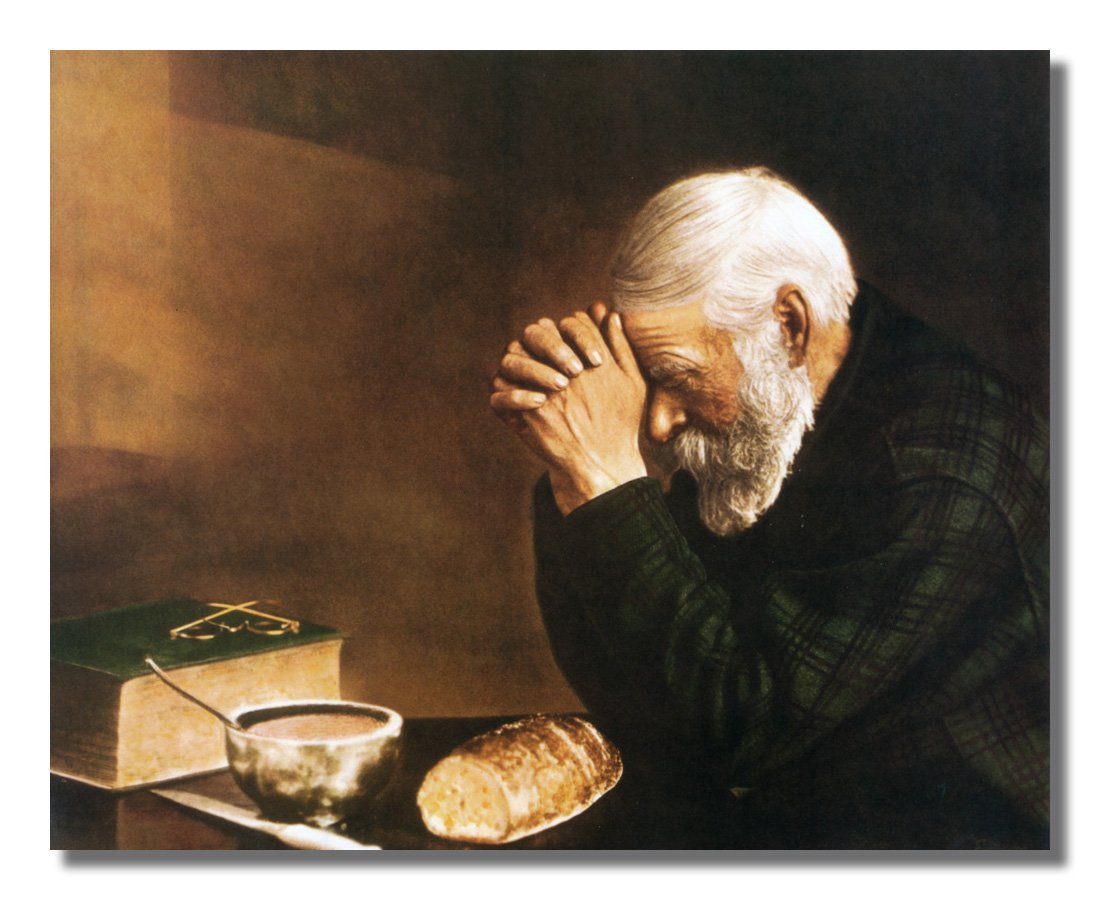
The giving of thanks is something that most of us learn at an early age.  One of the first things parents teach their children is to say, “Thank you.”  To do so is a sign of good manners.  We are proud of our children when they learn to do this without prompting and we praise them for it.  It is a signal that they understand the principle of gratitude.

Unfortunately, some people seem to lose this sense of responsibility as they grow older.  One of the more disheartening signs of our modern age is the apparent lack of gratitude that seems to characterize it.  We have perhaps become so accustomed to neglecting the simple matter of saying “Thank you” that we no longer recognize it when it happens.

Saying “Thank you” is certainly a small thing.  Nearly everyone would agree on this.  So, why has it become such a difficult thing for so many to say?  Perhaps it is because too many of us actually do not feel gratitude for services rendered or kindnesses given.  If one does not feel thankful for something, he will hardly take time to offer the appropriate words, will he?  It is possible, of course, that some who neglect to express thanks do so because they simply haven’t given it any thought, but this is not an excuse for such a failure.

To not be thankful, for whatever reasons, is a social blunder.  To not be thankful to God, however, is a sin.  Thankfulness should be at the heart of all we do in worship and in service to the Lord.  If we cannot be thankful to Him for all the rich blessings that He has given us, for the answers to our prayers, for the abundance of His grace, and for salvation in Jesus Christ, for what can we be thankful?  It certainly behooves us to give the matter some serious thought.

The scriptures abound with expressions of thanks to God for all the things He has done.  Many of the Psalms, for example, are songs of thanksgiving.  Time after time, men and women in scripture gave thanks to God for the things He had done for them, or given to them.  Under the Law of Moses, a thanksgiving offering, given at any time that the worshiper wanted to express gratitude to God,  was an important part of the exercise of Old Testament service to God.  Even our Savior on numerous occasions spoke words of thanks to His Father in heaven.  For all of these, giving thanks was a natural response to the blessings that God showered upon them.  They simply could not refrain from doing so.

It is interesting to notice that in the two primary New Testament passages that teach us to sing in our worship, we are commanded to do so with thanksgiving in our hearts.  In Eph. 5:20 Paul said we should be “always giving thanks for all things in the name of our Lord Jesus Christ to God, even the Father.”  In Col. 3:16, 17 Paul tells us to sing with thankfulness in our hearts and to do all in the name of Jesus, giving thanks through Him to God the Father.  Without a doubt, giving thanks to God is central to our worship and service.

There is no question that all of us are thankful to God when we celebrate our national day of thanksgiving, but we must not allow ourselves to become thoughtless in our expression of thanks to the Lord the rest of the year.  God blesses His people each and every day with everything they need to live on this earth.  He also blesses us each day with His grace and forgiveness.  For these reasons we must always give thanks to Him.

A Time For Choosing

fork-in-the-road-1


On October 27, 1964 an actor named Ronald Reagan delivered a televised speech in support of the Republican Presidential candidate, Barry Goldwater.  He entitled his speech, “A Time For Choosing,” and in it he laid out the stark contrasts between the views and policies of the conservative Goldwater and the liberal, incumbent, Lyndon B. Johnson.  This speech is widely credited with being the catalyst that propelled Reagan to a successful political career, first as governor of California, and later as President of the United States.

We often think of times of choosing as arising at critical moments in our lives.  Whether it is the choice of a vocational path, or an educational goal, or one’s life mate, we understand that there are times when we must choose one thing over another in order to proceed.  In some cases, our choices are little more than a matter of preference.  On the other hand, however, there are times when our choices have consequences that can affect the remainder of our lives.

One such instance occurred when Joshua was preparing Israel to live in the Promised Land.  He had led them through five years of conquest, during which time they had driven most of the Canaanite peoples from the land.  Now, as his own life neared its end, Joshua called Israel together for a final exhortation.  In Josh. 24:14-15 he said, “Now, therefore, fear the Lord and serve Him in sincerity and truth; and put away the gods which your fathers served beyond the River and in Egypt, and serve the Lord.  If it is disagreeable in your sight to serve the Lord, choose for yourselves today whom you will serve: whether the gods which your fathers served which were beyond the River, or the gods of the Amorites in whose land you are living; but as for me and my house, we will serve the Lord.”

For Israel it was a time for choosing.  They had been given a bountiful land in which to live.  It was a good land with cities and vineyards and flowing rivers and abundant rain.  They had received it by the hand of God, who had defeated all their enemies.  Now, as they settled into their inheritance, they must choose if they would remain faithful to the God who had given them this land.  Their history shows that sometimes they chose to follow God and other times they chose not to.  Their fortunes reflected their choices right up to the time in which they were taken away into captivity.

Joshua called upon Israel to make a choice that day, as he spoke to them.  In truth, however, they had to make that choice each and every day of their lives.  This is a principle that remains as true today as it was then.  In Heb. 11:6 the scripture says that without faith it is impossible to please God.  In Mt. 7:21 Jesus said, “Not everyone who says to Me, ‘Lord, Lord,’ will enter the kingdom of heaven, but he who does the will of My Father who is in heaven will enter.”  In Rev. 2:10 the Lord said, “Be faithful until death, and I will give you the crown of life.”

So then, we also face a time for choosing.  We must choose to believe in God and obey His will, or to go another way.  One choice leads to eternal life, but the other leads to destruction, as the Lord said in Mt. 7:13-14.  How we choose affects how our lives play out here on the earth, for those who pursue godliness receive benefits here and now for doing so (1 Tim. 4:8).  The greatest benefit, of course, is eternal life in the place being prepared in heaven for the faithful (Jn. 14:1-4).  Until the Lord returns, it is a time for choosing.  What will you choose?

A Great Worship Show

worship_by_knilvrie


Social media affords individuals the opportunity to express their opinions on everything from the ridiculous to the sublime.  Some of these opinions are profane.  Some are mean and hurtful.  Some are just plain stupid.  Others demonstrate an obvious lack of understanding about the subject under consideration.  One comment that falls into this latter category was a reaction to a worship assembly that one person had attended.  The comment was, “A great worship show!”  It was accompanied by a picture which showed a praise band performing on a stage bathed in multi-colored spot lights while the audience was in darkness.

For many professed believers today, this is exactly what worship has become.  It is a stage show in which the audience members are spectators as professional musicians and singers belt out rock-like tunes in praise to God.  If a video of such worship were shown without the sound, it would be nearly impossible to distinguish it from a secular rock concert.  The audience may clap and sing along, and some may even dance in the aisles as the music plays, and at the end of each piece, the arena (sorry, sanctuary), erupts in applause.  At the conclusion of the event everyone goes away with the same feelings of exhilaration that one would experience at a secular show.

Obviously this kind of event appeals to a wide spectrum of modern society, but is this what worship is supposed to be?  Many people think the very idea of asking such a question is absurd.  The prevailing attitude seems to be that whatever we want to do in worship to God will be just fine with Him.  However, even a cursory look at the scriptures shows otherwise.

All throughout the Old Testament God was very explicit in how His people were to worship Him.  He never left them to their own devices in deciding how to worship.  He always told them exactly what He would and would not accept from them.  The classic example of this is Nadab and Abihu in Lev. 10:1-2.  The scripture says that they offered strange fire before the Lord, “which He had not commanded them.”  As a result, God sent fire from heaven to consume them.  The point is that God only accepts worship that is offered in the manner He commands.

In the New Testament, the summary statement of God’s will about worship is made by Jesus in Jn. 4:24.  Speaking to the woman at the well in Samaria, the Lord said, “God is spirit, and those who worship Him must worship in spirit and truth.”  This is a general statement that covers both our attitude as we worship, as well as the things we do in worship.  Our worship must be sincere, but it must also be what God has commanded.

Our understanding of New Testament worship is a composite of a number of statements and examples.  We worship on the first day of the week (Sunday), because this is when first century Christians met (Acts 20:7).  We sing and make melody with our hearts, as they did (Eph. 5:15-21).  We eat the Lord’s Supper (Acts 20:7), give of our means (1 Cor. 16:1-2), pray, and proclaim God’s word (Acts 2:42).  All these things were done by the early Christians in a simple and reverent way, as befitting those coming into the presence of Almighty God.

This is the point that is lost on many modern worshipers.  God is the object of our worship, not the people in the pews.  Our joy and fulfillment in worship should come from having offered acceptable worship to God, rather than from having been entertained or moved by someone’s performance.  We don’t assemble to put on a great worship show.  We assemble to show our love for God by doing what He has commanded us to do.