As You Wish. . .

pb-as-you-wish


One of the most popular films of all time is the 1987 movie, “The Princess Bride.”  Like many films that have become classics, it was not a spectacular success in its original theatrical release.  However, the advent of the VCR and movie rental stores exposed it to a much wider audience, most of whom immediately fell in love with it.  Today, nearly thirty years after its initial release, The Princess Bride is one of the most beloved films ever.

At the heart of it, The Princess Bride is a love story.  In the opening sequences the beautiful Buttercup takes great pleasure in ordering the farm boy, Westley, to do various menial chores for her.  Each time she gives him an order, he softly replies, “As you wish,” and does as she has requested.  After several instances of this exchange, the narrator explains to the audience that Buttercup finally realized that when Westley, said, “As you wish,” he really meant, “I love you.”

Neither the author of the book, nor the director of the film, had any spiritual message in mind as they worked on this beautiful story.  However, there is a very basic spiritual truth to be found in Westley’s simple statement.  It is, in fact, a fundamental truth that marks mankind’s relationship to God from the beginning of time.  It is the truth that loving God means doing what He commands us to do.

God Himself spoke this truth when He gave the Ten Commandments to Moses on Mt. Sinai.  In Ex. 20:4-6 God said, “You shall not make for yourself an idol, or any likeness of what is in heaven above or on earth beneath or in the water under the earth.  You shall not worship them or serve them; for I, the Lord your God, am a jealous God, visiting the iniquity of the fathers on the children, on the third and fourth generation of those who hate Me, but showing lovingkindness to thousands, to those who love Me and keep My commandments.”  In other words, those who love God obey Him.  Those who don’t obey Him, hate Him.

When Jesus was upon the earth, He repeated this truth in Jn. 14:15.  On the night of His betrayal the Lord told the twelve, “If you love Me, you will keep My commandments.”  Later, as He prayed in the Garden of Gethsemane, He said to the Father, “. . . yet not as I will, but as You will” (Mt. 26:39).  This is it in a nutshell.  If we truly love God and love our Lord Jesus Christ, we will obey their commands.  This is how we say, “I love you,” to them.  Any response other than obedience means we hate them (Ex. 20:5).

This truth seems largely forgotten in the broader religious world today.  Much of modern church-going has become, “As I wish,” rather than, “As you wish.”  For example, some churches are constituted on the basis of what appeals to the largest number of people.  Other churches hold a finger to the wind and alter long-standing doctrines so they will not run afoul of political correctness.  Individual believers shop around to find a church that provides the programs and the worship experience that they most enjoy.  All of these loudly proclaim how much they love Jesus, even while they systematically ignore much of what the Lord commanded.

From the time that God placed Adam and Eve in the Garden of Eden, until the Lord comes again, God has required only one thing of mankind.  He requires us to show our love for Him by obeying what He has commanded.  He has not allowed anyone in any era of history to alter or ignore His word in any way.  Moses told Israel, “You shall not add to the word which I am commanding you, nor take away from it, that you may keep the commandments of the Lord your God which I command you”  (Deut. 4:2).  At the end of Revelation John wrote, “I testify to everyone who hears the words of the prophecy of this book: if anyone adds to them, God will add to him the plagues which are written in this book; and if anyone takes away from the words of the book of this prophecy, God will take away his part from the tree of life and from the holy city, which are written in this book” (Rev. 22:18, 19).  From cover to cover the scriptures require us to do what God commands.

By God’s own assessment, and by the proclamation of the scriptures delivered by means of His Holy Spirit, those who alter or ignore His commands actually hate Him, and His judgment will come upon those who do so.  On the other hand, if we truly love God, and if we truly love our Lord Jesus Christ, there is only one response we can make to what is written in the scriptures.  All we can say is, “As you wish.”

Obedience and Grace

Hand of a god-like creature pointing with finger.

A Facebook firestorm erupted recently when a faithful gospel preacher posted his response to a question that had been posed to him about what he called precision obedience.  His response was a masterful and biblically accurate recitation of God’s demand that His commands must be observed exactly as He gave them.  This preacher cited many examples, especially from the book of Deuteronomy, which clearly establish the principle that God does not allow us to serve Him however we may please.  Of course, many today discount such evidence because we are not under the Law, but under grace (Rom. 6:14).

The question of whether God requires precision obedience seems predicated on the assumption that in the Christian era we are not bound in such a way.  This is a pretty common precept among many professed believers.  They seem to think that if they love the Lord, worship Him with enthusiasm and sincerity, and do good deeds to those in need, the details of what they believe and practice are unimportant.  In one sense this is an expression of their reliance on the grace of God.  So then, if one stresses the necessity of obedience he is accused of ignoring grace, or of believing in salvation by works.  However, obedience and grace are not mutually exclusive.  They not only can co-exist, they must co-exist in the beliefs and practices of God’s people.

There is no question that we are saved by grace, because we do not possess the righteousness within ourselves to pay the debt for our sins. This is why Paul told Titus that the “grace of God has appeared, bringing salvation to all men, instructing us to deny ungodliness and worldly desires and to live sensibly, righteously and godly in the present age” (Tit. 2:11, 12).  It is also why he said, “For by grace you have been saved through faith; and that not of yourselves, it is the gift of God; not as a result of works, so that no one may boast” (Eph. 2:8, 9).

We are saved by the grace of God who paid the debt for our sins through the blood shed by His Son on the cross (Col. 1:19, 20).  At the same time, however, God, through the very same Son, requires us to obey His will.  Jesus said that only those who do the will of the Father will enter heaven (Mt. 7:21-23).  He also said, “If you love Me, you will keep My commandments” (Jn. 14:15).  And when the Lord gave the Great Commission, He again emphasized the necessity of obedience.  He said, “Go therefore and make disciples of all nations, baptizing them in the name of the Father and the Son and the Holy Spirit, teaching them to observe all that I commanded you; and lo, I am with you always, even to the end of the age” (Mt. 28:19, 20).

Obedience does not negate grace.  Neither does grace negate obedience.  Both are essential to our salvation.  These precepts come together in the fact that we are incapable of perfectly obeying all that God commands us.  When we try with all sincerity to do all the Lord commands us, His grace covers our inability to perfectly obey Him.  However, it only covers our sins if we are, in fact, seeking to obey His will.  This is why King David, with all his sins, was called a man after God’s own heart, and King Saul was rejected by God.  David tried to do what God commanded with all his heart and sometimes failed.  Saul, on the other hand, altered God’s commands to suit himself and was condemned for being disobedient.  The bottom line in scripture is that one is either obedient or he is disobedient.  There is no “precision” to it.  When we sincerely seek to obey all that God has commanded, without altering it in any way, the grace of God makes our obedience acceptable to Him.


I Want To Go Home

DSCN0075


One of the most beloved films of all time is the 1939 movie, “The Wizard of Oz.”  Long after its theatrical release this film became a favorite of generations of Americans due to its extensive airing on broadcast television.  The story is an entertaining mix of fantasy, humor, and the traditional values of right and wrong and personal responsibility that used to be the stock in trade of the film industry.  There is just enough danger and suspense to keep the audience’s attention and it concludes with the once typical happily-ever-after ending.

A key element in the film’s story is Dorothy’s consuming desire to go home.  Although Oz is an amazingly beautiful place, conveyed by being filmed in color versus the black and white of the opening and closing sequences, Dorothy just wants to go home.  Her magical adventure, her wonderful new friends, and her victory over the wicked witch are not enough to satisfy her.  She would gladly trade all of Oz’s delights just to be home once again with her family.

It may surprise us to learn that the great apostle Paul, as he neared the end of his ministry, had the same feelings that Dorothy expressed.  He just wanted to go home, but he had something substantially different in mind than Dorothy did.  As he awaited an audience with Caesar in Rome, Paul wrote to the church in Philippi and told them of his dilemma.  In Phil. 1:23-24 he said, “But I am hard-pressed from both directions, having the desire to depart and be with Christ, for that is very much better; yet to remain on in the flesh is more necessary for your sake.”

Paul’s ancestral home was in Tarsus in Cilicia, but that’s not where he wanted to go.  For Paul, home was being in the presence of the Lord. Even though he was doing some of the most important work a man could possibly do; even though he was highly regarded among the brethren all over the Roman Empire; and even though he continued efforts were so needed by the church, Paul just wanted to go home.  We can imagine Paul, like Dorothy, saying, “There’s no place like home.”

We may wonder how he could have such a desire to go to a place he had never been, and to think of this unknown place as home.  Yet it is not so hard to understand.  In Phil. 1:21 Paul said, “For me to live is Christ and to die is gain.”  In other words, his relationship with Christ was such that nothing in life could compare to it.  Whatever joy he might have had in life, it was nothing compared to his desire to be with the Lord.  For Paul, home was where the Lord was, even though he had never been to that place before.

We understand this in our own experience because home is where our loved ones are, no matter where that place may be.  We may have fond memories of the old family dwelling place or locale, but once the family is gone from that place it isn’t the same, is it?  As it turns out, it was not the place that was so special, but the fact that our family was there.  This was Paul’s attitude about going to be with the Lord.  He’d never been to that place, but it was home because the Lord was there, and nothing on earth would satisfy this desire.

This should be our attitude as well.  God gave us a beautiful world in which to live, full of all kinds of wonders to amaze us and to enhance our time here, but like the old song says, “This world is not my home, I’m just a-passing through.  My treasures are laid up, somewhere beyond the blue.”  We should not be so attached to this place that we lose sight of where our true home is.  As we live our lives our overwhelming desire, and our every action, should be so we can go home to be with the Lord when we die (2 Cor. 5:8).  If we do so, then we will indeed live happily ever after, at home with the Lord.

(Note: Case in point to the theme of this article.  The photo above is the old Dominguez family home in Lake Elsinore, CA.  My father purchased this house after his discharge from the Marine Corps in 1945, and his mother and sisters lived in it for many years.  This was a favorite place for me in my youth, and I spent many happy times there.  This photo was taken a few years ago when I was visiting in CA on vacation.  I loved this place as a child, but it’s no longer home, because my loved ones are no longer there.)

The Altar of Molech

a4d3cbf38a125842c19d2378399cfa10


The pagan nations that surrounded Israel worshiped some of the most despicable gods of the ancient world.  One of the most hideous of these was a god called Molech, who was a favorite of the Ammonite people.  A central feature of worship to Molech was offering one’s children as a sacrifice to this god.  In the scriptures this human sacrifice is often referred to as making one’s children “pass through the fire” (2 Chr. 33:6).  It was such a repugnant practice that God specifically named this god, and this heinous practice, among the many things in which Israel was forbidden to engage (Lev. 18:21).

The altar of Molech as typically a large hollow metal structure with the god’s hands outstretched before him.  A fire was built within the base of the image and the entire structure was heated red-hot.  When the image was sufficiently hot, the worshiper would place his or her live child on the glowing hands of the altar.  The child then was consumed by the heat as a sacrifice to this god.

The very idea of such a thing is repulsive to us, but the scriptures tell us that some of the Israelites performed this abominable practice (Jer. 32:35).  The most significant Israelite to do so was evil King Manasseh.  In 2 Chr. 33:6 the scripture says that he made his sons pass through the fire in the valley of Ben-Hinnom.  It was this wickedness of Manasseh that appears to have been the last straw in ending God’s patience with Judah.  Within a few years of Manasseh’s death Judah went into captivity in Babylon.

When we reflect on such practices in the name of religion, we are appalled that people could commit such atrocities.  We look back at these ancient peoples and shake our heads at how ignorant and barbaric they were.  We congratulate ourselves that we live in a far more civilized and enlightened world than they.  In all fairness to these ancient peoples, however, it is clearly evident that our world is no less barbaric than theirs.  Nothing illustrates this truth better than recent revelations about what is happening in abortion clinics all over our country.

Living babies, complete with souls given by God (Eccl. 12:7), are literally being torn limb from limb by medical practitioners.  Not only this, but various body parts of these murdered babies are being sold for medical research.  The barbarity of tearing a living being limb from limb is exceeded only by the hypocrisy of those who justify this abominable practice.  While inside the mother’s womb, the child is conveniently called a “fetus”, or “fetal tissue”, as though it is not human.  However, once the abortion process begins, the abortionist does so in such a way that “human” organs (hearts, lungs, livers, brains, etc.) will be preserved to be sold for research.

The abortion industry is the modern equivalent of the ancient god Molech.  The abortion table is his altar, and the unborn children ruthlessly destroyed by hands who took an oath to first do no harm, are the living sacrifices killed on that altar.  It is the height of rebellion to God and to His will that people demand the “right” to terminate unborn human life primarily for their own convenience (statistics confirm that this is the case in most abortions performed today).  In this sense the ancients were more righteous, because they believed sacrificing their children would bring their god’s blessings upon them.  No such motivation exists in the abortion industry.

In Prov. 6:16-19 Solomon said there are seven things which are an abomination to God.  Among them is “hands that shed innocent blood.”  God condemned the sacrifice of children in the ancient world, and He is no less displeased with the practice of abortion today, no matter how euphemistically we may refer to it.  As Christians we must speak up on behalf of the innocent lives that are being sacrificed on the modern altar of Molech.

The Narrow Way

NarrowWay280


In the Sermon on the Mount, Jesus told His audience that there are only two ways by which they would pass through life.  In Mt. 7:13, 14 He described them as the broad way and the narrow way.  The broad way, He said, leads to destruction, but the narrow way leads to life.  He also said that more people will travel down the broad way than those who find and follow the narrow way.  He did not allow for any other option.

We sometimes speak of staying on the “straight and narrow”, a phrase that is derived from the old King James Version, which speaks of the “strait gate” and the “narrow way”.  The point, of course, is that there is only one way that leads to heaven, and it is the path less traveled.  This way is a more difficult path, as the old English word “strait” suggests, rather than being an unwavering line, as the modern term “straight” suggests.  It is a way of life that submits to the commands of the Lord and eschews the ways of the world.

The most significant aspect of the Lord’s description of the path that leads to life, however, is the term “narrow.”  This suggests that there is no room to waver, or to stray to one side or the other.  This is not a popular idea in many religious circles today, but the concept of a narrow way is well documented in the scriptures.  It is stated in a very powerful manner in the books of Deuteronomy and Joshua, and was endorsed by the Lord Himself during His earthly ministry.

When Moses was preparing Israel to enter the Promised Land after his death, he reminded them of God’s Law, and was the first to cite the principle of a narrow way.  In Deut. 5:32 he said, “So you shall observe to do just as the Lord your God has commanded you; you shall not turn aside to the right or to the left.”  He repeated this command in Deut. 7:19, 20 with regard to the future kings of Israel, and again as he revealed the covenant of blessings and curses to Israel in Deut. 28:14.  Later, God bound Joshua with the same charge in Josh. 1:7.  Just before he died, Joshua repeated this charge to Israel (Josh. 23:6).

This is a powerful statement of what God requires of His people.  He expects us to stay on the pathway of obedience to His commands.  He does not want us to veer from the path to either side of it.  His way is a narrow way, and it is the only way that leads to eternal life.  Our Savior made this clear in Jn. 14:6, where He said, “I am the way, and the truth, and the life; no one comes to the Father but through Me” (emphasis added).  There is simply no alternative to God’s narrow way.

In our time, we often use the terms “right” and “left” to describe a conservative point of view versus a liberal point of view.  Even in the church we often use these terms, and depending upon one’s perspective, we extoll the one while vilifying the other.  Unfortunately, we greatly err when we do so, because we have ignored or forgotten God’s point of view on matters of faith.  God does not call us to be conservative or liberal.  He calls us to walk straight down the narrow path.  He commands us to not turn aside either to the right or to the left.

A reason for this command is that those of a conservative mindset often tend to add to God’s commands, while those of a liberal mindset tend to take away from God’s commands.  Doing either of these things violates God’s will.  In Deut. 4:2 Moses commanded Israel that they must not add to or take away from God’s commands.  John the apostle restated this principle with regard to the book of Revelation (Rev. 22:18, 19), and we correctly apply this principle to the entire New Testament.

Jesus said that we have two choices: the broad way that leads to destruction, or the narrow way that leads to eternal life.  Therefore, let us choose the narrow way, and as we walk this path, let us not turn aside either to the right or to the left.

Build On The Rock

build_on_the-rock


As the Lord brought the Sermon on the Mount to a close, He exhorted His audience to take His teachings to heart.  In Mt.7:24-27 Jesus said, “Everyone then who hears these words of mine and does them will be like a wise man who built his house on the rock.  And the rain fell, and the floods came, and the winds blew and beat on that house, but it did not fall, because it had been founded on the rock.  And everyone who hears these words of mine and does not do them will be like a foolish man who built his house on the sand.  And the rain fell, and the floods came, and the winds blew and beat against that house, and it fell, and great was the fall of it.” (English Standard Version)

Most of us enthusiastically embrace this exhortation and particularly enjoy singing the song with our children about the wise man who built his house upon the rock.  The simplicity of the Lord’s point should insure that we all understand exactly what He meant by it.  However, it is not entirely clear that we actually grasp what the Lord intended for us to understand.  We glibly speak about building our spiritual houses on the rock, but what do we mean when we say so?  Is it possible we may be overlooking the full implications of what the Lord said?

The Lord’s closing remarks in the Sermon on the Mount are focused on obeying God’s will.  In Mt. 7:21-23 the Lord said, “Not everyone who says to Me, ‘Lord, Lord,’ will enter the kingdom of heaven, but he who does the will of My Father who is in heaven will enter.  Many will say to Me on that day, ‘Lord, Lord, did we not prophesy in Your name, and in Your name cast out demons, and in Your name perform many miracles?’  And then I will declare to them, ‘I never knew you; depart from Me, you who practice lawlessness.” (NASB)

The Lord plainly taught that only those who do the Father’s will are going to enter heaven.  He then underscored this truth by the exhortation to build on the rock.  However, He did not leave us to our own devices to define what building on the rock means.  He explicitly said that one who hears His word and does it is the one who is building on the rock (Mt. 7:24).  This reinforces His statements in Mt. 7:21-23, especially with regard to those who thought they were doing the Lord’s will, but were not.

It is possible for one to be busy building a spiritual house, but to be doing so on the sand because it is not based upon obedience to God’s word.  The people of Mt. 7:21-23 were honest, sincere, religious people who were doing good works in service to the Lord.  In their minds they were building on the rock, but the Lord said they actually were practicing lawlessness.  In the context, this can only mean that they were not doing God’s will, even though they were sincerely religious.

The obvious lesson from the Lord’s statement at the end of the Sermon on the Mount is that the only way we can build on the rock is to obey God’s will in everything we do.  This means that we must do whatever He has commanded in His word.  At the end of the Great Commission, Jesus made this very point, saying, “teaching them to observe all that I commanded you” (Mt. 28:20a).  In Psa. 127:1 Solomon said it this way, “Unless the Lord builds the house, they labor in vain who build it.”  Therefore, let us take the Lord’s teachings to heart and be wise builders by not only hearing what the Lord commanded, but by doing all that He commanded.  If we do so, our house will stand all the trials of life, because we have built on the rock.

Love Covers A Multitude of Sins

love


Way back in the 1960s the Beatles sang, “All you need is love.”  This sentiment became the anthem of that generation, although few truly understood the full implications of this statement.  Most who adopted this philosophy applied it in a purely humanistic manner.  Over time this philosophy has become part of the perverse nature of our culture in which every kind of wickedness must be tolerated, because, we are told, this is how we show love.  Even professed believers have fallen into this mistaken point of view, as evidenced by the churches who are now adjusting their belief systems to allow for behaviors that the scriptures clearly condemn.

While we may balk at the current application of “love thy neighbor” as practiced by many, we may feel at a loss to offer a truly biblical response.  The scriptures do, in fact, teach that all we need is love.  However, love, as defined in the scriptures, is far different from the world’s definition.  Jesus taught that the greatest commandment is, “You shall love the Lord your God with all your heart, and with all your soul, and with all your mind” (Mt. 22:37).  He added in v. 39, “You shall love your neighbor as yourself.”  But He did not leave us to our own devices to define what love is.

In Jn. 14:15 the Lord said, “If you love Me, you will keep My commandments.”  In v. 23 He added these words: “If anyone loves Me, he will keep My word; and My Father will love him, and We will come to him and make Our abode with him.”  This divine definition of love helps us to understand why loving God with all one’s heart, soul, and mind is the greatest commandment.  If we truly love God, we will do everything that He commands us in His word, and we will be acceptable to Him.

Jesus said that if we love Him and keep His word, then God the Father will love us and make His abode with us.  Here is the divine aspect of what love is.  Paul spoke of it in Rom. 5:8, where he said, “But God commends His own love toward us, in that while we were yet sinners, Christ died for us.”  God showed His love for us by sending His Son to be the atoning sacrifice for the sins of all mankind.  The blood of Christ covers our sins when we are baptized into Christ for the forgiveness of our sins (Acts 2:38; 22:16).

When Peter wrote his first letter, he spoke of the importance of love in our walk as Christians.  In 1 Pet. 4:8 he said, “Above all keep fervent in your love for one another, because love covers a multitude of sins.”  On the surface this may seem very much like the modern definition of love, but it is far from it.  We know this because the Lord’s definition of love contradicts the modern practice.  We know this also, because the Lord’s half-brother, James, also helped define it for us.  In Jas. 5: 19, 20 James said, “My brethren, if any among you strays from the truth and one turns him back, let him know that he who turns a sinner from the error of his way will save his soul from death and will cover a multitude of sins.”

Peter said love covers a multitude of sins, and James says turning a sinner from his error covers a multitude of sins.  When we understand Peter and James in the light of what the Lord said about love, we recognize that love covers our sins by turning us away from our sins and leading us to obey God’s will.  This, after all, is why God sent His Son, so that all would be saved and come to the knowledge of the truth (1 Tim. 2:4).  Love covers a multitude of sins, not by ignoring sin, but by turning us from sin to obey the gospel.  Love continues to cover a multitude of sins as Christians help each other stay on the narrow path that leads to eternal life.  Therefore, let us “keep fervent in our love for one another, because love covers a multitude of sins.”

The Ultimate Supreme Court

Unknown


The ripping sound that recently echoed across our land was the moral fabric of our society being torn apart to placate a vocal and politically well-connected minority bent on forcing the rest of us to accept their lifestyle as legitimate.  When the United States Supreme Court ruled, 5-4, that the Constitution guarantees the right of same-sex couples to marry, the reaction was immediate and passionate.  Gay rights advocates celebrated and the President spoke praising the decision, essentially calling on Christians to get over their negative beliefs on homosexuality.  Professed believers, on the other hand, are outraged and fearful of what this will mean for them in the future.  There is a very real likelihood that our First Amendment rights to freedom of speech and freedom of religion will be the next target of the pro-homosexual lobby.

Whenever the U.S. Supreme Court renders an opinion, the winners celebrate and the losers complain.  In the last half century the court has increasingly rendered its decisions to satisfy political purposes, none more evident than the ruling on same-sex marriage.  The founders of our nation certainly never envisioned what we now recognize as an activist court.  Judges are supposed to interpret law, not make law, but that point has long ago been lost.  Those who believe in the Constitution are genuinely concerned at the way it is being shredded by judges at all levels purely for political favor.

As we reflect on this current ruling, there is one argument that many people, even some on the losing side of this particular case, have ignored.  The U.S. Supreme Court is the final authority in our country, but there is another court which is the Ultimate Supreme Court.  This is a court before which everyone who has ever lived, including the justices of the U.S. Supreme Court, must appear.  It is a court from which there is no appeal, but whose every judgment is both just and fair.  This court is the court of God.

In 2 Cor. 5:10 Paul said we must all appear before the judgment seat of Christ to receive recompense (reward) for everything done in the body, whether good or bad.  In Rom. 14:12 he said that each one of us will give an account of himself to God.  In Rev. 20:11-15 John was given a vision of final judgment for all mankind.  In his description of it, he notes that everyone, both great and small, will stand before God on that day.  He points out that books will be opened and everyone will be judged from what is written in the books.  These books are the word of God, the scriptures.  The conclusion of his description of this event is that those whose names are not written in the book of life will be cast into the lake of fire, which is the second death (Rev. 20:15).

Many who want believers to stop speaking against the homosexual lifestyle have made the statement, “Just let God judge,” as though those who oppose homosexuality have no right to speak on this subject.  If we did not care about the souls of practicing homosexuals, we would indeed remain silent.  However, because we know the content of God’s word and the consequences of sinful behavior, we must warn against this abomination.  We would not stand by silently while someone drove toward a cliff.  To do so would be criminal.  It is the same in this case as well.  We must warn of impending judgment so that those who are willing may repent and be saved.

God will indeed judge, but when He renders His decision there will be no appeal.  The scriptures are crystal clear that those who practice homosexuality are condemned by God (Lev. 18:22; Lev. 20:13; Rom. 1:18-32; 1 Cor. 6:9, 10).  This is not the judgment of any man.  It is the judgment of the Ultimate Supreme Court.

A Ransacked Bible

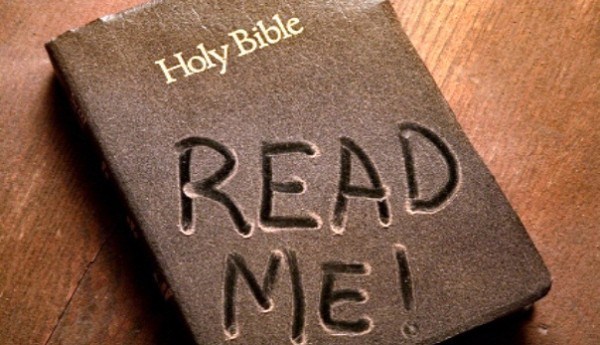
Bible-dust-read-me


Many years ago when I was in preacher-training school one of my instructors would often begin class with the statement that we were going to “ransack our Bibles” as we studied that day.  This was interesting since the word “ransack,” in typical usage, denotes going through something hurriedly and destructively.  The image of burglars literally tearing up a house in search of valuables immediately comes to mind.  This is not a pleasant picture, and we may wonder if such a word is appropriate to describe our approach to the scriptures.

It is certain that there are some whose methods do constitute a ransacking of the scriptures in the typical sense of this word.  They literally tear the scriptures apart, cherry-picking the verses or phrases that best fit their man-made doctrines, while leaving the rest of scripture lying strewn about them like so much excess baggage.  In so doing they turn an orderly and unified book into a disjointed collection of favorite sayings.  This kind of ransacked Bible is the source of the many religious practices, now present in the world, for which there is no “Thus says the Lord.”

On the other hand, is there another way to look at this word that would make it an acceptable description of how to study the scriptures?  The answer to this question is, “Yes, there is!”  As my former instructor used this word, he simply meant that we would leave no stone unturned in our search for the truth from God’s word.  He was profoundly dedicated to proclaiming “the whole purpose of God” (Acts 20:27), and this was one way in which he impressed this principle on his students.  He taught us that we must search all of the scriptures to know God’s will on any subject.  Only when we had consulted all that the Lord revealed on that subject could we say with certainty that we knew what He intended for us to believe and practice.

Recently I had a conversation with a long-time gospel preacher about one of my favorite verses of scripture.  That verse is Acts 17:11, which says of the people of Berea, “Now these were more noble-minded than those in Thessalonica, for they received the word with great eagerness, examining the scriptures daily to see whether these things were so.”  This verse speaks of a fundamental principle of Christian life.  We do not take anyone’s word for anything he might proclaim in God’s name.  We listen, and then compare what he says to what God’s word says.  If it agrees, then we can accept it and follow it.  If it does not agree, then we must reject it.  This verse is particularly significant because the Bereans were fact-checking none other than Paul the apostle!

As we talked about this verse, however, my preacher friend pointed out that in the Norwegian translation of the New Testament the word “examined” is translated “ransacked”.  So in the Norwegian, it says the Bereans ransacked the scriptures daily!  The power of that imagery is amazing.  The Bereans literally left no stone unturned as they consulted the scriptures to verify the message that Paul preached to them.  I am certain that my former instructor would have relished knowing that his signature phrase was more than a catchy way of describing dedicated Bible study.

So then, it is appropriate to speak of a ransacked Bible, and this phrase should accurately describe the way in which each of us approaches the scriptures.  To do so, however, we have to pick up our Bibles, open them, and take the time necessary to know the whole purpose of God.  A closed Bible cannot be a ransacked Bible.

In the spirit of the Christians in Berea, we must thoroughly examine the scriptures every day in order to verify that we have been taught the truth, the whole truth, and nothing but the truth.  How about it?  Do you have a ransacked Bible?

F-A-T-H-E-R

Fathers-Day


For several generations forces have been at work in our country to minimize the importance of fathers in the home.  Governmental policies that reward women who have children, but no husband, have become an excuse for men to shirk their parental responsibilities.  Feminists have also contributed to this by decrying the need for men in general and fathers in particular.  The consequence is a generation of young men who do not know how to be a man, much less how to be a father.  Society has sown the wind and is reaping the whirlwind in the form of a lack of respect for authority and an increase in violence and crime among young men.

Some, seeing this catastrophe, have begun to call for a return to the kind of family structure that once was common in our nation.  Those who do so understand the importance of a father in the home as a role model and as a leader for his family.  This call is long overdue and needs to be heeded before all familial order and control is lost.  However, we must seek direction from a credible source in order to accomplish this goal.

The best model for what a father should be, and the only model worth following, is our Father in heaven.  He, alone, is the epitome of what a father should be, and we would do well to seek His example from the scriptures.  There is much in the scriptures to instruct us in this matter, but perhaps a short acrostic can help summarize who God the Father is, and who we, as earthly fathers, should be.

So then, when we spell the word F-A-T-H-E-R, the letter F stands for Faithful.  God our Father is faithful.  In Deut. 7:9-10 Moses told Israel that the Lord their God is the faithful God, who keeps His covenant and lovingkindness to the thousandth generation of those who love Him and keep His commandments.  In other words, God is not fickle.  He will never forsake His people.

The A in father stands for Approachable.  In Heb. 4:14-16 the inspired writer said that we may draw near with confidence to the throne of grace.  Our Father in heaven has made Himself approachable by the blood of His Son Jesus Christ.  We can always come to Him with our cares, concerns, and petitions.

The T in father stands for Truthful.  In Jn. 17:17 Jesus said that God’s word is truth.  In other words, our Father in heaven never lies to us.  What He tells us is always true and trustworthy.

The H in father stands for Honorable.  In 1 Tim. 1:17 Paul ascribed honor and glory to God the Father.  He is worthy of honor because there is nothing unscrupulous about our Father in heaven.  He is honorable in everything He does.

The E in father stands for Even-handed.  In Acts 10:34-35 Peter told Cornelius that God is not one to show partiality.  He treats all people the same and rewards and punishes each one according to his own deeds (2 Cor. 5:10).  He is just and fair in all His dealings with us.

The R in father stands for Reliable.  When Balaam spoke his oracle to Balak (Nu. 23:19), he said that God does not lie, and would not fail to do what He said He would do.  So then, we can rely on our Father in heaven in every situation of life.  He will never desert us when we need Him the most.

If earthly fathers are ever going to be what they ought to be in their homes, they must follow the example of God the Father in every aspect of their lives.  When they do so, their homes will be better places, and our society will benefit far more than from any human wisdom on this subject.  Therefore, let all of us who are fathers resolve that we will do everything in our power to be more like God the Father each and every day.  May God bless godly fathers!